
Every organization has a corporate culture, whether it’s intentionally built or formed by default. But why is it so important for businesses?
According to SHRM’s State of Global Workplace Culture 2024, companies with strong workplace cultures are almost four times more likely to retain their employees than those with weak ones.
That difference helps explain the importance of corporate culture for business.
Organizations with healthy cultures retain talented people while poor cultures lead to costly turnover.
In the following sections, you will learn why culture is important in business and how to build a high-performing organization through a strong corporate culture.
| TL;DR: A strong organizational culture helps retain employees, improve customer experiences, and support better business outcomes. Measuring employee feedback, recognition, and goal alignment gives leaders the insights needed to address workplace issues before they become costly challenges. |
| Table of contents 1. What is corporate culture 2. Why corporate culture is important for business success 3. How corporate culture influences business performance: What the data shows 4. How to improve organizational culture 5. Final takeaway 6. Frequently asked questions |
What is corporate culture
Corporate culture is the values, workplace practices, behaviors and beliefs that shape how employees work, collaborate, and make decisions within an organization.
A strong company culture helps attract and retain talent, sparks innovation, and builds customer loyalty and brand recognition.
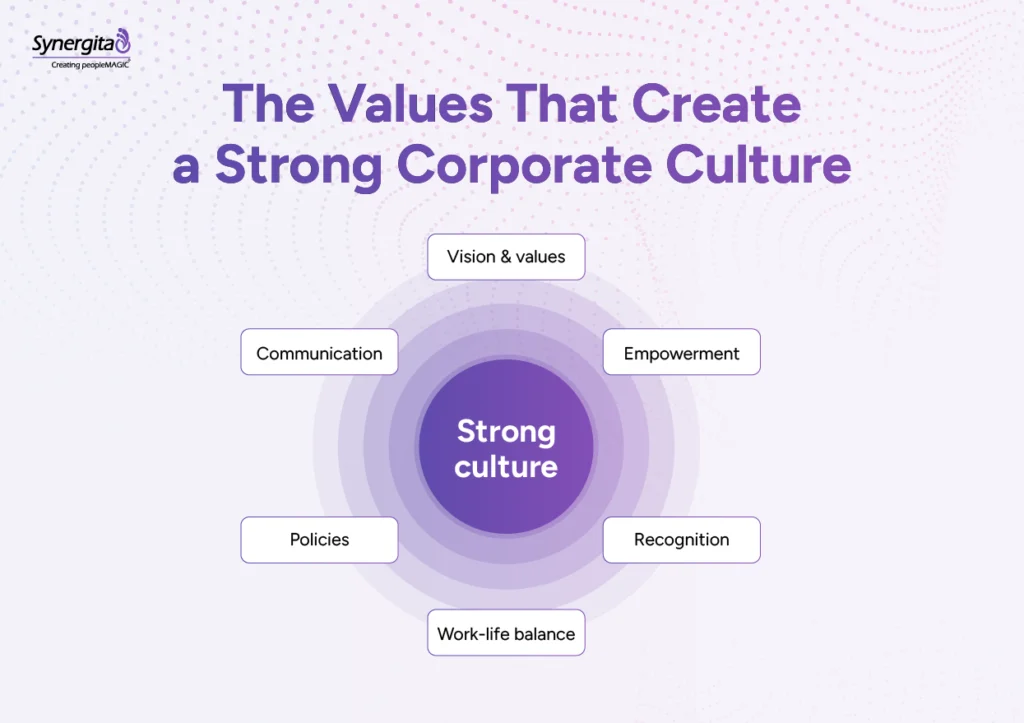
Why corporate culture is important for business success
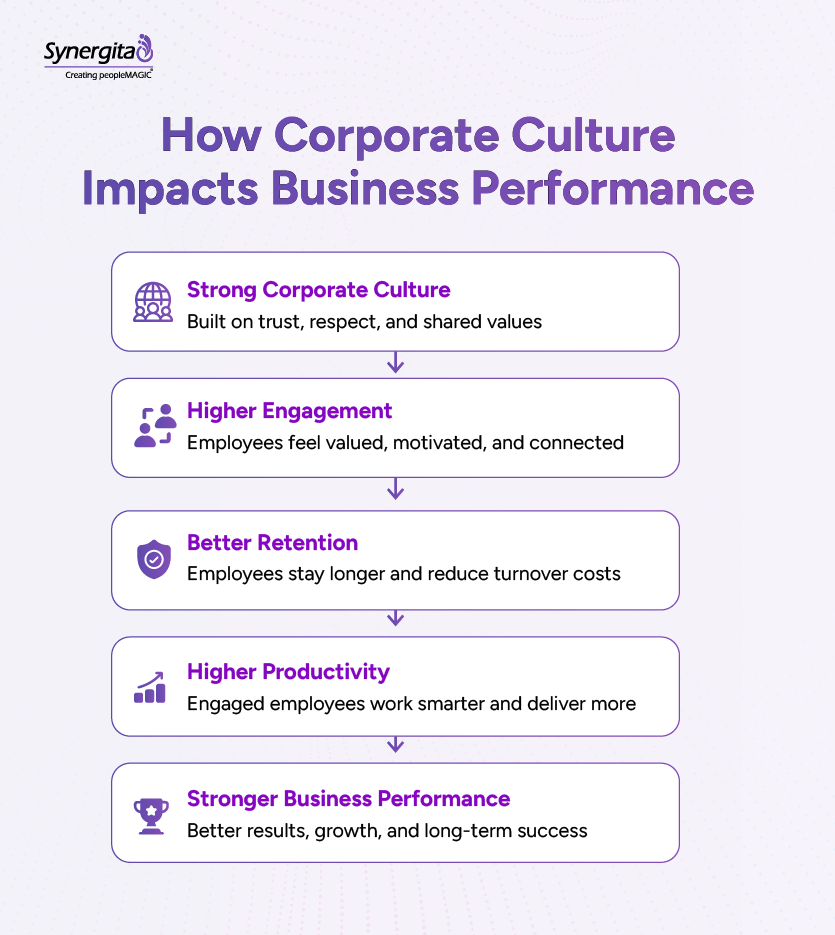
Corporate culture is important because it influences employee engagement, retention, productivity, customer experience, and overall business performance. According to the American Psychological Association, 92% of employees say working for an organization that values their emotional and psychological well-being is important to them. Here are the key reasons why it is important.
Higher employee engagement
Employees who feel connected to their organization’s mission, values, and leadership are more engaged in their work. A strong culture creates a sense of belonging and trust, encouraging employees to stay motivated and contribute to the organization’s long-term success.
Better employee retention
A positive workplace culture encourages employees to build long-term careers with the organization. When people feel valued, respected, and supported, they stay longer, resulting in lower turnover and reduced hiring costs.
Higher productivity
Engaged employees collaborate more effectively, take ownership of their responsibilities, and deliver better results. A strong corporate culture improves focus, efficiency, and overall team performance.
Stronger customer relationships
Employees who work in a positive culture consistently deliver better customer experiences. This builds trust, strengthens customer relationships, and encourages long-term loyalty.
Stronger business performance
Organizations with healthy workplace cultures adapt more easily to change, make better decisions, and execute strategies effectively. These advantages contribute to sustainable growth, resilience, and long-term business success.
The importance of organizational culture is far more than just employee job satisfaction. Businesses that intentionally build and implement a healthy culture create a stronger foundation for sustainable corporate success.
How corporate culture influences business performance: What the data shows
Corporate culture directly impacts business performance by improving employee retention, engagement, productivity, and overall organizational performance. Research shows that organizations with strong workplace cultures outperform those with weaker cultures.
1. Strong cultures improve employee retention
Employees who describe their organization’s culture as good or excellent are far less likely to look for another job, with only 15% actively job hunting. But that number jumps to 57% for employees who rate their culture poorly
2. Culture has a greater impact than compensatio
MIT Sloan Management Review analyzed 34 million employee profiles during the Great Resignation and found that a toxic workplace culture was more than 10 times stronger at predicting employee turnover than low pay. In fact, culture ranked as the top driver of attrition, while compensation ranked 16th.
3. Great culture creates competitive advantag
In a Deloitte survey of business and HR leaders, 87% said culture is important to their organization’s success, and 82% said culture is a genuine competitive advantage.
4. Employees value respect in the workplace
In a national survey of U.S. workers, 95% said that feeling respected at work is important to them, either “very” or “somewhat,” reinforcing the role workplace culture plays in employee engagement and retention.
These findings show that corporate culture has a direct impact on business performance, employee retention, engagement, and the organization’s ability to achieve long-term success.
How to improve organizational culture
You can improve workplace culture by measuring employee experiences, identifying issues early, and making continuous improvements. The following metrics help you understand the health of your workplace culture and identify areas for improvement.
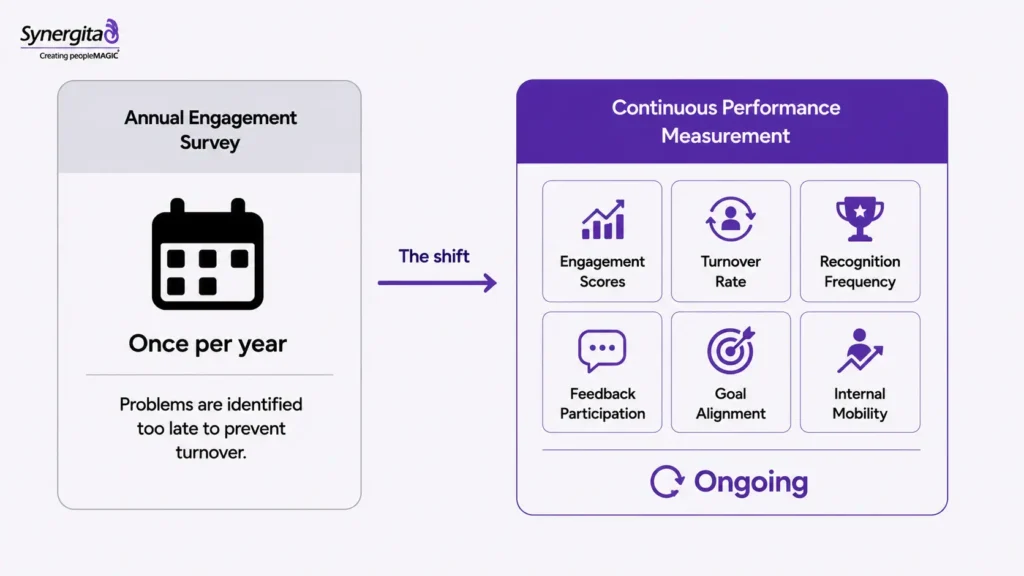
- Employee engagement and pulse survey scores to measure employee sentiment and identify potential issues before they affect performance.
- Employee turnover and retention rates to measure whether people choose to stay and grow with the organization.
- Recognition frequency to see how employees acknowledge and celebrate each other’s contributions.
- Continuous feedback participation to evaluate the quality and consistency of manager-employee conversations.
- Goal alignment to ensure employees understand how their work contributes to team and business objectives.
- Internal mobility and learning participation to assess whether employees have opportunities to develop and advance.
- Modern performance management software help organizations strengthen workplace culture through continuous feedback, goal tracking, recognition, and real-time analytics.
Final takeaway
A strong organizational culture is built through consistent manager conversations, timely recognition, shared goals, and regular employee feedback. Organizations that neglect these everyday practices experience higher turnover, lower engagement, slower execution, and rising hiring costs.
However, improving culture requires proactive initiatives and the right tools to incorporate these behaviors every day. Synergita Performance Management Software offers feedback, recognition, goal alignment, and real-time insights into a single platform, helping companies make culture-building part of everyday work.
Book a demo to see how Synergita helps you build a high-performing workplace culture.

Frequently asked questions
Corporate culture shapes how employees collaborate, make decisions, and achieve business goals. Organizations with strong cultures experience higher employee engagement, better retention, stronger customer relationships, and greater adaptability, making culture a key driver of long-term organizational success.
The benefits of corporate culture include improved employee retention, higher engagement, better customer experiences, stronger collaboration, and increased innovation. A healthy workplace culture also supports productivity, business resilience, and sustainable growth, giving organizations a lasting competitive advantage.
Culture influences more than HR practices. It affects leadership, decision-making, collaboration, customer experience, and organizational performance. A strong culture helps employees align with business goals, improving execution, productivity, and long-term corporate success across every department.
The relevance of organizational culture lies in its ability to influence employee behavior, business performance, and customer satisfaction. Organizations with healthy cultures retain talent more effectively, adapt to change faster, and consistently achieve stronger long-term business outcomes.
A positive workplace culture encourages employees to share ideas, collaborate openly, and experiment with confidence. This environment supports continuous innovation, improves problem-solving, and helps organizations develop better products, services, and processes while adapting quickly to changing business needs.
No. Company values describe what an organization believes, while organizational culture reflects how employees behave, collaborate, and make decisions every day. Culture is the practical expression of values through leadership, workplace behaviors, and everyday business interactions.