
Support teams often drown in endless ticket queues while quality scores stagnate despite your best efforts. You see high burnout rates and declining customer satisfaction because the team lacks a clear strategic compass.
Static KPIs only tell you what happened yesterday; they rarely inspire the growth needed for tomorrow’s challenges. You need a framework that connects daily ticket resolution to long-term company success and scalability.
In this guide, we provide 15 practical customer support okrs to help you scale quality without sacrificing operational speed.
Quick Look
- Balance quality and velocity: Do not chase speed at the expense of customer sentiment or team well-being.
- Move beyond the inbox: Use OKRs to turn support into a revenue-generating engine through retention.
- Audit your baselines: You cannot set ambitious targets without a precise understanding of your current performance data.
- Focus on leading indicators: Prioritize metrics like “internal quality scores” that predict future customer satisfaction levels accurately.
- Incorporate team health: High turnover in support kills knowledge retention; track engagement as a core performance metric.
What Are Customer Support OKRs?
Customer support OKRs are a strategic goal-setting framework designed to drive ambitious improvements in service delivery. Unlike standard tracking, they focus on high-impact outcomes like customer loyalty, team proficiency, and operational scale.
The objective provides a qualitative direction, while key results offer the quantitative proof of your team’s progress. They align every technical agent with the broader mission of providing world-class customer experiences.
Defining the framework is a necessary starting point, but the true value lies in how it addresses the unique pressures of modern service environments.
Also read:Best Tools for OKR Management and Visualization

Why Are Customer Support OKRs Critical for Scale?
Relying solely on ticket volume and handle times creates a culture of “clearing the queue” rather than solving customer problems. Without a strategic framework, your support team remains a reactive cost center that struggles to prove its business value.
OKRs shift the focus from merely surviving the daily influx to proactively improving the entire service ecosystem.
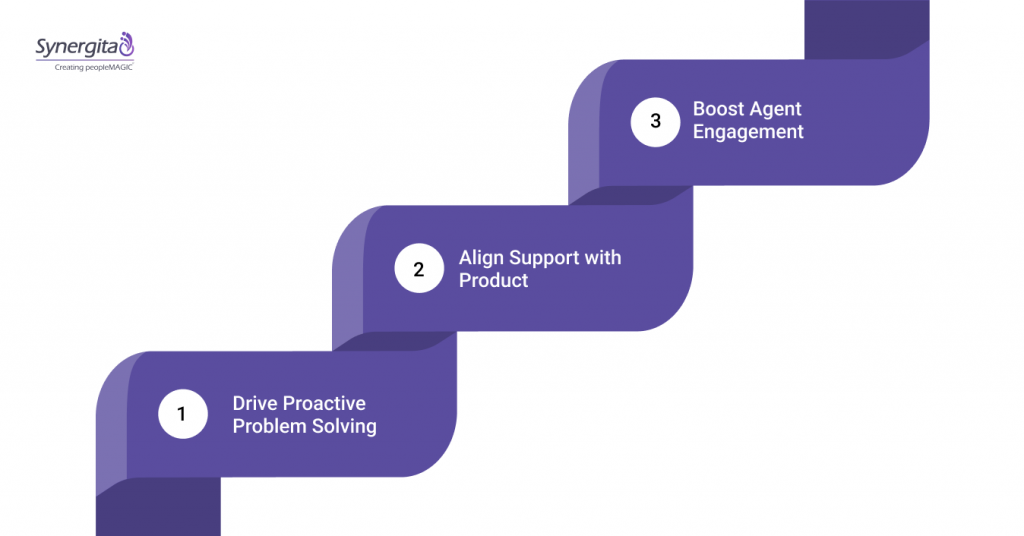
Implementing these objectives provides three vital strategic advantages:
1. Drive Proactive Problem Solving
Standard support work is inherently reactive. OKRs force your agents to step back and identify the root causes of recurring issues. This results in permanent fixes rather than repetitive bandages, effectively slowing down ticket growth as you scale.
2. Align Support with Product and Sales
OKRs break down the silos between the front lines and the back office. When support goals are linked to product reliability or customer retention, the entire company benefits from the support team’s unique insights. You turn customer feedback into a roadmap for growth.
3. Boost Agent Engagement and Retention
Customer support is a high-stress environment with traditionally high turnover rates. Providing agents with meaningful objectives beyond “closing tickets” gives them a sense of ownership and career progression. Purpose-driven teams are more resilient and stay with the company longer.
By establishing why these goals matter, you can better understand how they differ from the traditional metrics you already track.
Also read:Essential OKR Dashboard Examples for Goal Tracking
OKRs vs. KPIs in Support: Knowing When to Measure Health vs. Growth
KPIs function as the health monitor of your department, ensuring that baseline service levels remain stable daily. OKRs act as the growth accelerator, pushing the team to reach new heights of excellence every quarter.
Mixing these two distinct measurement types often leads to confusion and diluted focus for support leaders.
Distinguish between maintaining stability and driving strategic progress using this comparison:
| Feature | KPI (Health) | OKR (Growth) |
| Purpose | Monitors ongoing performance | Drives significant change |
| Scope | Business as usual | Strategic initiatives |
| Frequency | Daily or Weekly tracking | Quarterly focus |
| Success | Meeting the threshold | Achieving 70-80% of a stretch goal |
Choosing the right metrics requires a clear understanding of your current departmental priorities and growth stages.
Also read:Effective OKR Examples for Teams and Businesses
15 Actionable Customer Support OKR Examples
Success in support requires a multidimensional approach that considers the customer, the business, and the agent. These examples cover the critical pillars of a modern support function to ensure balanced organizational growth.
Implement these objectives and key results to build a more resilient and high-performing support organization:
Objective 1: Delight customers with world-class service quality.
| Key Result | Target |
| Customer Satisfaction Score (CSAT) | Increase from 85% to 95% |
| Neutral feedback ratings | Reduce neutral ratings by 50% |
| Post-interaction surveys | Achieve a 30% survey response rate |
Objective 2: Turn support into a brand advocacy engine.
| Key Result | Target |
| Support Net Promoter Score (NPS) | Increase score from +40 to +60 |
| Customer testimonials | Collect 50 new video testimonials from users |
| Referrals via support | Generate 20 new referrals from support interactions |
Objective 3: Make support interactions effortless for every user.
| Key Result | Target |
| Customer Effort Score (CES) | Reduce the average score from 3.5 to 2.0 |
| High-effort workflows | Audit and fix the top 5 high-effort workflows |
| Self-service link usage | Increase link clicks in chats by 40% |
Objective 4: Deliver lightning-fast initial responses to all users.
| Key Result | Target |
| First Response Time (FRT) | Reduce the average from 4 hours to 1 hour |
| VIP Response Time | Maintain FRT under 30 minutes for VIPs |
| Response consistency | Ensure 99% of tickets meet the SLA |
Objective 5: Resolve complex issues with maximum speed and accuracy.
| Key Result | Target |
| Average Resolution Time | Decrease from 48 hours to 24 hours |
| First Contact Resolution (FCR) | Achieve 80% FCR for tier 1 issues |
| Re-opened tickets | Reduce ticket re-open rate to less than 5% |
Ready to implement these customer support OKRs? Book a demo to see how Synergita’s templates and tracking can accelerate your goal-setting process.
Objective 6: Clear the path for future growth by reducing debt.
| Key Result | Target |
| Total Ticket Backlog | Reduce backlog volume by 40% this quarter |
| Stale Tickets | Close 100% of tickets older than 7 days |
| Knowledge Base gaps | Document 20 previously unlisted technical workarounds |
Objective 7: Identify growth opportunities during support interactions.
| Key Result | Target |
| Expansion Leads | Generate $50k in leads via support tickets |
| Agent Training | Train 100% of agents on upsell triggers |
| Qualified Lead Conversion | Convert 10% of support leads into opportunities |
Also read: Tips and Best Practices for OKR Reporting
Objective 8: Proactively prevent customer churn through support intervention.
| Key Result | Target |
| Saved Accounts | Retain 20 at-risk accounts through support |
| Technical Churn Rate | Reduce churn for technical users by 5% |
| Cancellation Deflection | Deflect 15% of cancellation requests to trials |
Objective 9: Increase long-term customer value via education.
| Key Result | Target |
| Feature Adoption Rate | Boost adoption by 15% after support chats |
| Customer Webinars | Host 3 “Power User” webinars for clients |
| Educational Content | Increase tutorial video views by 50% |
Objective 10: Empower users to solve issues independently.
| Key Result | Target |
| Ticket Deflection Rate | Increase deflection from 10% to 20% |
| Help Center traffic | Achieve 5k monthly views on new articles |
| Search Success Rate | Ensure 80% of searches yield a result |
Objective 11: Build a comprehensive and accurate knowledge base.
| Key Result | Target |
| New Troubleshooting Guides | Create 30 guides for top-reported bugs |
| Article Helpfulness | Improve “Helpful” ratings to 90% or higher |
| Content Refresh | Audit and update 100% of legacy articles |
Objective 12: Automate routine queries with high precision.
| Key Result | Target |
| AI Resolution Rate | Resolve 30% of tier 1 tickets via bot |
| Bot Accuracy | Maintain 90% accuracy for automated responses |
| Bot-to-Human Handoff | Reduce handoff requests for routine billing queries |
Objective 13: Build the happiest support team in the industry.
| Key Result | Target |
| Employee NPS (eNPS) | Increase score from +20 to +50 |
| Peer Recognition | Launch a monthly peer-to-peer awards program |
| Feedback Participation | Ensure 90% participation in weekly surveys |
Objective 14: Master the technical details of the product.
| Key Result | Target |
| Internal Quality Score (IQS) | Increase average score from 80% to 92% |
| Agent Certification | Ensure 100% of agents pass advanced training |
| Technical Quiz Scores | Achieve an average score of 95% on quizzes |
Objective 15: Reduce burnout through better workload management.
| Key Result | Target |
| Monthly Agent Turnover | Decrease turnover rate to less than 2% |
| Wellness Days | Ensure 100% of agents take wellness days |
| Overtime Hours | Reduce total team overtime by 30% |
Selecting these targets is only the beginning of a successful performance management strategy.
Also read:OKR vs KPI: Key Differences and How to Use Both
How to Calculate and Measure Your Support Key Results: A Step-by-Step Process
Accurate data is the foundation of any credible performance framework. You must standardize your calculations to ensure transparency and trust across the support department.
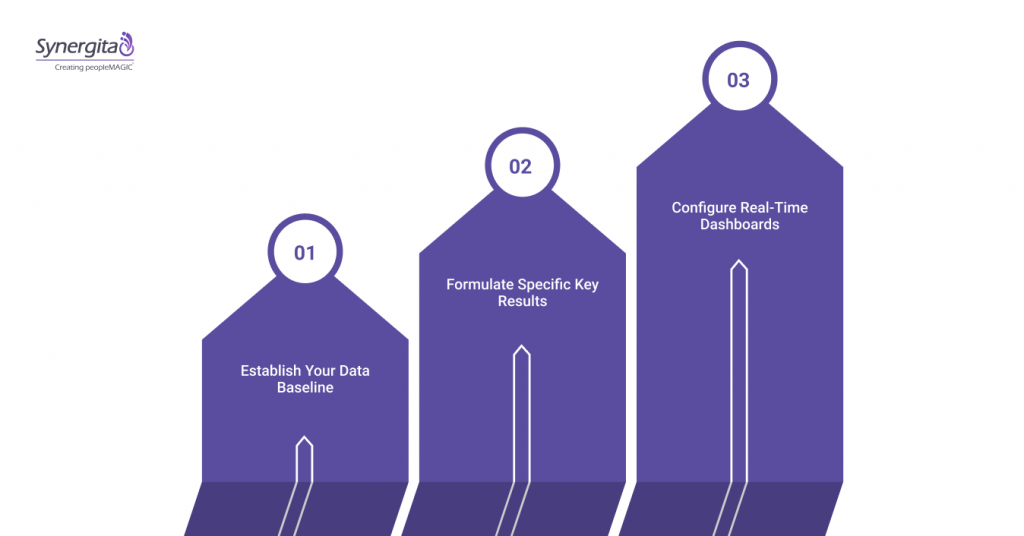
Follow these steps to quantify your progress and maintain data integrity:
1. Establish Your Data Baseline
Audit your historical performance data from the previous two quarters. You cannot set realistic stretch goals without knowing your current average resolution speeds. Use this data to define what “Business as Usual” looks like.
2. Formulate Specific Key Results
Apply clear mathematical formulas to every metric you choose to track. For instance, calculate First Contact Resolution by dividing single-interaction tickets by total closed tickets. This removes subjectivity from your success criteria.
3. Configure Real-Time Dashboards
Connect your ticketing system to a dedicated tracking platform for instant visibility. Manual spreadsheets lead to errors and delay critical course corrections during the quarter. Real-time insights allow you to pivot before objectives fail.
Establishing clear measurement protocols prevents common misunderstandings during the quarterly review process.
Struggling to align high-volume support queues with your strategic quality goals? Book a demo to see how Synergita automates customer support OKRs and eliminates manual tracking for your agents.
Do’s and Don’ts for Support OKR Implementation
Successful implementation requires a shift in leadership mindset and operational habits. Avoiding cultural pitfalls is just as important as choosing the right metrics.
Use this guide to ensure your implementation remains productive and fair:
| Do’s | Don’ts |
| Focus on customer outcomes | Do not encourage ticket closing “gaming.” |
| Involve agents in goal setting | Do not use OKRs as a secret disciplinary tool |
| Celebrate 70% achievement | Do not punish teams for missing stretch targets |
| Link support to product goals | Do not isolate support from other departments |
Avoiding these mistakes helps maintain high morale while driving significant departmental improvements.
Also read:OKR vs KPI: Key Differences and How to Use Both

Transforming Customer Support OKR Strategy with Synergita
Many support leaders struggle with fragmented data and manual tracking processes. You lose valuable time jumping between ticketing tools and spreadsheets to find progress. This lack of visibility makes it difficult to align your team with the company strategy.
Synergita offers a unified platform to manage your OKR goals and agent performance effectively. It provides the clarity needed to turn your support function into a strategic asset.
- Goal Management & Alignment: Cascade company objectives to the support team and link individual goals. Visual dashboards show real-time progress on key results like CSAT or deflection rate.
- Synergita Perform & Engage: Automate continuous feedback and 360° reviews. Foster a coaching culture with structured check-ins tied to development plans for support agents.
- AI-Powered Analytics: Move beyond vanity metrics with focused analytical reports. Gain insights from feedback sentiment to proactively address team or customer concerns.
- Real-Time Progress Visualization: Precisely analyze progress with tools that visually highlight trajectories and lead/lag status against all key results.
Synergita ensures your support team stays focused on driving quality and value every single day.
Conclusion
Customer support OKRs provide the structure needed to scale your operations without compromising on quality. By moving beyond basic KPIs, you enable your team to solve complex problems and drive business growth. This framework ensures that every interaction contributes to the long-term success of the organization.
Implementing this strategy requires more than just a list of goals; it requires the right technology. Synergita provides the tools to track these metrics, foster engagement, and align your team’s efforts. Our platform simplifies the transition to a continuous, data-driven performance culture.
See how Synergita can help you achieve your customer support objectives by scheduling a personalized demo today.
FAQs
Q. How many OKRs should a support team have each quarter?
Limit your team to 3-5 objectives to ensure deep focus on critical areas. Each objective should have no more than three key results to maintain clarity.
Q. What is the difference between a support KPI and an OKR?
A KPI measures the ongoing health of your operations, like current ticket volume. An OKR drives specific, time-bound improvements, such as reducing that volume through better self-service.
Q. How can OKRs help reduce support agent burnout?
By including team health objectives, you prioritize engagement and workload management as core metrics. This signals to your team that their well-being is essential for long-term success.
Q. Should support OKRs be tied to individual bonuses?
It is better to decouple these meetings from compensation to encourage honest data and ambitious goals. This allows agents to report risks without fearing financial penalties.
Q. What are the 4 main customer service objectives?
The four main objectives are: Quality (high CSAT/resolution accuracy), Efficiency (fast FRT/MTTR), Customer Growth (retention/expansion signals), and Team Health (high eNPS/low turnover). Modern support strategies must address all four.