
As a marketing leader, measuring campaign performance and prioritizing efforts can be difficult. Many teams struggle to understand how daily tasks contribute to long-term business goals, leaving them uncertain about where to focus their energy.
Research shows that underused or unused marketing content costs companies about $2.3 million annually in missed opportunities. This reveals a misalignment between marketing and sales teams, as well as wasted additional time on tasks that don’t drive results. Aligning marketing OKRs with business goals can help direct efforts where they matter most.
This blog explores how marketing teams can use OKRs to improve campaign execution by better goal-setting and performance tracking. You’ll learn how to define clear objectives, monitor progress, and measure success so your marketing efforts deliver meaningful business outcomes.
Key Takeaways:
- OKRs provide clarity and focus by helping marketing teams define clear objectives and measurable key results aligned with business goals.
- Regular tracking and reviews ensure marketing teams stay on course and can make adjustments if needed.
- Marketing OKRs drive accountability by assigning specific ownership of key results to team members, improving motivation and performance.
- Defining a limited number of OKRs helps prioritize efforts on the most impactful activities, avoiding distractions and wasted resources.
- Choosing the right OKR tools enhances transparency and collaboration, enabling teams to monitor progress and stay aligned with company objectives.
Why Are OKRs Essential for Marketing Teams?
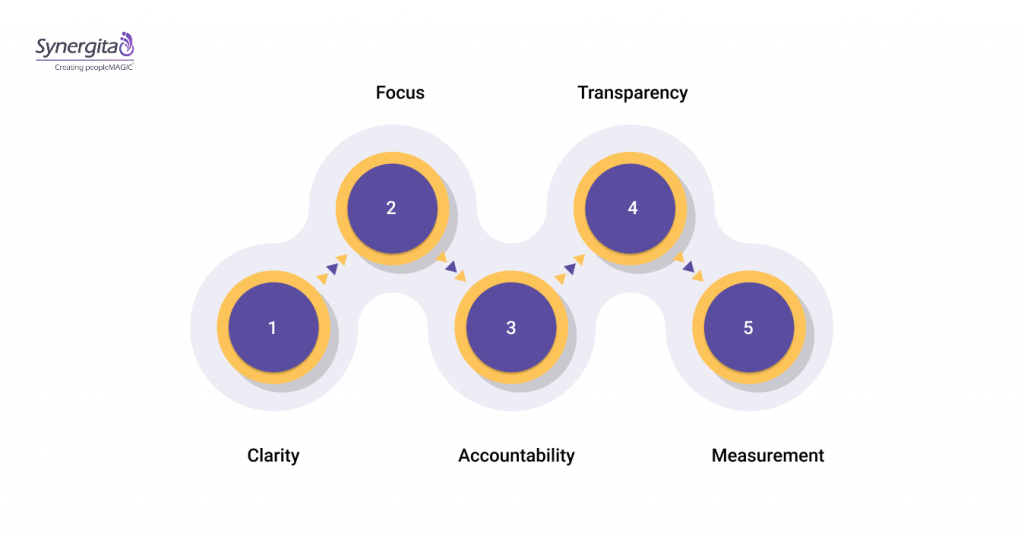
OKRs, or Objectives and Key Results, are a goal-setting framework used by teams and organizations to align their activities with broader business objectives. This method helps ensure that everyone works towards shared goals, making it easier to track progress and measure success.
In the context of marketing, OKRs focus on defining clear objectives (what needs to be achieved) and measurable key results (how success will be tracked).
For marketing teams, OKRs serve several critical purposes:
- Clarity: OKRs provide marketing teams with clear, measurable goals that directly link to business objectives. Without clear goals, marketing efforts can become fragmented and inefficient.
- Focus: OKRs help teams focus on the most important tasks by limiting objectives and setting clear key results. With many tasks to manage, marketing teams can stay aligned on what truly matters.
- Accountability: OKRs give team members clear expectations for their roles, creating a sense of ownership. This accountability boosts motivation and drives better results.
- Transparency: OKRs are typically visible to the entire organization, which helps promote alignment across departments and clarify how marketing efforts contribute to broader organizational goals.
- Measurement: With specific key results tied to each objective, OKRs make it easier for marketing teams to measure progress and identify areas for improvement. This data-driven approach leads to continuous refinement of strategies, improving the overall effectiveness of marketing efforts.
Having established the importance of OKRs, it’s time to dive into the core marketing areas that will benefit most from this framework.
Also Read: OKR Guide: Types, Benefits, Implementation & Best Practices

The Most Impactful Marketing OKR Areas and Examples
When defining OKRs for marketing teams, the objective is to connect creative activity with measurable revenue outcomes. Below are 15 examples across seven core focus areas to guide structured growth and performance tracking.
Brand Awareness & Authority
1. Objective: Increase brand share of voice in the manufacturing sector
Key Results:
- Reach 500,000 organic website sessions
- Secure five features in industry publications such as IndustryWeek and Manufacturing Today
- Grow LinkedIn followers from 10,000 to 15,000
2. Objective: Build thought leadership through original research
Key Results:
- Publish the “State of Manufacturing 2026” research report
- Generate 1,500 gated report downloads
- Secure three speaking opportunities at national trade conferences
Lead Generation & Demand Growth
3. Objective: Generate a qualified sales pipeline through targeted campaigns
Key Results:
- Generate 300 MQLs from companies with 500+ employees
- Increase MQL-to-SQL conversion rate from 15% to 25%
- Increase webinar registrations by 20% using paid campaigns
4. Objective: Improve inbound conversion performance
Key Results:
- Raise landing page conversion rate from 3% to 5.5%
- Reduce lead response time from 24 hours to one hour
- Increase demo form submissions by 15% through A/B testing
SEO & Content Performance
5. Objective: Rank for high-intent search terms
Key Results:
- Secure top three rankings for ten keywords related to production improvement
- Publish 12 new blog posts, driving 50% organic traffic growth
- Add 20 high-authority backlinks per month
6. Objective: Increase content engagement
Key Results:
- Increase average time on page from 1:30 to 2:45
- Reduce bounce rate from 75% to 60%
- Grow weekly newsletter subscribers by 15%
Product Marketing & Sales Support
7. Objective: Support the successful launch of a new product line
Key Results:
- Deliver sales enablement materials within 30 days
- Train all sales representatives on product positioning
- Generate 50 trial sign-ups in the first month
8. Objective: Improve competitive win rates
Key Results:
- Create three competitor comparison guides
- Increase win rate against the main competitor from 30% to 40%
- Publish two customer testimonial videos
Customer Marketing & Retention
9. Objective: Turn customers into advocates
Key Results:
- Recruit ten members for a customer advisory group
- Increase NPS score from 45 to 60
- Generate $100,000 in referral-driven revenue
10. Objective: Increase customer lifetime value
Key Results:
- Increase webinar participation by 30%
- Achieve 20% CTR on product update emails
- Convert 15% of starter-tier users to enterprise plans
Field Marketing & Events
11. Objective: Improve return from industry trade shows
Key Results:
- Collect 400 qualified booth leads
- Book 30 on-site demos with target accounts
- Keep cost per lead under $150
12. Objective: Run executive roundtable events
Key Results:
- Host three regional leadership dinners
- Reach 80% attendance rate
- Convert 20% of attendees into sales opportunities
Marketing Operations & Performance Tracking
13. Objective: Reduce marketing spend waste
Key Results:
- Reduce cost per lead by 15%
- Achieve 5:1 ROAS on LinkedIn campaigns
- Lower marketing-to-CAC ratio by 10%
14. Objective: Improve data accuracy and attribution
Key Results:
- Maintain duplicate-free CRM records
- Launch multi-touch attribution reporting
- Automate 80% of performance reports
15. Objective: Build a high-performing marketing team
Key Results:
- Certify all team members in analytics training
- Run one A/B experiment every week
- Increase internal team satisfaction score by 20%
Now that you have a solid understanding of key OKR focus areas, let’s move on to how you can set and implement them.
Also Read: OKRs in Business: The Secret to Goal Alignment and Success
Step-by-Step Guide to Setting and Implementing Marketing OKRs
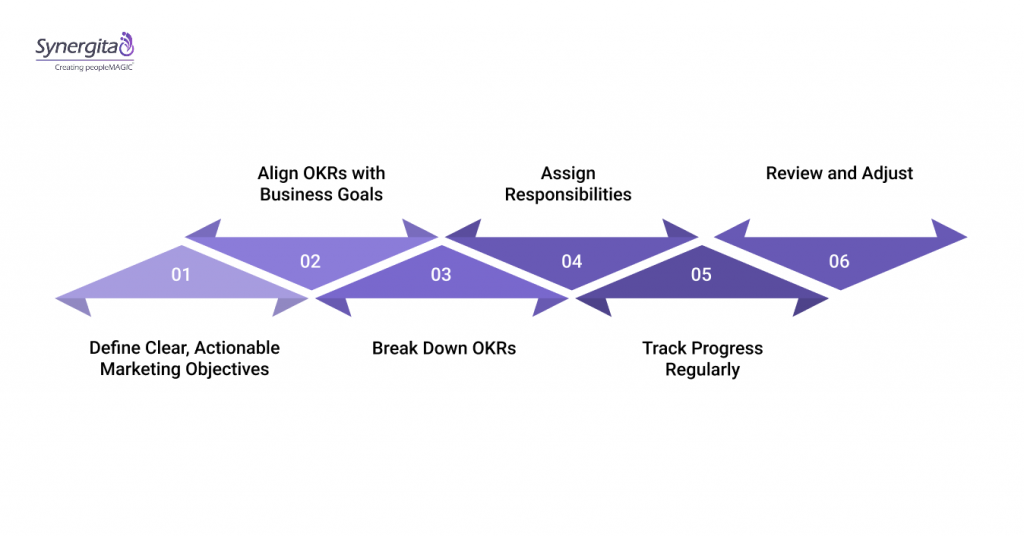
To successfully implement OKRs in marketing, it’s crucial to first define clear objectives that are aligned with your company’s goals. Once your objectives are set, you need a structured approach to execute them. Here are the essential steps for setting, aligning, and implementing OKRs for your marketing campaigns:
- Define Clear, Actionable Marketing Objectives: Start with specific, measurable objectives that are focused on tangible outcomes. For example, “Increase website traffic by 30% next quarter.”
- Align OKRs with Business Goals: Ensure that marketing OKRs align with company-wide goals, such as increasing revenue or improving customer retention, so that every marketing activity supports larger business objectives.
- Break Down OKRs into Measurable Key Results: Set key results that are quantifiable and time-bound. For instance, “Achieve 100,000 monthly website visits by the end of the quarter.”
- Assign Responsibilities and Resources: Clearly assign each key result to a team member and ensure they have the necessary resources to achieve it.
- Track Progress Regularly: Hold regular check-ins and use dashboards to track progress, keeping the team aligned and able to adjust as needed.
- Review and Adjust: At the end of each campaign or quarter, review the OKRs, assess the results, and make adjustments for the next cycle.
Now that you know how to set and execute OKRs, let’s take a look at the pitfalls to avoid in the process.
Also Read: 4 Steps on How to Build an Effective Performance Management Program
Common Pitfalls in Marketing OKRs and How to Avoid Them
Setting and tracking OKRs can be a game-changer for marketing teams, but there are common pitfalls that can undermine their effectiveness. Being aware of these challenges and taking steps to avoid them is key to ensuring that your marketing OKRs drive meaningful results. Here are some pitfalls to watch out for:
- Setting Too Many OKRs: Trying to tackle too many objectives at once can dilute focus. It’s better to focus on a few high-impact OKRs and allocate resources to achieving them.
- Vague Key Results: If key results are not measurable or specific, it becomes difficult to track progress and assess success. Make sure each key result is quantifiable.
- Lack of Alignment with Business Goals: If marketing OKRs are not aligned with company-wide objectives, marketing efforts may not contribute effectively to overall business growth.
- Neglecting Regular Reviews: Without periodic check-ins, teams may fall behind or veer off course. Regular reviews help ensure that the team stays on track and can adjust strategies as needed.
- Overlooking Resource Allocation: If your team is not given the proper resources (budget, tools, support), achieving OKRs becomes much harder. Ensure that the necessary resources are in place to meet your goals.
With a clear understanding of common pitfalls, it’s time to look at the tools that can help you effectively track and manage OKRs
Also Read: An Ultimate Guide to OKR Tracking

Choosing the Right OKR Software for Your Marketing Team
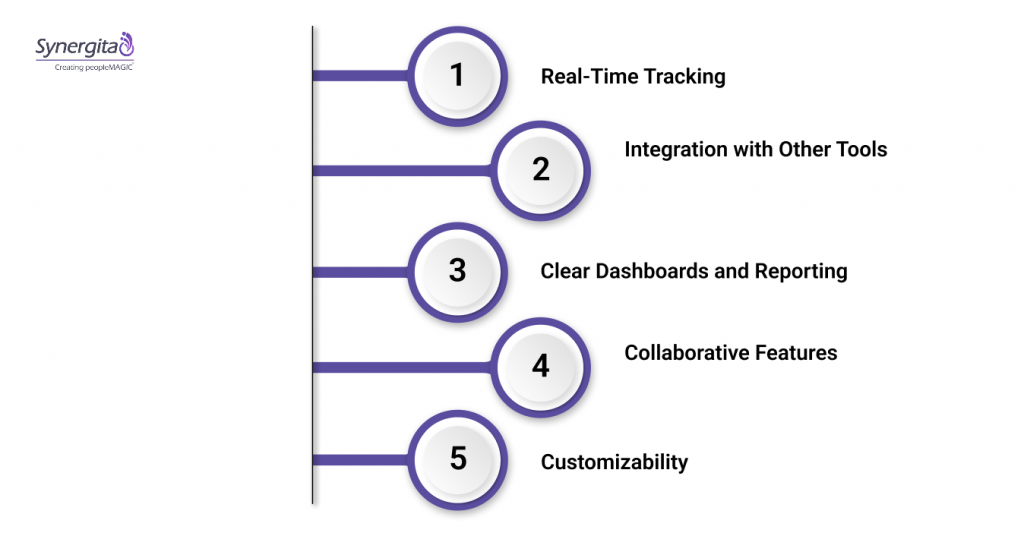
Tracking OKRs is crucial for keeping marketing teams on course and making sure that their goals are actually achieved. A range of tools can help monitor progress, offer visibility, and ensure alignment across the team. Here are a few key features to consider when choosing an OKR tool for your marketing team:
- Real-Time Tracking: Look for tools that provide real-time insights into progress, so teams can stay informed and make adjustments as needed. This helps ensure no time is wasted when things veer off course.
- Integration with Other Tools: Choose platforms that integrate seamlessly with the tools your team already uses, such as project management tools (e.g., Jira) or communication platforms (e.g., Slack or Microsoft Teams). This reduces friction and improves workflow efficiency.
- Clear Dashboards and Reporting: Select tools that deliver clear, visual dashboards to track key results, enabling marketing teams to easily see where they stand relative to their objectives.
- Collaborative Features: Collaboration is key in executing OKRs. Look for platforms that enable team members to comment on progress, share updates, and openly discuss obstacles and achievements.
- Customizability: Different marketing teams have different needs. The tool should allow for flexibility in how you set up OKRs, track them, and report on them. Customizable templates can help you get started quickly.
Synergita is one such great platform that integrates OKRs with other performance management tools, offering clear tracking features and collaboration tools to keep teams on track.
Conclusion
Effective OKRs can significantly improve how your marketing team tracks progress and achieves measurable results. This is exactly how marketing teams can use OKRs to improve campaign execution by setting clear objectives, aligning them with business goals, and using the right tools to drive consistent performance.
Synergita offers a robust OKR platform to help you track goals, ensure alignment, and drive performance across your marketing team.
Book a demo today and experience how Synergita can help you achieve your marketing goals.
FAQs
1. Can You Add OKRs During the Execution Phase?
Yes, OKRs can be adjusted during the execution phase if needed. If new opportunities or challenges arise during the campaign, you can modify your key results to reflect changes in strategy. Regular check-ins are crucial for monitoring progress and making adjustments when needed.
2. How Can I Improve My Marketing Campaigns Using OKRs?
To improve marketing campaigns with OKRs, focus on setting clear, measurable objectives and tracking progress through key results. Regular reviews of your OKRs help identify performance gaps and guide strategy adjustments, ensuring your campaigns are aligned with business goals.
3. Is OKR Better Than KPI for Marketing Teams?
OKRs and KPIs serve different purposes. OKRs are used to set and track ambitious goals with measurable outcomes, while KPIs are often used to measure ongoing performance. OKRs tend to be broader and more strategic, whereas KPIs are more tactical and operational. Both can complement each other for better performance management.
4. What Is the Role of Leadership in Driving OKR Success for Marketing Teams?
Leadership plays a crucial role in driving OKR success by setting clear expectations, aligning OKRs with business goals, and providing support and resources. Leaders should also ensure transparency, keep teams focused, and encourage regular reviews to ensure OKRs are being executed effectively.
5. How Often Should Marketing OKRs Be Reviewed?
Marketing OKRs should be reviewed regularly, typically on a weekly or bi-weekly basis. This frequency allows teams to stay aligned, track progress, and make adjustments quickly if necessary. Quarterly reviews are also essential for evaluating overall success and adjusting future OKRs.