
In the United States, the national six-year graduation rate stands at 64.9%. This number reflects stalled progress despite years of academic planning, reporting, and performance reviews. Many campuses track data, yet results fail to move.
You are expected to improve retention, completion, and engagement while managing disconnected priorities across departments. Your team works hard, but goals often lack clarity, ownership, and follow-through. That gap shows up in student outcomes.
In this blog, we’ll explore why traditional academic metrics fall short, how schools & universities can leverage OKRs for better student performance, and how leaders use them to drive focus and accountability.
Key Takeaways:
- Traditional academic metrics report results too late to influence student progress during the term.
- OKRs focus teams on student outcomes through clear objectives and measurable progress signals.
- Student-centered OKRs connect leadership priorities with classroom actions and support decisions.
- A phased ninety-day rollout helps teams adopt OKRs without resistance or confusion.
- Consistent reviews tied to next steps improve student performance through timely intervention.
Why Traditional Academic Metrics Fail to Improve Outcomes
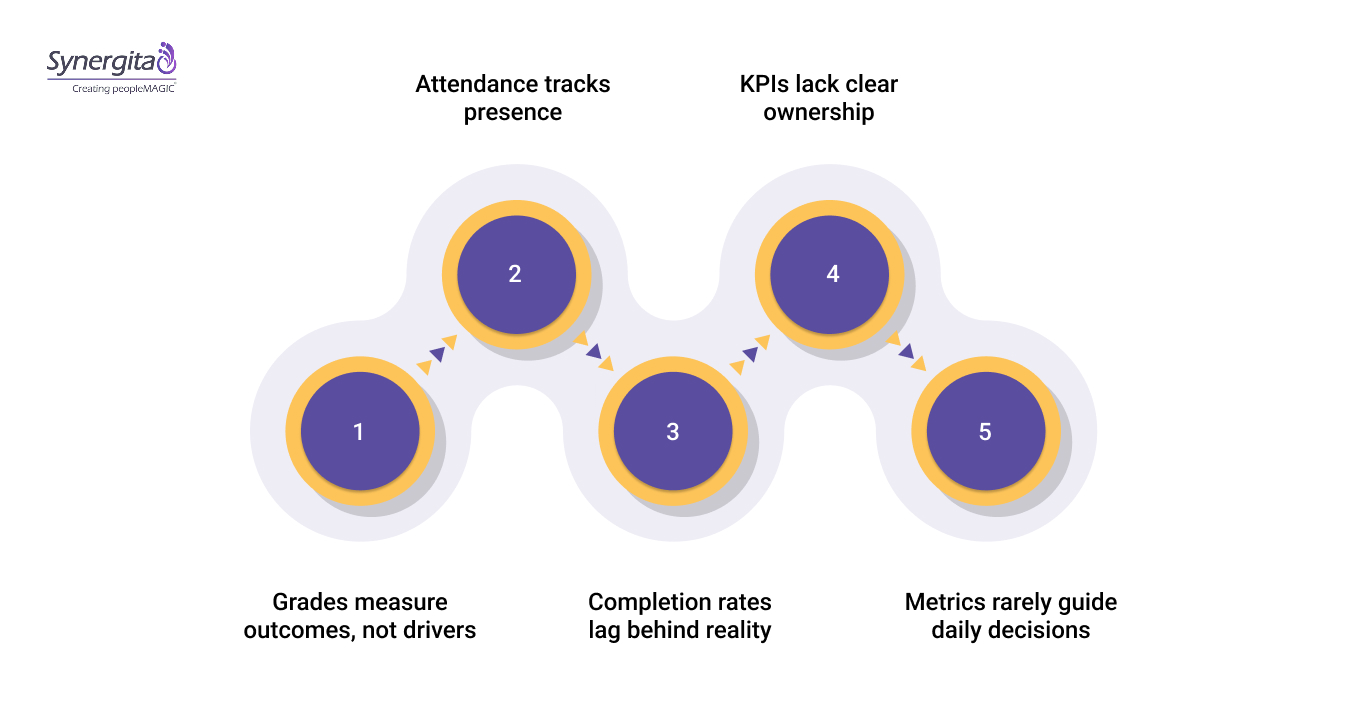
Traditional academic metrics promise clarity, yet they rarely change behavior or results across campuses managing complex student needs and accountability demands. These measures report outcomes after the fact, leaving leaders and their teams without direction during the moments where intervention actually matters.
Here are the core reasons these metrics fall short for leaders seeking consistent student performance improvement:
- Grades measure outcomes, not drivers: Grades reflect final performance but fail to show which teaching practices, support actions, or behaviors influenced student progress during the term.
- Attendance tracks presence, not engagement: Attendance records confirm physical or virtual presence but ignore participation quality, comprehension levels, and student commitment across courses.
- Completion rates lag behind reality: Graduation and course completion data arrive too late, limiting your team’s ability to adjust strategies before students disengage or fall behind.
- KPIs lack clear ownership: Many academic metrics spread responsibility across departments, leaving no single leader or team accountable for corrective action.
- Metrics rarely guide daily decisions: Static reports sit in dashboards while faculty and administrators struggle to connect numbers to weekly priorities and actions.
Once you see the limits of traditional metrics, the next step involves a goal system that influences behavior before student outcomes decline.
Also Read: KPI Monitoring That Works: What to Track, Why It Matters, and How to Do It Right
How OKRs Directly Impact Student Performance
OKRs change how goals influence daily academic behavior by shifting focus from static reporting toward shared priorities that guide decisions across leadership, faculty, and support teams. Instead of tracking outcomes after failure occurs, OKRs keep attention on progress signals that affect student success during each academic cycle.
Here are the key ways OKRs improve student performance across schools and universities:
- Clear objectives focus effort: Well-defined objectives clarify what student success means each term, helping your team prioritize actions that support learning progress and completion.
- Measurable results guide action: Key results translate goals into observable progress markers, allowing faculty and administrators to adjust instruction and support before students disengage.
- Ownership drives accountability: Each OKR assigns responsibility to specific leaders or teams, ensuring student performance gaps trigger action instead of passive reporting.
- Visibility keeps teams engaged: Shared OKRs create transparency across departments, helping your team track progress consistently and maintain focus throughout the academic period.
- Cadence supports timely intervention: Regular OKR check-ins prompt earlier conversations about student challenges, enabling corrective steps while improvement remains achievable.
Understanding OKR impact matters little unless leadership priorities clearly translate into goals that instructors and support teams influence daily.
Also Read: OKR Guide: Types, Benefits, Implementation & Best Practices
Translating Institutional Goals into Student-Centered OKRs
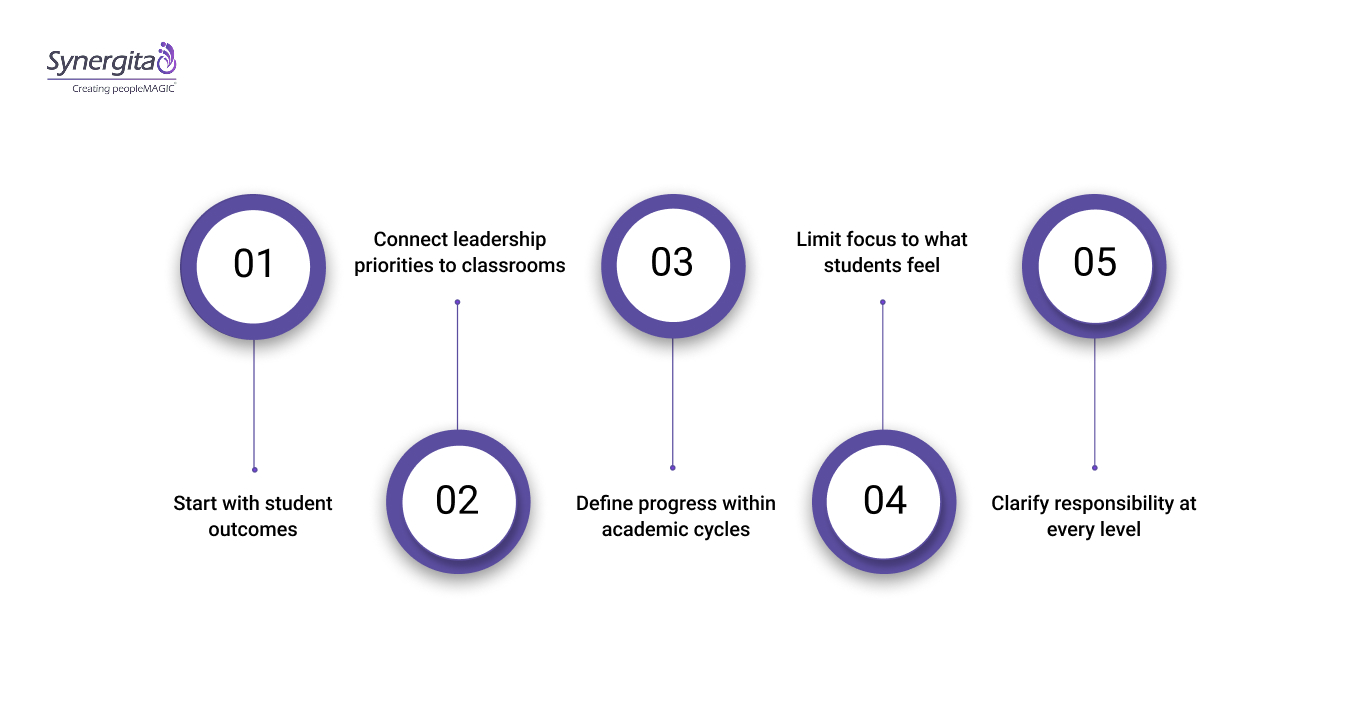
Senior leaders often set broad academic goals, yet those priorities lose impact when they fail to connect with student behavior and classroom realities. Student-centered OKRs close this gap by converting high-level intent into clear expectations that guide teaching, support, and decision-making across every level.
Here is how leadership teams translate broad goals into OKRs that influence student performance directly:
- Start with student outcomes: Define objectives using student results such as course completion, skill progression, or sustained engagement rather than administrative milestones or reporting targets.
- Connect leadership priorities to classrooms: Break leadership goals into OKRs that instructors and support teams can influence through weekly actions and measurable progress signals.
- Define progress within academic cycles: Set key results that reflect improvement during the term, allowing your team to monitor learning trends before end-of-year reviews.
- Limit focus to what students feel: Choose a small set of OKRs that affect learning experience, feedback quality, and academic confidence rather than tracking excessive activity.
- Clarify responsibility at every level: Assign ownership for each OKR so student challenges prompt timely responses instead of diffused accountability across departments.
Concepts gain clarity when you see how schools and universities express student-focused goals through specific, measurable OKR structures.
Also Read: 10 Key Benefits of OKRs Software for Business Growth
Real OKR Examples for Schools and Universities
Seeing OKRs applied in context helps leadership teams understand how goals translate into daily academic decisions and measurable student progress. These examples show how OKRs operate across levels while keeping student performance as the central focus.
Here are practical OKR examples used across schools and universities:
Institution-Level OKRs
These OKRs connect leadership priorities to measurable student outcomes across the entire school or university.
Here are a few examples:
1. Objective: Improve mid-level program completion rates across core disciplines.
- Key Result: Increase course pass rates from 68 percent to 78 percent by term end.
- Key Result: Reduce mid-term withdrawals by 15 percent across programs.
- Key Result: Raise academic support usage by 20 percent during the term.
2. Objective: Strengthen first-year student retention.
- Key Result: Increase first-year retention from 72 percent to 82 percent.
- Key Result: Achieve weekly advisor outreach coverage for 90 percent of at-risk students.
Department-Level OKRs
Department OKRs focus teams on actions that influence student learning and engagement during the academic cycle.
Here are a few examples:
1. Objective: Improve student performance in foundational mathematics courses.
- Key Result: Reduce failure rates from 30 percent to 18 percent by term end.
- Key Result: Increase assignment completion consistency to 85 percent across sections.
2. Objective: Improve instructional consistency across multi-section courses.
- Key Result: Achieve shared assessment usage in 100 percent of course sections.
- Key Result: Conduct biweekly teaching reviews throughout the academic term.
Student Success and Support OKRs
Support-focused OKRs ensure advising, tutoring, and counseling efforts directly influence academic progress.
Here are a few examples:
1. Objective: Increase academic engagement among at-risk students.
- Key Result: Schedule proactive outreach for 95 percent of flagged students.
- Key Result: Improve support session attendance rates to 75 percent.
2. Objective: Improve student feedback turnaround time.
- Key Result: Deliver academic feedback within seven days for 90 percent of assessed work.
- Key Result: Reduce unresolved student queries by 25 percent during the term.
While these examples show what good OKRs look like, many teams still struggle when small mistakes weaken focus and reduce student impact.
Also Read: Leveraging OKRs for Complete Organizational Efficiency Through Process Automation
Common OKR Mistakes That Hurt Student Outcomes
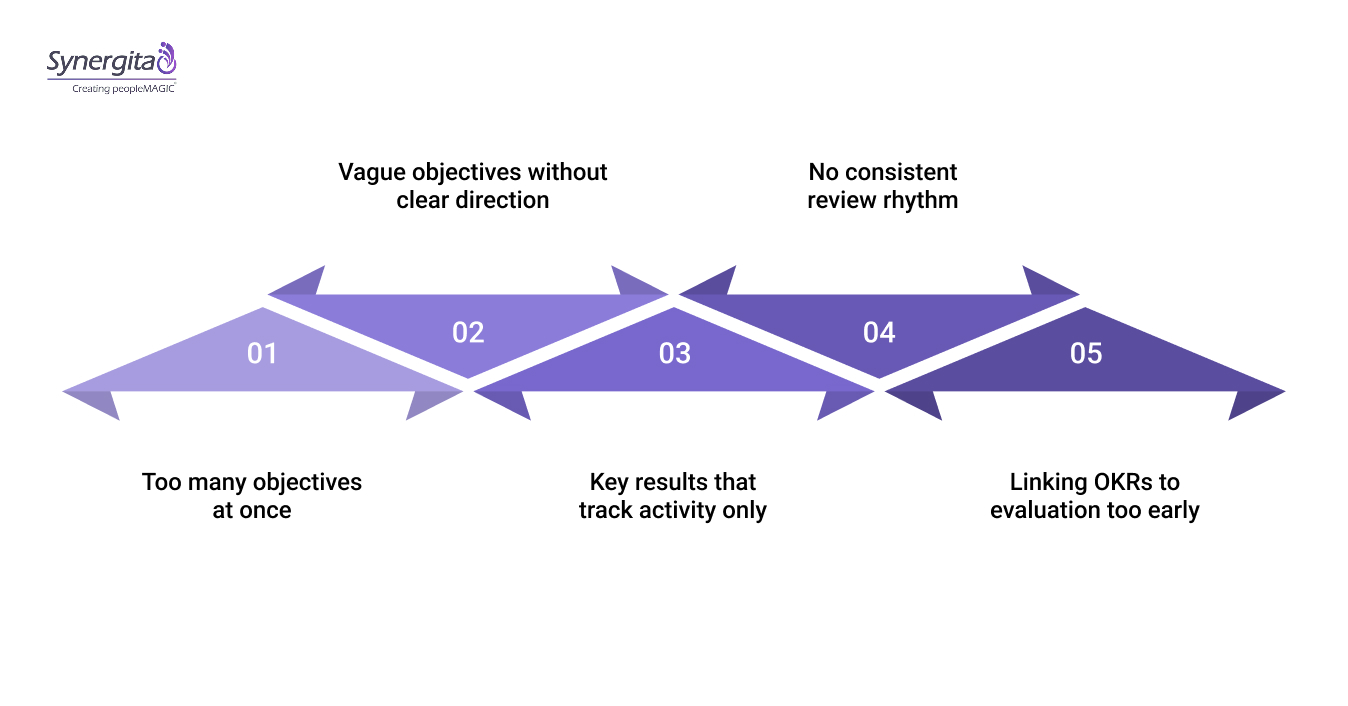
OKRs fail when teams treat them as reporting tools rather than guides for daily academic decisions and student support actions. These mistakes often weaken trust, reduce participation, and limit the impact OKRs can have on student performance.
Here are the most common OKR mistakes schools and universities make:
- Too many objectives at once: Setting excessive objectives divides attention, leaving your team unsure which student outcomes deserve immediate focus.
- Vague objectives without clear direction: Broad statements lack clarity, making it difficult for faculty and support teams to connect goals with daily actions.
- Key results that track activity only: Counting meetings, sessions, or tasks ignores whether those efforts improved learning progress or engagement.
- No consistent review rhythm: Irregular check-ins delay responses to student challenges and reduce accountability across departments.
- Linking OKRs to evaluation too early: Tying results to appraisal creates caution, discouraging honest progress updates and early problem discussion.
Avoiding these pitfalls requires more than awareness, making a phased rollout essential for consistent adoption across departments.
Also Read: Top 10 OKR Mistakes and How to Avoid Them

Rolling Out OKRs Without Resistance: A 90-Day Action Plan
Resistance often appears when teams view OKRs as added reporting rather than a practical guide for academic priorities and student progress. Platforms like Synergita support this rollout by giving leaders and teams shared visibility into objectives, progress updates, and review rhythms without adding operational friction.
Here is a practical ninety-day action plan leaders can follow to reduce resistance and maintain focus:
Days 1–30: Set direction and expectations
- Clarify why OKRs exist and how they connect to student performance priorities.
- Define two or three objectives that matter most for the current academic period.
- Identify clear owners for each objective across leadership, faculty, and support teams.
Days 31–60: Build habits through visibility
- Introduce regular check-ins focused on progress, obstacles, and next actions.
- Share OKR updates openly so your team sees progress and gaps across departments.
- Encourage discussion around adjustments based on student response and early data.
Days 61–90: Reinforce accountability and learning
- Review outcomes against key results without tying results to evaluation or penalties.
- Highlight teams that used OKRs to address student challenges during the term.
- Refine objectives and key results for the next cycle based on lessons learned.
Once teams follow a consistent OKR rhythm, leaders need clear methods to assess how goals influence student outcomes over time.
Also Read: People Strategy Isn’t Just HR’s Job. Here’s How to Make It Work
Measuring the Impact of OKRs on Student Performance
Measuring OKR impact requires more than reviewing end results, since leaders need signals that show whether student progress improves during the academic cycle. The right measures help your team adjust actions early while keeping attention on outcomes that matter to students.
Here are effective ways leaders measure how OKRs influence student performance:
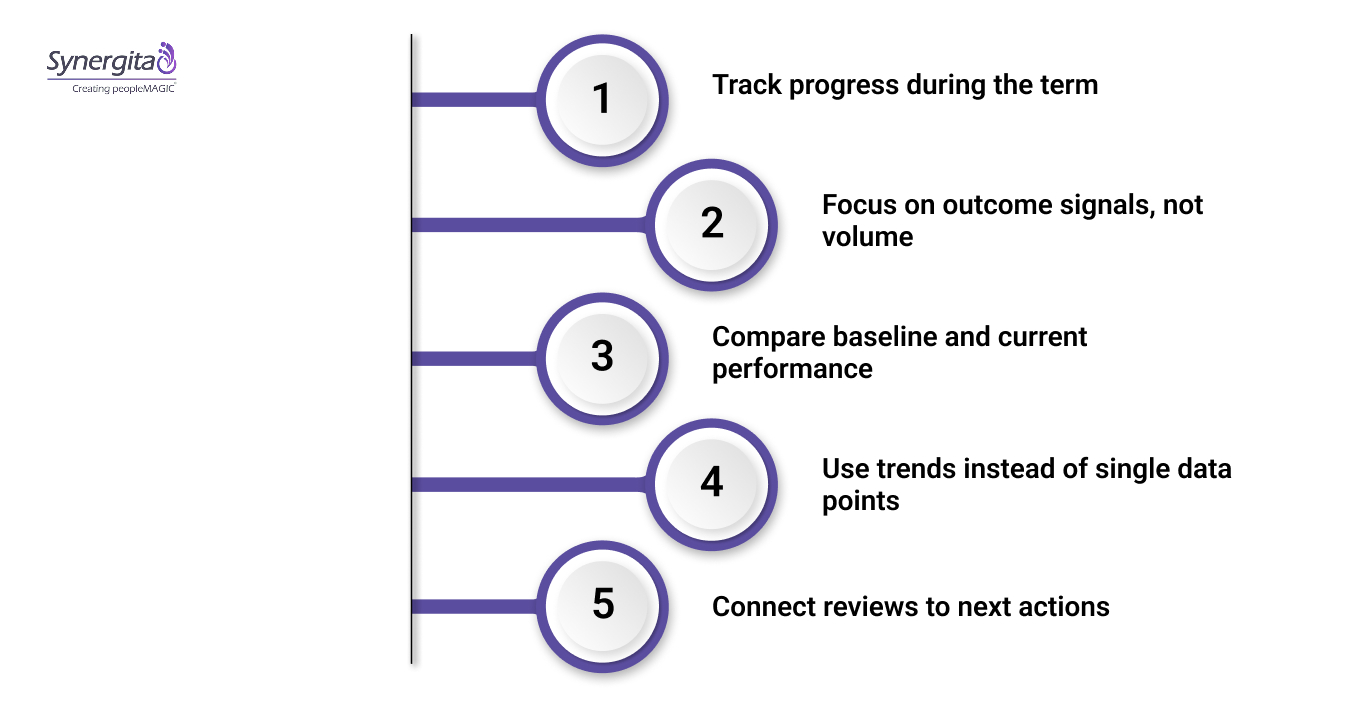
- Track progress during the term: Review key results weekly or biweekly to identify learning gaps, engagement drops, or support needs before students disengage fully.
- Focus on outcome signals, not volume: Measure changes in pass rates, progression milestones, or participation quality rather than counting activities completed by teams.
- Compare baseline and current performance: Establish clear starting points for each key result, allowing your team to see whether actions shift student outcomes meaningfully.
- Use trends instead of single data points: Look for consistent improvement patterns across weeks rather than reacting to isolated fluctuations or short-term anomalies.
- Connect reviews to next actions: Each review should end with specific steps your team will take to address gaps affecting student learning and completion.
With clear measurement practices in place, your team gains the clarity needed to reinforce what improves student outcomes consistently.
Conclusion
Student performance improves when goals guide daily academic decisions rather than sitting inside reports reviewed after problems escalate. This is how schools & universities can leverage OKRs for better student performance by giving leadership teams a shared structure for clarity, ownership, and timely action across each academic cycle.
When objectives focus on student outcomes and progress receive regular attention, faculty and support teams respond earlier to learning gaps. This shift helps schools and universities move from reactive measurement toward consistent academic progress driven by visible priorities.
Start a free OKR trial and give your team the clarity needed to turn student performance goals into consistent academic progress.
FAQs
1. What are the ways for students to improve their academic performance?
Students improve performance by setting clear study goals, following structured schedules, and seeking feedback before challenges grow. Consistent attendance, active participation, and early use of tutoring or advising services also support steady academic progress.
2. Can OKRs work alongside existing grading and assessment systems?
OKRs work alongside grades by focusing teams on progress drivers during the term rather than replacing formal assessments. This approach helps faculty respond to learning gaps earlier while grades continue to serve reporting and certification needs.
3. How long does it take to see results after introducing OKRs?
Many schools notice clearer priorities and better coordination within the first academic cycle. Improvements in student engagement and intervention timing often appear before changes in final grades or completion rates.
4. Do OKRs add extra work for faculty and staff?
When designed with restraint, OKRs reduce duplicate tracking and unclear priorities. Faculty and staff spend less time reacting to reports and more time focusing on actions that support student progress.
5. Are OKRs suitable for both K–12 schools and universities?
OKRs fit both settings when objectives reflect age-appropriate learning needs and support structures. The framework scales from classroom teams to large academic programs without changing its core approach.