
Measuring organizational effectiveness includes tracking activity as well as understanding how well strategies, processes, and people drive real outcomes.
McKinsey highlights that organizations prioritizing employee performance are 4.2 times more likely to outperform peers, with higher revenue growth and lower attrition. This demonstrates the tangible value of the right metrics.
Organizational effectiveness metrics give leaders a clear line of sight into productivity, engagement, financial performance, and operational efficiency. They reveal strengths, highlight bottlenecks, and inform decisions that align teams with strategic goals.
In this blog, we’ll unpack the most critical metrics, how to track them meaningfully, and common pitfalls, providing actionable insights for sustained success.
At a glance:
- Tracking metrics like employee engagement, productivity, and financial outcomes provides insight into alignment, efficiency, and cultural health.
- Measuring retention and innovation rates highlights workforce stability and adaptability.
- Customer satisfaction and leadership effectiveness indicate whether organizational decisions are translating into tangible results.
- Applying structured effectiveness models ensures a multidimensional view of performance and strategic alignment.
- Consistently tracking, analyzing, and linking these metrics to action enables data-driven decisions, process improvements, and sustained growth.
- Tools like Synergita help align objectives and measure progress across teams for actionable impact.
What Are Organizational Effectiveness Metrics?
Organizational effectiveness metrics are measurable indicators that show how well a company converts its resources, people, systems, and strategy into results. These metrics bridge the gap between vision and execution, revealing whether day-to-day operations are aligned with long-term goals.
For example, tracking employee engagement through quarterly pulse surveys can highlight cultural strengths or burnout risks before they impact performance. Revenue per employee helps gauge operational efficiency, while innovation rate (percentage of revenue from new products or services) reflects adaptability.
Unlike generic performance KPIs, these metrics provide a holistic view of how leadership, culture, and structure interact to drive sustainable success, not just short-term wins.
Why Measuring Organizational Effectiveness Matters
Measuring organizational effectiveness helps leaders see if their teams, strategies, and systems are actually creating results or just keeping operations running. It turns broad goals into measurable outcomes, enabling data-driven decisions and continuous improvement.
When organizations track effectiveness metrics, they can:
- Spot inefficiencies early: For example, if productivity per employee declines, it could signal unclear processes or misaligned priorities. Early detection allows leaders to address bottlenecks before they affect overall performance.
- Align goals across departments: Shared KPIs ensure every team is working toward the same business objectives. This alignment builds accountability and fosters collaboration between departments.
- Strengthen culture and engagement: Regular engagement metrics reveal how supported and motivated employees feel. When engagement drops, leaders can proactively act on feedback to improve morale and retention.
- Support long-term growth: Tracking effectiveness data helps identify which strategies truly drive sustainable results. This prevents reactive decision-making and supports consistent progress toward long-term goals.
- Improve decision-making quality: Data-backed insights replace gut-based choices, helping leaders prioritize initiatives that create measurable impact. This builds confidence in leadership decisions across the organization.
- Enhance adaptability and resilience: Monitoring effectiveness helps companies respond faster to market or operational changes. It ensures the organization remains agile even during disruption.
Regular measurement builds a culture of accountability and progress, where every improvement is intentional and supported by evidence.
Top 10 Organizational Effectiveness Metrics to Track
Tracking the right organizational effectiveness metrics gives leaders a clear picture of how well their people, processes, and strategies are performing. Here are the key metrics that matter most across performance, culture, and financial impact:
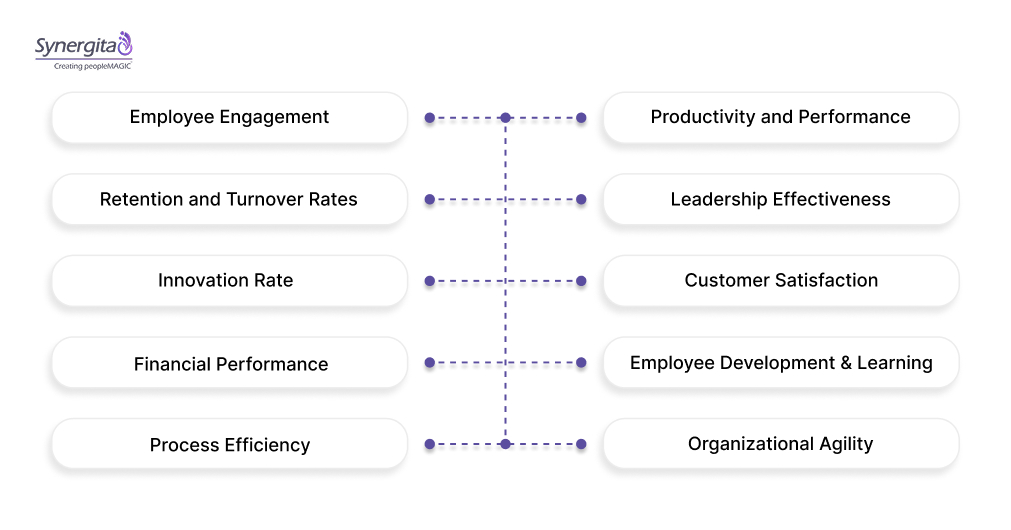
To truly understand how well your organization is performing, it’s not enough to look at revenue or output alone. These key metrics provide a full picture of organizational health, covering people, performance, and adaptability.
1. Employee Engagement
Employee engagement reflects how motivated, committed, and emotionally invested employees are in their work. High engagement drives productivity, innovation, and retention, while low engagement signals deeper cultural or leadership issues.
How to measure: Use engagement surveys, pulse checks, and sentiment analysis. Track participation rates, eNPS (Employee Net Promoter Score), and changes in engagement over time.
2. Productivity and Performance
This measures how efficiently your teams turn resources such as time, skills, and technology into tangible results. It helps assess whether workflows, tools, and leadership practices are enabling employees to perform at their best.
How to measure: Analyze output per employee, goal achievement rates, project completion timelines, or sales productivity metrics.
3. Retention and Turnover Rates
Retention indicates how well you’re keeping top performers engaged and aligned with organizational goals. High turnover often reflects leadership gaps, cultural issues, or poor workload management, all of which directly impact effectiveness.
How to measure: Track voluntary turnover rates, retention by department or tenure, and exit interview insights to uncover root causes.
Also read: Are You Tracking the Right Metrics for Employee Retention in 2025?
4. Leadership Effectiveness
Strong leadership is a cornerstone of organizational success. This metric assesses whether leaders are driving alignment, communicating clearly, and inspiring teams to perform consistently.
How to measure: Gather 360° feedback, leadership competency ratings, and team performance data. Regularly review how leadership behaviors influence engagement and results.
5. Innovation Rate
Innovation reflects your organization’s ability to adapt and improve continuously. Tracking it ensures that creativity and problem-solving are embedded in your culture, not just left to specific teams.
How to measure: Track the number of new ideas implemented, percentage of revenue from new products or services, and innovation participation rates in initiatives or hackathons.
6. Customer Satisfaction
Customers are the ultimate measure of effectiveness. High satisfaction shows that your teams are delivering value consistently and that internal processes support external success.
How to measure: Use Net Promoter Score (NPS), Customer Satisfaction (CSAT) surveys, and customer retention or referral data.
7. Financial Performance
Financial health validates whether your strategies and operations are translating into sustainable success. It’s not just about profit; it’s about efficiency, growth, and smart resource allocation.
How to measure: Track revenue growth, operating margin, cost-to-income ratio, and return on investment (ROI). Compare financial performance with engagement or productivity metrics for deeper insight.
8. Employee Development and Learning
This metric evaluates how effectively employees are growing skills, advancing careers, and participating in learning programs. Strong development initiatives boost engagement, prepare talent for future roles, and enhance organizational capability.
How to measure: Track training completion rates, skill assessment scores, internal promotions, and participation in development programs.
9. Process Efficiency
Process efficiency measures how well workflows and operations convert resources into results. Efficient processes reduce errors, save time, and support scalability, directly impacting performance and organizational effectiveness.
How to measure: Monitor cycle times, project delivery speed, error rates, and cost per process or transaction.
10. Organizational Agility
Organizational agility reflects the ability to adapt strategies, respond to market changes, and implement solutions quickly. High agility supports competitiveness, resilience, and long-term success.
How to measure: Track project pivot frequency, time to execute strategic changes, employee adaptability, and responsiveness to customer feedback.
With a solid grasp of key metrics, organizations can move beyond numbers to strategy. Effectiveness models provide the frameworks needed to interpret these metrics and align efforts for sustained growth and impact.

Organizational Effectiveness Models
Understanding organizational effectiveness requires more than tracking metrics—it’s about applying structured models that guide decision-making, align strategy, and optimize performance.
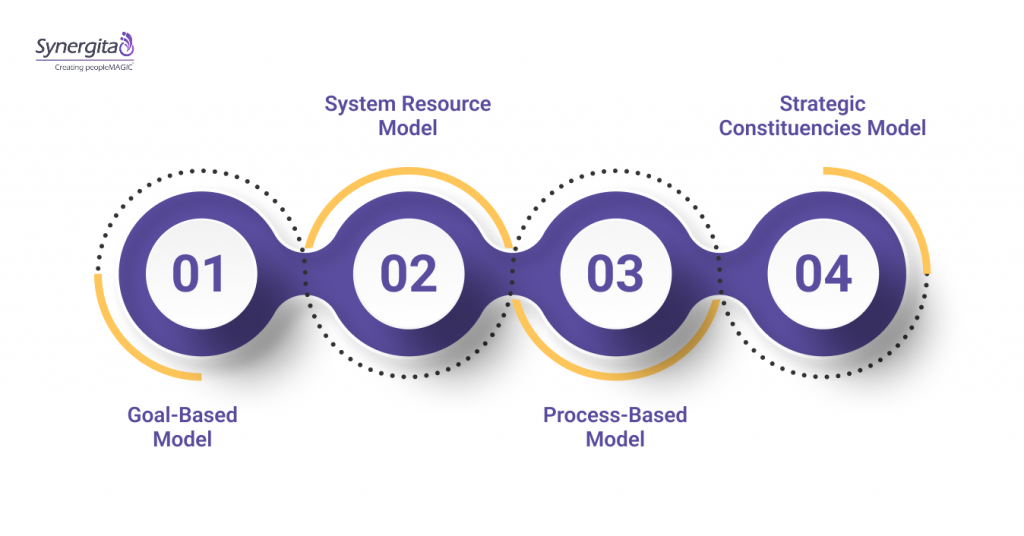
Here are the most widely used models and how they help:
1. Goal-Based Model
This model evaluates effectiveness based on the achievement of clearly defined organizational objectives. It measures whether strategic goals, such as revenue targets or market expansion, are being met. This approach ensures that teams remain aligned with the organization’s mission and priorities.
2. System Resource Model
This model focuses on an organization’s ability to acquire, manage, and deploy resources—financial, human, or technological—to sustain operations and growth. It highlights how efficiently resources are used to achieve objectives.
3. Process-Based Model
Effectiveness is evaluated through the efficiency, quality, and adaptability of internal processes. This model emphasizes workflow optimization, decision-making efficiency, and operational agility to improve overall organizational performance.
4. Strategic Constituencies Model
This approach assesses how well an organization satisfies the expectations of key stakeholders—employees, customers, investors, and partners. It prioritizes stakeholder alignment and long-term sustainability.
By applying these models, organizations gain a multidimensional understanding of effectiveness, allowing them to align strategy, optimize resources, and drive measurable outcomes across all levels.
Also read: Best Value-Based Performance Management Analytics Tools to Watch in 2025
How to Effectively Track and Analyze Organizational Effectiveness Metrics
Tracking organizational effectiveness metrics effectively requires turning insights into actionable strategies that improve performance and guide informed decision-making.
Let’s look at some practical steps to track and analyze metrics:
- Define clear objectives: Know what each metric is meant to reveal and why it matters for overall organizational performance. Clarifying objectives ensures teams focus on actionable outcomes rather than collecting irrelevant data.
- Use dashboards and visualization tools: Centralize metrics in real time, spot trends, and identify performance gaps. Visual tools also make it easier for leadership to communicate insights across teams.
- Set a regular review cadence: Conduct monthly or quarterly analyses to ensure insights remain timely and relevant. Routine reviews allow organizations to adjust strategies proactively rather than reactively.
- Compare across teams and departments: Identify high-performing areas and recurring challenges for targeted interventions. Benchmarking helps share best practices and focus improvement efforts where they matter most.
- Link metrics to action plans: Use insights to refine processes, address inefficiencies, and drive measurable improvements. Connecting metrics to action ensures data translates into tangible business results.
By following these steps, organizations can move beyond data collection to strategic insight, ensuring metrics actively support growth, alignment, and sustained effectiveness.
Enhance Organizational Effectiveness with Synergita
Tracking metrics alone isn’t enough to drive real impact. Synergita helps organizations translate insights into action by linking performance data with strategic objectives and OKRs, ensuring teams are aligned and outcomes are measurable.
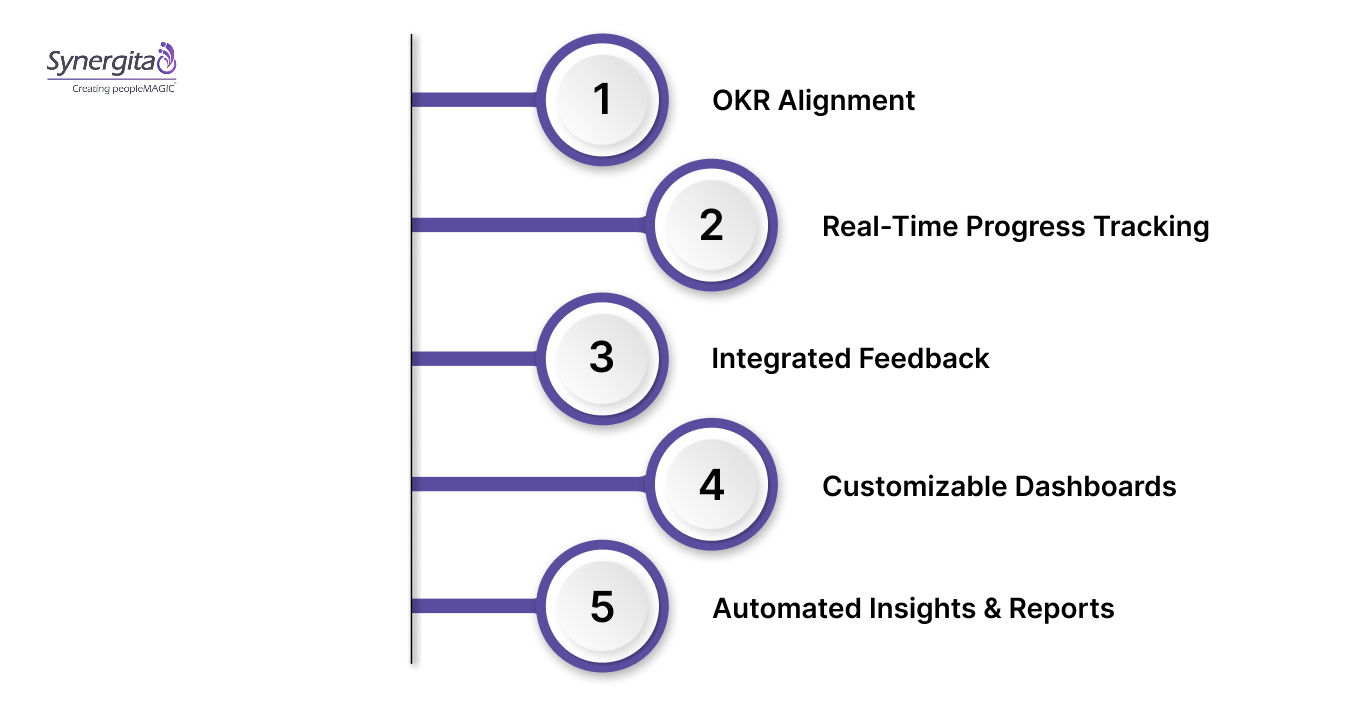
Key Features:
- OKR Alignment: Connect team and individual OKRs directly to organizational goals, ensuring every effort contributes to measurable outcomes.
- Real-Time Progress Tracking: Monitor key results and metrics in real time to identify bottlenecks and optimize performance.
- Integrated Feedback: Capture feedback from employees to complement performance metrics, providing a complete picture of organizational health.
- Customizable Dashboards: Visualize progress across departments, teams, or initiatives to inform leadership decisions and strategic planning.
- Automated Insights and Reports: Reduce manual tracking and generate actionable insights to continuously refine strategies.
With Synergita, you can measure and actively improve effectiveness by aligning work to outcomes, fostering accountability, and driving continuous performance improvement.
Book a demo to see how Synergita can optimize your organizational effectiveness initiatives.

FAQs
1. How do you measure organizational effectiveness?
Organizational effectiveness is measured by evaluating how well a company achieves its strategic goals. This includes tracking employee performance, engagement, financial outcomes, process efficiency, customer satisfaction, and innovation metrics.
2. What are the KPIs for organizational efficiency?
KPIs for efficiency assess how effectively resources are used to achieve goals. Common indicators include productivity rates, cost per output, cycle time, process adherence, resource utilization, and operational throughput.
3. What are organizational performance metrics?
Organizational performance metrics track progress toward strategic objectives. They encompass financial results, employee engagement, customer satisfaction, project completion rates, process efficiency, innovation adoption, and overall goal achievement.
4. Which indicator is commonly used to measure organizational effectiveness?
Common indicators include employee engagement scores, financial performance, customer satisfaction ratings, process efficiency metrics, and achievement of strategic objectives. These reflect both operational performance and the organization’s ability to meet goals.
5. What are the most important organizational effectiveness metrics?
Key metrics include employee engagement, productivity, financial performance, customer satisfaction, innovation adoption, and process efficiency. Tracking these helps leaders identify gaps and drive strategic improvements across the organization.
6. How can organizations improve effectiveness using metrics?
By regularly analyzing metrics, leaders can pinpoint bottlenecks, align resources with goals, enhance employee performance, optimize processes, and make data-driven decisions that boost overall organizational effectiveness.
7. Why is tracking organizational effectiveness metrics critical?
Monitoring these metrics ensures that strategic objectives are on track, highlights areas needing intervention, fosters accountability, and supports continuous improvement for long-term growth and competitive advantage.