



It is a common sight to see valuable 360-degree feedback reports gather dust on a shelf. Without proper follow-up, even the most comprehensive assessment becomes useless data. This failure is systemic: only 14% of employees strongly agree that their performance reviews inspire them to improve.
The success of your entire performance system hinges on transforming raw feedback into concrete action plans. You need a structured, high-impact process to translate insights into behavioral change. Ignoring the post-assessment phase guarantees stagnation, not growth, for your key talent.
This guide provides a definitive, authoritative playbook for the 360 debrief process. You will learn the definition, detailed steps, and essential best practices. We offer a consultant-level framework to ensure every review drives measurable leadership development.
Key Takeaways
- The 360 debrief is a dedicated, structured conversation to process multi-rater feedback.
- The primary goal is to create a focused, measurable Individual Development Plan (IDP).
- Structure the debrief around three distinct phases: Receive, Process, and Act.
- Prioritize only 2-3 development themes to maintain focus and drive true change.
- A certified coach or trained HR professional must facilitate the debrief conversation.
- Use performance management software to integrate feedback and track IDP progress.
What is a 360 Debrief?
A 360 debrief is the crucial, structured conversation that follows a 360-degree assessment. It involves a certified coach or manager discussing the multi-rater feedback report with the recipient.
The debrief’s purpose is not just to review scores but to deeply internalize the feedback’s meaning. It provides context, minimizes defensiveness, and converts data into actionable insights for growth.
This guided conversation transitions the individual from receiving data to owning their development journey. A proper 360 debrief is the linchpin of effective leadership development programs.
Now that the definition is clear, it is crucial to understand the high-stakes value of this conversation.
Importance Of 360 Debrief
A formalized debrief process separates developmental insight from a simple reporting exercise. Ignoring this step turns multi-rater feedback into a compliance activity lacking organizational impact.
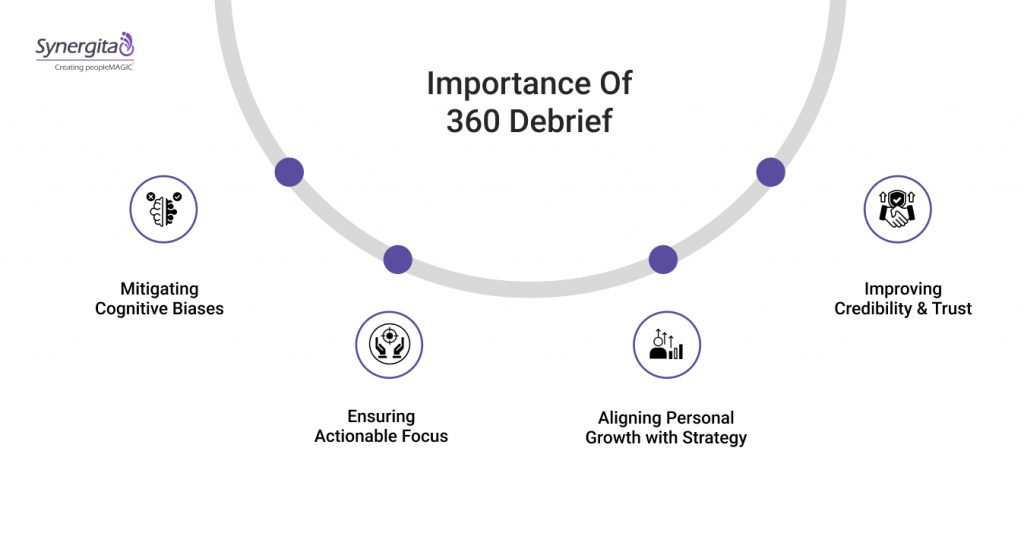
Here is why a structured debrief is critical for talent development:
1. Mitigating Cognitive Biases
The debrief facilitator helps the recipient avoid common psychological traps like confirmation bias. They ensure the individual confronts difficult feedback without becoming immediately defensive or dismissive. This neutral guidance is essential for honest self-assessment and acceptance of developmental needs.
2. Ensuring Actionable Focus
Raw 360 data can be overwhelming, often presenting ten or more areas for improvement. The facilitator guides the recipient to pinpoint the 2-3 most critical areas to address first. This focused approach prevents goal overload and makes the subsequent development plan achievable.
3. Aligning Personal Growth with Strategy
The discussion connects the feedback to specific organizational goals and leadership competencies. It helps the employee understand how improving a particular skill impacts their role and company strategy. This step reinforces the strategic value of the development effort for the organization.
4. Improving Credibility and Trust
Providing dedicated, professional support for processing complex feedback demonstrates commitment. It shows employees that the organization values their growth beyond just completing an appraisal form. This investment significantly strengthens employee trust and engagement in future HR initiatives.
Is your current 360 process failing to translate data into strategic, measurable growth for your key talent? Synergita integrates feedback directly with your core competencies, ensuring every development goal is aligned with business objectives. Book a demo to learn more.
The conversation clarifies development priorities, ensuring the employee focuses efforts where they matter most. It solidifies the review process as an investment in growth, not just an audit of past behavior.
Understanding the value is the first step, but execution requires a strict, formalized procedure.
8 Steps To Conduct An Effective 360 Debrief
The effectiveness of a 360 review is measured by the subsequent change in behavior, not the report’s size. A high-quality debrief requires a rigorous, multi-step process for maximum impact.
This structured approach moves the conversation logically from data review to commitment. Do not rush this process; dedicate the necessary time to each distinct phase.
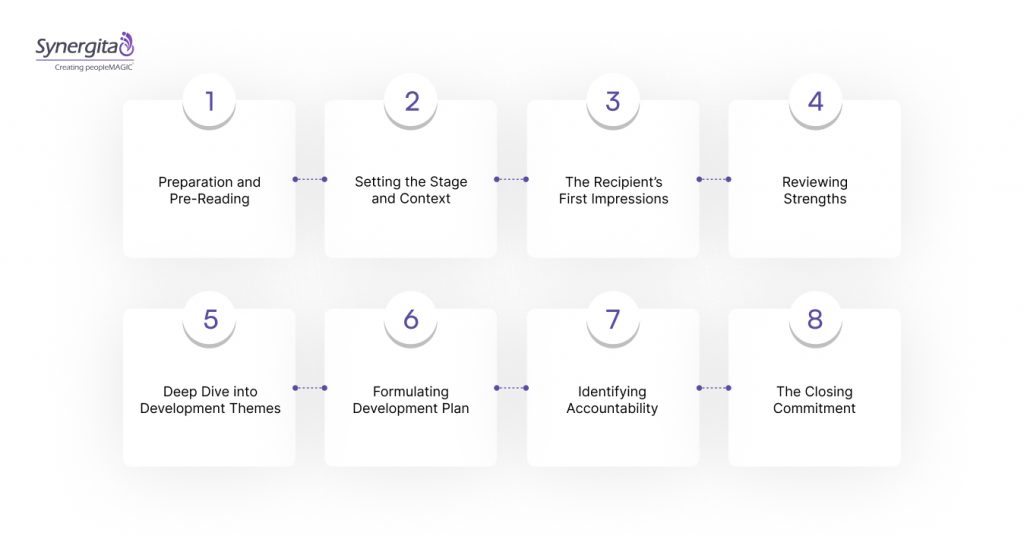
Follow these eight critical steps to execute a successful 360 debrief:
1. Preparation and Pre-Reading
The facilitator must thoroughly review the report and identify key themes before the meeting begins. They should also formulate open-ended, non-leading questions to initiate a productive conversation. This preparation ensures the facilitator guides the discussion rather than simply reading the document aloud.
Key actions to take:
- Highlight outliers: Identify significant score discrepancies between the self-rating and rater average scores.
- Draft opening questions: Prepare three open-ended questions focused on the recipient’s perceived development areas.
- Identify themes: Group low scores and common written comments into 2-3 overarching developmental themes.
2. Setting the Stage and Context
Begin the session by reiterating the confidentiality rules and the debrief’s developmental purpose. Clearly state that this is a conversation for growth, not a performance evaluation for compensation decisions. Establishing a safe and non-judgmental environment is crucial for eliciting honest engagement.
Key actions to take:
- State the ground rules: Reiterate the confidentiality of all rater feedback.
- Define the purpose: Clearly frame the session as future-focused development, not past performance judgment.
- Secure time: Confirm the full 90-minute or two-hour block is uninterrupted and dedicated.
3. The Recipient’s First Impressions
Ask the individual to share their initial reactions and key surprises before diving into the data. Listen actively to their self-perceptions and how they align with the aggregated rater feedback. This step validates their feelings and provides a baseline for discussing the subsequent results.
Key actions to take:
- Ask for ‘Ahas’: Prompt the recipient to share the one or two most surprising or validating insights.
- Listen actively: Note the recipient’s language and emotional response to gauge potential defensiveness.
- Address score gaps: Ask the recipient to comment on any notable gaps between their self-assessment and others’ views.
4. Reviewing Strengths and Commendations
Start the data review by focusing on the report’s high scores and areas of perceived strength. Acknowledging existing competence reduces defensiveness and builds confidence for tackling challenging areas. Spend ample time discussing how these strengths can be applied to future challenges.
Key actions to take:
- Validate the strengths: Use specific, positive comments to reinforce areas of high performance.
- Discuss strength application: Ask the recipient where they can leverage this strength more broadly in their role.
- Connect to self-efficacy: Ensure the individual recognizes that success in one area proves they possess the ability to change.
5. Deep Dive into Development Themes
Systematically explore the 2-3 most significant and consistent gaps identified by the raters. Use specific, anonymous rater comments to illustrate the behavior without revealing the source. Encourage the recipient to reframe difficult feedback into potential learning opportunities.
Key actions to take:
- Use ‘Impact’ language: Focus the discussion on the impact of the behavior on the team, not the intent.
- Prioritize two themes: Guide the recipient to select the two highest-impact themes for immediate action.
- Explore root causes: Ask probing questions about why the behavior might be occurring (e.g., lack of clarity, time pressure).
6. Formulating the Individual Development Plan (IDP)
Collaboratively define 2-3 specific, measurable goals based on the identified development themes. Translate abstract goals into concrete actions, behaviors, and timelines for immediate implementation. This transition from ‘insight’ to ‘action’ is the most vital step of the entire debrief.
Key actions to take:
- Ensure SMART goals: Verify that each goal is Specific, Measurable, Achievable, Relevant, and Time-bound.
- Define micro-behaviors: Translate the goal into 3-5 observable, new behaviors to practice immediately.
- Assign metrics: Determine the objective measure that will signal the goal has been successfully met (e.g., check-in frequency).
7. Identifying Accountability and Support
Determine who will act as the accountability partner, typically the direct manager or the coach. Discuss the required resources, such as training, mentorship, or specific project assignments for practice. Establish a specific check-in schedule to monitor progress on the new IDP goals.
Key actions to take:
- Identify the partner: Clearly name the individual responsible for follow-up and monitoring the IDP.
- Determine resources: List the specific tools, training courses, or mentors required for skill acquisition.
- Schedule a follow-up: Book the first progress check-in meeting immediately before ending the session.
8. The Closing Commitment
Conclude the debrief by summarizing the IDP and securing a verbal commitment from the recipient to execute the plan. Reaffirm the organization’s support for their growth and their importance to future success. End the session with a clear, positive statement about the journey ahead.
Key actions to take:
- Summarize the IDP: Verbally review the two core goals and the first three actions.
- Secure commitment: Ask for explicit confirmation that the recipient owns and will pursue the plan.
- Thank the raters (internally): Reiterate the value of the rater effort and the necessity of good follow-up.
Also read: How to Perform Effective Talent Reviews in 2025
Executing those steps is necessary, but high-impact debriefs also require adopting a professional mindset and specific advanced practices.
Best Practices For An Effective 360 Debrief Session
Conducting a debrief requires more than just following the sequential steps of the report. It demands sophisticated facilitation skills and a keen focus on psychological safety.
These advanced practices transform a routine review into a pivotal development moment for your talent. They address the nuances of human behavior that often derail less structured conversations.
Employ these consultant-level best practices for high-impact debriefs:
1. Facilitator Certification is Non-Negotiable
Only use trained, certified coaches or HR professionals who understand adult learning and emotional intelligence. An unskilled debriefer can inadvertently damage trust or cause the recipient to regress into defensiveness. The facilitator’s neutrality and expertise ensure the conversation stays constructive and goal-oriented.
2. Focus on Impact, Not Intent
Guide the recipient to understand the impact of their behavior on others, irrespective of their original intent. Explain that 360 feedback measures perception, which is the organizational reality for the individual’s effectiveness. This reframing shifts the focus from justifying actions to changing future conduct.
3. Adopt a Developmental, Future-Focused Mindset
Consistently frame the debrief as the beginning of a growth trajectory, not the conclusion of an assessment. Discourage excessive dwelling on past failures or searching for the identity of the rater. The conversation’s primary energy must be directed toward future behavior and skill acquisition.
4. Integrate Feedback with Core Competencies
Systematically link every development point back to your company’s official leadership competency model or OKRs. This ensures that the individual’s growth is directly aligned with the capabilities the organization needs most. It reinforces the idea that their personal development serves a strategic business purpose.
Need to maintain debrief quality across your organization? Synergita standardizes facilitation with certified frameworks. Book a demo to learn how we ensure consistent debrief quality.
Even with the best practices in place, common errors can still derail the entire process and waste the feedback investment.
Common Mistakes To Avoid During 360 Debrief
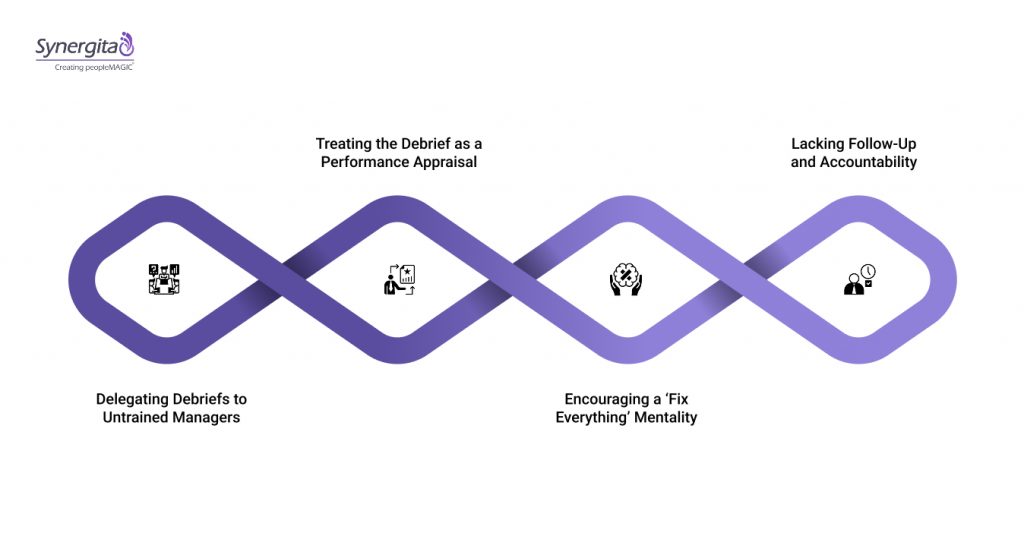
Even seasoned HR professionals can fall into predictable traps when conducting the 360 debrief. These errors, often subtle, can severely limit the value of the assessment and breed cynicism toward the process.
Avoiding these pitfalls requires disciplined adherence to the developmental protocol. An ineffective debrief risks confirming employee suspicions that the review process is a bureaucratic exercise.
Be vigilant against these common errors that sabotage the debrief process:
1. Delegating Debriefs to Untrained Managers
Expecting a manager without specific coaching training to handle the emotional complexity of multi-rater feedback is a major error. The manager’s relationship may bias the conversation, or they may lack the necessary facilitation skills. Use an external coach or a certified internal HR team for consistency and objectivity.
2. Treating the Debrief as a Performance Appraisal
Mixing the developmental 360 conversation with a formal, compensation-linked performance review destroys psychological safety. The recipient will focus on defending their rating rather than genuinely internalizing the feedback for growth. Always separate the 360 debrief from the official appraisal cycle completely.
3. Encouraging a ‘Fix Everything’ Mentality
Allowing the individual to attempt to address all perceived gaps in the report ensures that no real change occurs. Overcommitment leads to diluted effort, burnout, and eventual failure to meet any of the goals. Enforce the focus rule: select no more than two or three key development objectives.
4. Lacking Follow-Up and Accountability
Failing to schedule subsequent check-ins or integrate the IDP into a performance management system renders the debrief useless. Without ongoing progress monitoring, the initial commitment will fade within a few weeks. Ensure the IDP is tracked and regularly reviewed by the accountability partner.
Also read: How Can Performance Management Software Boost Revenue Growth?
Addressing these mistakes manually is challenging; this is where unified technology becomes essential.
Streamlining 360 Debriefs With Synergita
Manual 360 processes create administrative burdens and inconsistent experiences. Leaders struggle to track feedback and connect it to development plans. This variability undermines the process’s credibility.
Synergita automates and standardizes the entire 360 feedback lifecycle. Our platform provides structured debrief tools and progress tracking. This ensures consistent, measurable development outcomes.
The platform delivers these specific capabilities:
- Multi-Rater Feedback Collection: Collect performance insights from peers, managers, and external stakeholders for a truly unbiased review.
- Blind Spot Identification: Uncover critical perception gaps and blind spots for employees across various organizational competencies.
- Upward Feedback Loop: Provide managers with positive reinforcement and candid insights on how their leadership behavior is perceived by their direct reports.
- Customizable Review Workflows: Configure the process to align with your organization’s unique competency model and specific development objectives.
- Targeted Development Plans (IDP): Integrate feedback results directly into specific, trackable Individual Development Plans.
Transform your 360 feedback from a one-time event into a continuous growth cycle for your organization.

Conclusion
Effective 360 debriefs transform anonymous feedback into actionable development plans. They build self-awareness and drive meaningful behavior change. Mastering this process maximizes your leadership development investment.
Consistent, high-quality debriefs require more than manager training. Synergita provides the infrastructure to standardize and scale 360 feedback conversations. Our platform ensures every feedback session delivers maximum impact.
Book a demo to see how Synergita’s 360 module creates consistent development conversations across your organization.
FAQs
Q. What is the purpose of a 360 debrief?
The debrief helps employees understand and interpret their multi-rater feedback. It translates data into specific development actions and goals. This conversation ensures feedback drives behavior change.
Q. How long should a 360 debrief take?
Allow 60-90 minutes for a comprehensive feedback discussion. Complex reports or senior leaders may require additional time. Rushing the conversation reduces its effectiveness.
Q. Who should conduct the 360 debrief?
Trained managers typically facilitate debriefs for their direct reports. HR business partners can coach managers or handle sensitive situations. External facilitators sometimes handle executive-level feedback.
Q. How should you handle conflicting feedback?
Help employees look for patterns rather than focusing on contradictions. Explore how different behaviors might appear in various contexts. Identify the most consistent themes across rater groups.
Q. What if an employee becomes defensive?
Acknowledge their feelings and return to specific, observable examples. Refocus the conversation on development rather than criticism. Consider pausing and rescheduling if emotions escalate.
Q. When should you conduct follow-up sessions?
Schedule check-ins at 30, 60, and 90 days after the initial debrief. Review progress on action plans and adjust strategies as needed. Consistent follow-up maintains development momentum.