



Research shows that organizations implementing structured PIPs see a 30% increase in engagement and a 20% boost in productivity. For HR leaders, this highlights an important truth: when designed strategically, a Performance Improvement Plan (PIP) is not a punishment. It is a framework for accountability, coaching, and trust-building.
This guide helps HR professionals and managers understand how to use a 30-day PIP effectively—when to apply it, how to structure it, and how to ensure outcomes are fair and evidence-based.
Key Takeaways:
- What a 30-day PIP really means: Clear definition and how it differs from longer plans.
- How to navigate step by step: A week-by-week roadmap that breaks thirty days into achievable milestones.
- Mistakes to avoid: Common missteps that quickly derail progress and how to steer clear of them.
- What managers should do: Best practices to design a fair, structured, and supportive plan.
- What happens after the plan: Realistic outcomes employees can expect once the thirty days are complete.
What is a 30-Day Performance Improvement Plan?
A Performance Improvement Plan (PIP) is a formal, documented process that outlines performance gaps, sets measurable goals, and defines the timeframe for improvement. A 30-day version is a compressed, high-intensity plan used when urgency is critical, such as during probation, in client-facing roles, or when compliance concerns cannot wait.
Unlike 60- or 90-day PIPs, which allow gradual improvement, a 30-day plan requires visible, week-by-week progress.
Why HRs Use Short-Term or 30-Day PIPs
HRs typically use short-term PIPs in:
- Probationary reviews: when a new hire must prove fit quickly.
- Client-impact roles: where poor service is already affecting relationships.
- Time-sensitive projects: where missed deliverables risk critical delays.
- Behavioral/compliance issues: where immediate correction is essential.
The short duration signals urgency and accountability. It is less about long-term skill building and more about correcting gaps quickly to protect business outcomes.

How to Navigate a 30-Day PIP
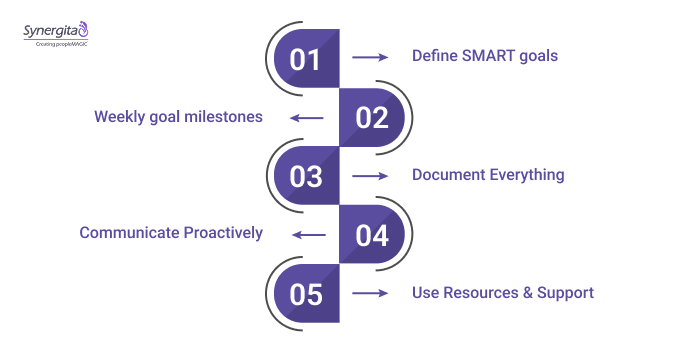
A 30-day PIP does not allow for vague effort. You need a clear approach that shows measurable progress each week. Here is how to move through it with structure and confidence.
#1 Define SMART goals
Avoid vague instructions. Every target should be Specific, Measurable, Achievable, Relevant, and Time-bound.
- Instead of: “Improve client communication.”
- Use: “Respond to 90% of client emails within 24 hours for 30 days.”
#2 Break Goals Into Weekly Milestones
Design the PIP as a week-by-week roadmap:
| Week | Focus Area | Key Actions | Success Indicator |
| 1 | Understanding | Align tasks with the manager | Agreement on priorities |
| 2 | Execution | Apply changes and practice skills | At least 20% improvement |
| 3 | Review | Mid-point check-in and adjustments | Course corrected |
| 4 | Delivery | Complete required results | Target achieved |
#3 Document Everything
In a 30-day PIP, documentation is non-negotiable. With such a short timeline, HRs and managers cannot rely on memory, perception, or informal notes. Documentation is what makes the process defensible, transparent, and fair.
Why it matters for HRs:
- Protects against legal or compliance risks if termination follows.
- Ensures decisions are based on evidence, not subjective judgment.
- Provides a clear trail that shows the organization offered support and opportunities for correction.
- Builds credibility with employees—when feedback is recorded, it’s harder to dismiss as “bias.”
Best practices for HRs:
- Require managers to log every check-in, feedback point, and adjustment in a central system.
- Use standardized PIP templates with sections for goals, progress, and outcomes.
- Encourage employees to co-sign weekly summaries to confirm alignment.
- Store records in your HRMS or performance management software for auditability.
How Synergita helps: Managers can update progress logs in real time, and both parties have access to a shared record of actions, feedback, and outcomes. This eliminates “he said, she said” scenarios and strengthens organizational fairness.
#4 Communicate Proactively
Silence is the fastest way a PIP fails—for both the employee and the organization. A 30-day plan requires structured, proactive communication where managers consistently reinforce expectations and employees get timely course corrections.
Why it matters for HRs:
- Prevents last-minute surprises at the end of 30 days.
- Creates psychological safety—employees know where they stand.
- Builds a culture of accountability where feedback flows both ways.
- Demonstrates to leadership that HR is running a fair and transparent process.
Best practices for HRs:
- Mandate weekly check-ins between manager and employee (minimum).
- Encourage data-backed discussions (e.g., “customer tickets resolved increased by 15% this week”).
- Train managers to balance corrective feedback with recognition of small wins.
- Provide HR oversight by attending midpoint reviews, ensuring alignment and fairness.
#5 Use Resources and Support
A 30-day PIP is not just about monitoring—it’s about enabling success. If an employee fails because resources were unavailable, the plan becomes legally and ethically questionable.
Why it matters for HRs:
- Demonstrates the organization’s commitment to improvement, not replacement.
- Increases the employee’s chances of success, protecting recruitment investments.
- Reduces perceptions of bias—support shows the plan is a fair opportunity.
- Improves manager credibility—employees see they are being coached, not abandoned.
Best practices for HRs:
- Audit resource gaps at the start of the PIP (training, mentorship, tools).
- Assign a mentor or buddy for quick support.
- Provide targeted learning materials (e.g., sales scripts, compliance refreshers, or technical courses).
- Monitor whether employees are actively using the resources provided.
Mistakes You Should Avoid as an Employer
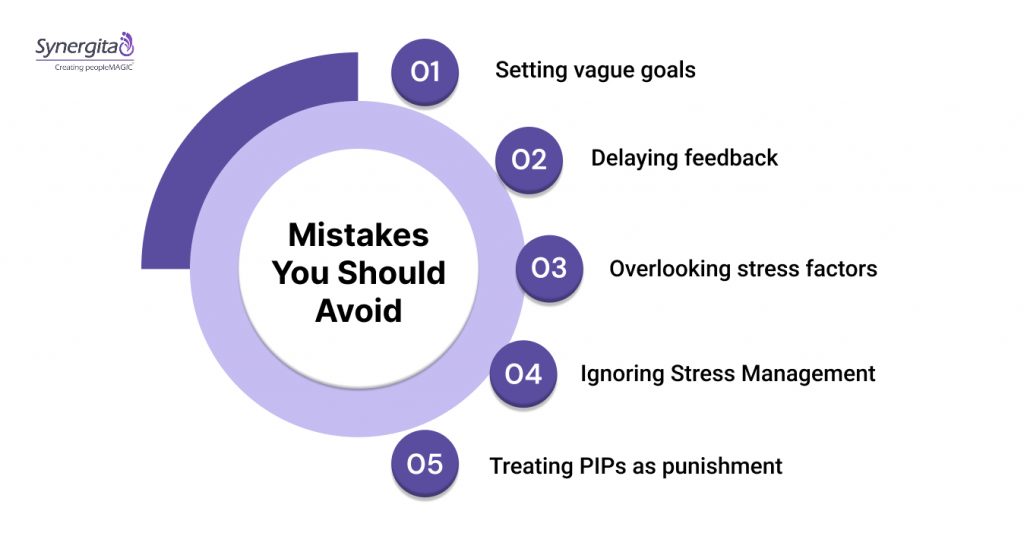
Unlike longer plans, the compressed timeline means that poor design or weak execution can quickly undermine fairness and credibility. For HRs, avoiding these mistakes is just as important as setting the right goals. When employees perceive a PIP as unfair, they disengage—or worse, challenge the process legally.
Here are the most common pitfalls HRs should watch for:
#1 Setting vague or unrealistic goals
Vague goals (“be more productive”) leave room for subjective interpretation. Employees may argue later that the success criteria were never clear. Unrealistic targets create the impression that the PIP was designed to fail, damaging trust in HR and leadership.
#2 Delaying feedback
In a 30-day plan, waiting until the end for evaluation leaves no time for correction. Employees blindsided by “failure” at day 30 are more likely to contest the process.
If you consider using platforms like Synergita, continuous feedback flows in real time, ensuring employees never guess whether they’re on track.
#3 Overlooking stress factors
A 30-day PIP creates natural pressure. Unmanaged stress leads to burnout, errors, and even attrition. High attrition after PIPs raises questions about whether the organization genuinely supports employees.
#4 Ignoring Stress Management
High pressure can lead to overwork and burnout. When exhaustion sets in, mistakes increase. Employees who pace themselves, take breaks, and manage stress tend to perform more steadily throughout the plan.
#5 Treating PIPs as punishment
If employees perceive the PIP as purely disciplinary, they disengage rather than try to improve. This perception damages the employer brand and discourages future openness to feedback.
How Managers Should Run a Fair 30-Day Performance Improvement Plan
A thirty-day PIP is not just a test for the employee; it is also a reflection of how effectively a manager can guide improvement under pressure. The outcome depends on whether the plan is designed with fairness, clarity, and consistent feedback.
#1 Set SMART Goals Instead of Vague Targets
Employees cannot succeed if the plan is built on ambiguous expectations. Every objective in the PIP should follow the SMART framework: Specific, Measurable, Achievable, Relevant, and Time-bound.
For example, instead of writing “improve communication with clients,” set the target as “respond to 90 percent of client emails within 24 hours for the next four weeks.” Specific goals like this reduce confusion and allow managers to evaluate progress with evidence rather than opinion.
#2 Provide Feedback Frequently
A thirty-day timeline is too short to wait until the end for evaluation. Managers should build in structured touchpoints, such as weekly reviews, to discuss progress openly. These conversations should focus on evidence: what has improved, what remains behind, and what corrective actions can be taken before time runs out.
#3 Offer Support, Not Just Monitoring
Monitoring performance without offering support makes the plan feel like a setup for failure. Managers should identify the tools, training, or mentoring that can help the employee. Even in a compressed thirty-day plan, giving access to resources signals that the company is invested in improvement rather than replacement.
#4 Document Progress Objectively
Managers must maintain detailed records of expectations, check-in notes, and progress updates. Documentation ensures transparency, protects against bias, and provides a clear narrative of whether improvement happened. This is as much about protecting the organization as it is about guiding the employee.
#5 Balance Accountability With Encouragement
Although a thirty-day PIP carries high stakes, employees are more likely to succeed if they feel the plan is an opportunity rather than a final warning. Managers who acknowledge small wins and reinforce visible effort encourage persistence. Striking this balance can mean the difference between disengagement and a genuine turnaround.
How Synergita Helps Employees and Managers Succeed in a 30-Day PIP
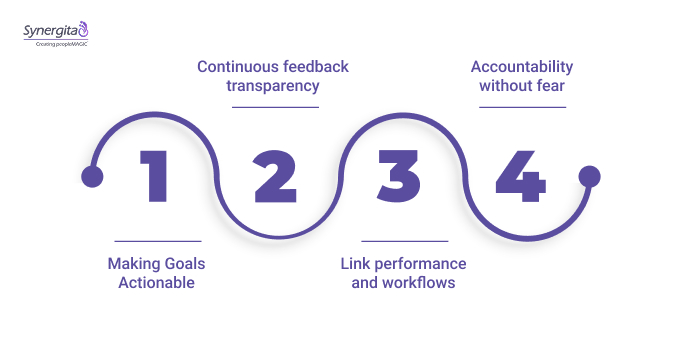
A thirty-day PIP leaves little room for assumptions. Both the employee and the manager need clarity, structure, and real-time tracking to know if progress is on course. This is where Synergita changes the experience from stressful guesswork to transparent improvement.
#1 Making Goals Actionable
In many PIPs, objectives are broad: “improve productivity” or “be more responsive.” Synergita helps managers set clear SMART goals that translate into daily actions. For example, a sales associate can see weekly targets broken down into calls, proposals, and conversions, with progress automatically tracked. This gives the employee certainty and the manager measurable evidence.
#2 Creating Transparency Through Continuous Feedback
Waiting thirty days to find out if a PIP succeeded is risky. Synergita enables managers to provide continuous feedback as soon as progress is visible. If a customer service agent is improving ticket resolution times, the manager can acknowledge it immediately. If gaps remain, corrective input is shared in real time. This keeps the plan fair and allows employees to adjust quickly instead of being surprised at the end.
#3 Connecting Performance With Workflows
Performance issues often show up in day-to-day work systems. A product engineer struggling to meet sprint deadlines in Jira can have their PIP goals connected directly to tasks in the same platform through Synergita’s integration. This way, both the manager and employee track improvement in real time without extra reporting.
#4 Building Accountability Without Fear
Synergita’s structured approach ensures that progress is documented, visible, and tied to specific outcomes. For employees, this creates a sense of fairness because improvement is measured with evidence. For managers, it reduces subjectivity and builds trust that decisions are based on results, not perceptions.
Conclusion
A thirty-day PIP is not just a challenge for the employee. It is a test of how clearly an organization defines expectations, how fairly it measures progress, and how quickly it provides feedback. In many cases, what decides the outcome is not effort alone but whether the process is transparent and structured.
Synergita brings that structure. Goals become measurable. Progress is tracked in real time. Feedback flows continuously instead of arriving too late. The result is a process that feels fair, gives employees a real chance to succeed, and gives managers confidence in their decisions.
If your organization is ready to turn PIPs from a dreaded formality into a genuine path for improvement, now is the time to see how Synergita can make it possible. Book a demo today and discover how performance conversations can move from stressful to constructive.
FAQs
Q: What is a 30-day performance improvement plan?
A: A 30-day performance improvement plan (PIP) is a structured document identifying specific performance gaps, setting measurable goals, and providing employees with a defined thirty-day period to show progress. It’s typically used when immediate results are critical, ensuring accountability while offering guidance and support to achieve expected performance.
Q: Can a PIP be for 30 days?
A: Yes. While many PIPs last sixty or ninety days, a thirty-day PIP is appropriate when rapid improvement is required, such as during probation, on high-stakes projects, or when urgent performance issues arise. It provides a concise timeline for accountability while keeping expectations clear and achievable.
Q: What is an example of unprofessional behavior in a PIP?
A: Unprofessional behavior during a PIP includes missing deadlines, skipping scheduled check-ins, showing defensiveness to feedback, or failing to implement corrective actions. These behaviors undermine trust, hinder improvement, and indicate resistance to accountability, which can reduce the likelihood of successfully completing the performance improvement plan.
Q: Can an employee survive a PIP?
A: Absolutely. Many employees successfully complete a PIP by clarifying expectations, demonstrating consistent progress, communicating openly, and embracing feedback. Survival depends on commitment, proactive problem-solving, and adapting behaviors, transforming the plan from a warning into an opportunity to rebuild trust and strengthen performance.
Q: What happens after a 30-day PIP?
A: After a 30-day PIP, if goals are met, employees typically return to standard performance management with renewed trust. If improvement is incomplete, the plan may be extended, the employee reassigned, or, in some cases, termination may occur. Outcomes depend on performance progress and alignment with organizational expectations.