



Unlocking team performance isn’t just about finishing tasks or closing tickets. True success happens when your team’s work advances your company’s big-picture goals. But what if goals feel scattered and motivation fades?
This is where OKR 101 helps. How do you get everyone aligned with clear, ambitious goals and measurable key results? This simple framework turns scattered efforts into a focused, powerful force.
With OKRs, your team achieves real progress and meaningful impact. It brings clarity, focus, and energy to the work that matters most. In this blog, we’ll explore OKR basics, common pitfalls, and how to empower lasting success.
Key Takeaways:
- OKR 101 enables your team to align around clear, ambitious objectives that directly contribute to strategic business goals, driving measurable outcomes.
- This framework shifts teams from task-driven busywork to focused efforts that move the company forward with purpose and energy.
- Key Results are specific, quantifiable, and time-bound milestones that transform broad goals into actionable progress, offering absolute clarity on success.
- Aligning and cascading OKRs creates transparency at all organizational levels, builds accountability, boosts motivation, and scales growth effectively.
- Avoid common OKR pitfalls by crafting inspirational objectives paired with measurable, challenging, and achievable Key Results, supported by regular check-ins.
- Synergita’s easy-to-use platform enhances OKR success with automated alignment, real-time progress analytics, and seamless integration with tools like Jira to link daily work to big-picture strategy.
Why You Need an OKR 101 Approach
Teams often struggle to stay focused and work on the right priorities. In many organizations, a significant majority of employees lack a clear understanding of the company’s overarching strategy and how their daily work genuinely contributes to it. That’s why an OKR 101 approach is so valuable, as it establishes the clear, measurable alignment needed to overcome this strategic disconnect.
OKRs clarify priorities, helping your team stop juggling everything and start owning measurable results that drive success. Plus, regular check-ins keep the team flexible and ready to adapt. With OKR 101, your team transitions from working independently to collaborating to drive business growth.
To make this shift from scattered tasks to strategic focus, it’s essential to understand exactly what OKRs are and how they transform your team’s daily work into meaningful business outcomes.
What Are OKRs?
Objectives and Key Results (OKRs) move your team from busywork to intentional achievement. Instead of endless task lists, OKRs define:
- Objectives: The meaningful goals your team strives to achieve.
- Key Results: Quantifiable outcomes that signal progress toward those objectives.
OKRs clarify why efforts matter. They keep teams focused, ensure work aligns with strategy, and replace vague intentions with measurable impact.

How OKRs Came to Be: From Concept to Practice
OKRs originated in Silicon Valley, but their roots date back to management innovations from the late 20th century. Leaders adopted OKRs to ensure fast-moving teams didn’t lose sight of long-term vision. Today, OKRs help companies—large and small—build transparency and psych up teams for high performance.
OKR 101 Benefits: What’s in It for You?
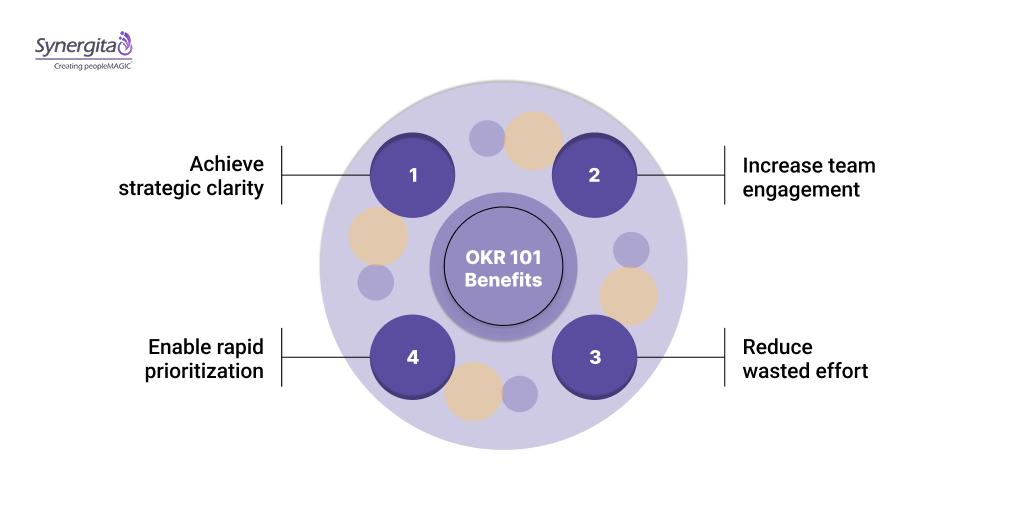
- Achieve strategic clarity: Objectives set the direction, while Key Results track outcome, not just completion.
- Increase team engagement: Individuals see how their work contributes to bigger goals.
- Reduce wasted effort: Every sprint, milestone, or campaign serves a distinct purpose.
- Enable rapid prioritization: When every task is mapped to an objective, decision-making becomes easier and smarter.
How You Measure Success with OKRs
Key Results aren’t just simple to-dos. Think of them as clear signposts showing your progress—they’re specific, measurable, and backed by data. These key indicators help your team see exactly what success looks like and what steps to take to reach it.
For example:
Objective: Improve customer satisfaction
Key Results:
- Achieve a Net Promoter Score (NPS) greater than 65
- Reduce customer response time to under 2 hours
Effective Key Results take big ambitions and turn them into clear, concrete actions. They give your team an easy way to see progress at a glance, keep their focus on what matters, and track the impact they’re making in real time.
Characteristics of Effective Objectives
Great objectives do more than just guide—they inspire and engage your team both emotionally and strategically. Ask yourself: Would this objective excite and motivate your team? Does it connect directly to your company’s mission and bigger purpose?
Practical objectives share these key characteristics:
- They are inspirational and bold, pushing teams to stretch beyond the usual
- They align with your business goals, ensuring every effort drives real impact
- They are specific enough to steer meaningful outcomes and actionable steps
Avoid vague or generic objectives like “Do better at sales.” Instead, focus on clear targets such as specific growth percentages, new market opportunities, or innovation milestones that make the ambition tangible and achievable.
Characteristics of Great Key Results
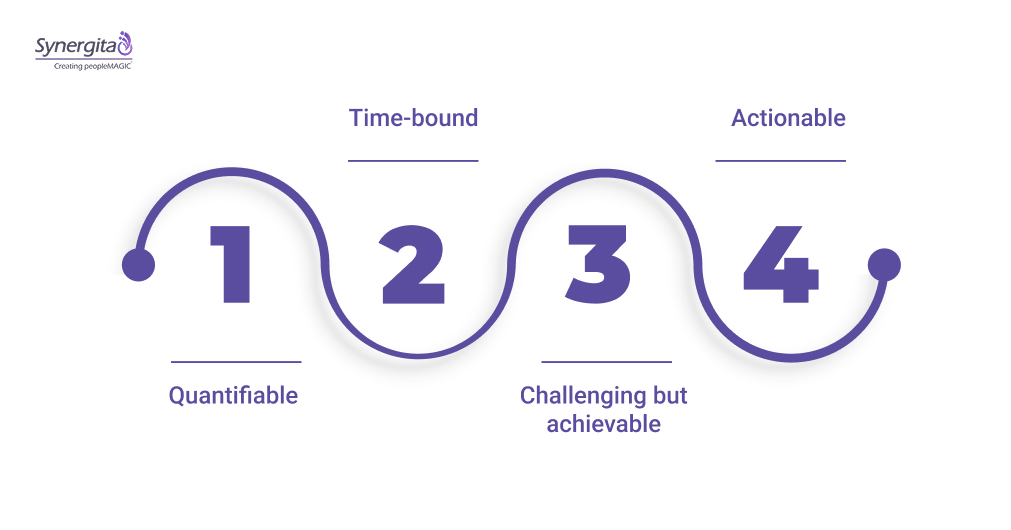
Powerful Key Results have a clear checklist:
- Quantifiable: They use numbers, percentages, or yes/no metrics so there’s no guesswork about progress.
- Time-bound: Deadlines add urgency, keeping everyone focused and moving forward.
- Challenging but achievable: They push your team to stretch their limits—but not so far that success feels impossible.
- Actionable: They clearly show progress and highlight where the gaps still are so that you can adjust quickly.
OKRs vs. Traditional Goals
OKRs outpace traditional goals by focusing on results, not just activities. Instead of tracking tasks like support tickets completed, OKRs measure real impact like improved customer satisfaction or higher retention.
| Approach | Traditional Goals | OKRs |
| Focus | Activity | Outcomes |
| Alignment | Siloed, department-level | Company-wide, cross-functional |
| Visibility | Burn down charts | Real business impact |
| Adaptability | Static for the year | Reviewed and recalibrated quarterly |
| Engagement | Limited | Everyone sees their contribution |
The Role of Initiatives
Initiatives are the specific projects and actions that help achieve your Key Results. They connect goals to real outcomes. For example:
Key Result: Acquire 500 new users
Possible initiatives:
- Targeted Marketing Campaigns
Run focused campaigns to attract your ideal audience. - Referral Programs
Encourage existing users to bring in new ones. - Onboarding Optimization
Improve the user experience to boost engagement.
Clear initiatives map out the steps to turn goals into results, keeping your team aligned and focused on what matters.
Aligning and Cascading OKRs
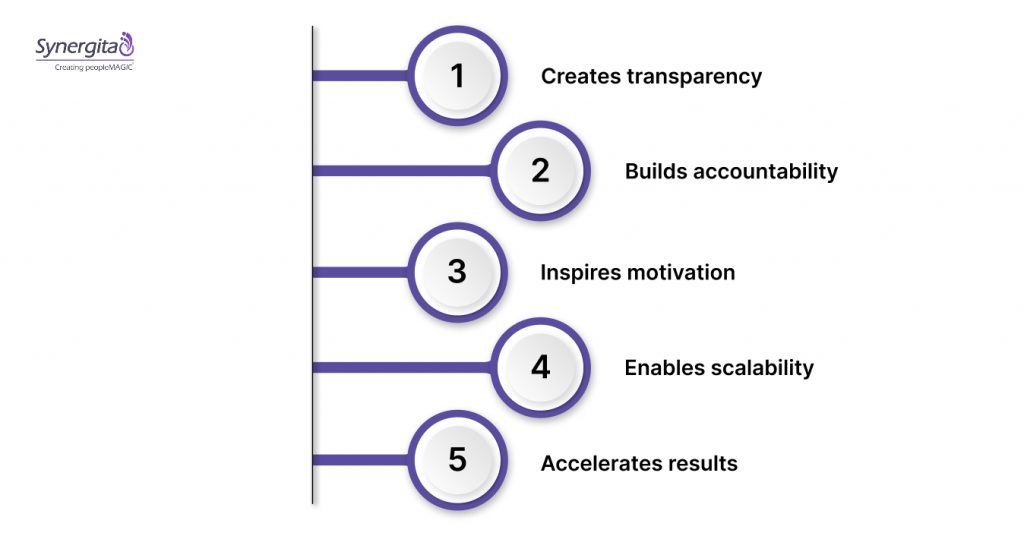
Alignment is the engine that powers rapid growth. OKRs provide a structured way to cascade objectives—from the company level, through departments, down to individuals—ensuring every effort supports your business strategy.
Here’s why cascading OKRs matter:
- Creates transparency: Everyone sees how their work connects to bigger goals.
- Builds accountability: Clear alignment means people know what they’re responsible for.
- Inspires motivation: Teams feel engaged knowing their contributions matter.
- Enables scalability: Cascading goals keep even large organizations moving in sync.
- Accelerates results: When every level is aligned, your team achieves more, faster.
This seamless flow of objectives breaks down silos and turns strategy into action, building a team that’s focused, agile, and ready to deliver.

Best Practices for Writing OKRs
Setting great OKRs means focusing on what matters and creating ambitious yet achievable goals. Clear and well-defined OKRs inspire your team, provide measurable targets, and keep progress on track.
- Start with strategy: What matters most this quarter?
- Draft bold objectives—make them inspiring, not routine.
- Define 2–5 Key Results per objective. Less is more.
- Use numbers and deadlines: “By Q2, increase renewal rate to 92%.”
- Review progress weekly; recalibrate when Key Results go off-track.
- Connect tasks to Key Results—tools like Synergita’s Jira integration turn busywork into strategic impact.
Avoid These OKR Mistakes
Even the best OKRs can miss the mark if you’re not careful. Avoiding common mistakes is key to keeping your team focused and moving forward.
- Writing objectives that are too broad, such as simply aiming to “grow the business”
- Choosing Key Results that can’t be measured clearly, like stating “improve user experience” without specifics
- Neglecting regular check-ins and updates to track progress
- Focusing only on activities instead of the actual outcomes and impact
Keep OKRs flexible. If a Key Result isn’t driving progress, adjust it.
Ready to Put OKR 101 Into Action?
Ready to put OKR 101 into action and transform the way your team works? Synergita makes OKR adoption simple, scalable, and easy to track. With automated alignment and real-time progress analytics, your team can focus on driving the outcomes that matter most.
Synergita’s seamless Jira integration ensures every sprint, ticket, and campaign directly supports your key business goals. This unified approach helps eliminate wasted effort and keeps everyone moving toward the same targets with clarity and purpose.
Start your free trial today and turn misalignment into clarity. Discover how Synergita connects strategy and execution, empowering your team to achieve rapid, measurable success.
And if you want to deepen your OKR knowledge, be sure to check out our blog for expert insights and practical tips.
FAQs
1. Can OKRs work for teams of all sizes and industries?
Absolutely. OKR 101 is a versatile approach that helps any team, big or small, stay focused on what matters most and drive measurable outcomes, regardless of industry or structure.
2. How often should teams review and update their OKRs according to OKR 101 best practices?
Regular check-ins, ideally weekly or biweekly, keep OKRs flexible and relevant, allowing teams to recalibrate quickly and stay aligned with shifting priorities.
3. What makes a good Key Result in the OKR 101 framework?
Good Key Results are specific, quantifiable, time-bound, and challenging yet achievable, giving your team clear metrics to track progress and adjust efforts accordingly.
4. Can OKRs replace traditional performance reviews, or should they be used together?
OKRs work best alongside agile performance management, offering continuous focus and measurable outcomes, while reviews provide structured development conversations.