



University leaders face a widening gap between grand strategic plans and daily departmental silos. Annual academic reviews often fail to drive the rapid institutional changes required in a competitive higher education market. You cannot achieve global prestige if your faculty and administrative goals are fundamentally disconnected.
Strategic alignment requires a shift from passive compliance to active, measurable growth targets. Implementing a structured framework allows you to synchronize research output with student retention and institutional funding. It provides the clarity needed to turn abstract academic missions into concrete results.
In this guide, we provide a blueprint for implementing the university OKR framework across your institution. We share 15 specific examples tailored for academic departments and administrative offices to ensure collective progress.
Quick Look
- Align mission to action: Map high-level university goals directly to department-level research and teaching objectives.
- Respect academic autonomy: Focus OKRs on outcomes rather than micromanaging how faculty conduct their research.
- Cycle for semesters: Adapt the standard quarterly OKR cadence to match the academic year and semester milestones.
- Prioritize student outcomes: Use Key Results to drive measurable improvements in retention, graduation rates, and career placement.
- Data over intuition: Move away from anecdotal evidence toward real-time analytics for tracking institutional health.
What are University OKRs?
University OKRs are a strategic goal-setting framework designed to align academic research, student success, and administrative operations. The Objective sets an ambitious, qualitative direction for a college or department.
Key Results provide the quantitative metrics that prove the institution is meeting its strategic milestones. This framework ensures that every faculty member and staff leader works toward the same long-term institutional mission.
Distinguishing growth targets from basic compliance metrics is essential before you apply them to specific campus departments.
Also read:How to Make Better Strategic Decisions in 2025: Process, Tools & Examples
15 Actionable OKR University Examples for Every Department
Successful institutional growth requires a balanced focus on student outcomes, research prestige, and administrative health. These examples provide a practical starting point for deans and directors to measure what truly matters.
Implement these objectives to ensure your university remains competitive and focused on its core mission:
Objective 1: Increase the first-year student retention rate significantly.
| Key Result | Target |
| First-semester dropouts | Reduce the dropout rate from 12% to 8% |
| Peer tutoring participation | Increase tutoring attendance by 40% |
| Advising satisfaction | Achieve a 90% positive score on advising surveys |
Objective 2: Improve post-graduation career placement outcomes.
| Key Result | Target |
| Employment within 6 months | Increase placement rate from 75% to 85% |
| Career center engagements | Host 10 industry-specific networking events |
| Alumni mentorship | Match 30% of seniors with an alumni mentor |
Objective 3: Enhance the digital learning experience for remote students.
| Key Result | Target |
| LMS engagement | Increase daily active users on the LMS by 25% |
| Faculty training | Certify 100% of faculty in digital pedagogy |
| Technical support tickets | Reduce login-related tickets by 50% |
Objective 4: Boost the institutional reputation through high-impact research.
| Key Result | Target |
| Citations per faculty | Increase average citations by 20% |
| Tier-1 journal publications | Publish 50 articles in top-tier journals |
| International collaborations | Sign 5 new cross-border research partnerships |
Ready to align your academic mission with departmental execution? Book a demo to see how Synergita’s templates and tracking tools accelerate institutional growth across your entire campus.
Objective 5: Secure diverse and sustainable research funding streams.
| Key Result | Target |
| Federal grant applications | Submit 15 new grant proposals this semester |
| Private sector partnerships | Secure $2M in private research contracts |
| Indirect cost recovery | Increase cost recovery funds by 10% |
Objective 6: Streamline the path from research to commercialization.
| Key Result | Target |
| Patent filings | File 10 new patents for campus innovations |
| Faculty startups | Launch 3 student or faculty-led startups |
| Licensing revenue | Increase licensing income by 15% |
Also read:Are You Tracking the Right Metrics for Employee Retention in 2025?
Objective 7: Reduce administrative overhead to prioritize academic spending.
| Key Result | Target |
| Procurement cycle time | Reduce purchase order processing by 30% |
| Paper-based processes | Move 100% of HR forms to a digital platform |
| Departmental budget variance | Maintain less than 2% variance across all units |
Objective 8: Enhance the efficiency of the student enrollment process.
| Key Result | Target |
| Application processing time | Reduce turnaround time from 3 weeks to 1 week |
| Yield rate | Increase the admitted-to-enrolled ratio by 5% |
| Financial aid inquiries | Resolve 80% of aid queries within 24 hours |
Objective 9: Improve campus-wide cybersecurity and data privacy.
| Key Result | Target |
| Phishing vulnerability | Reduce click rates on test emails to under 3% |
| Staff security training | Ensure 100% of staff pass the security audit |
| Incident response time | Conduct 2 full-scale data breach simulations |
Objective 10: Create a more inclusive faculty recruitment process.
| Key Result | Target |
| Diverse candidate pools | Ensure 40% of shortlisted candidates are from underrepresented groups |
| Bias training | Certify 100% of search committee members |
| Retention of diverse staff | Maintain a 95% retention rate for minority faculty |
Objective 11: Close the graduation gap for underrepresented students.
| Key Result | Target |
| Graduation rate gap | Reduce the gap by 50% over the next two cycles |
| Scholarship distribution | Allocate $1M in additional need-based aid |
| DEI workshop attendance | Host 5 campus-wide inclusion town halls |
Objective 12: Enhance campus accessibility for all students.
| Key Result | Target |
| ADA compliance audit | Resolve 100% of identified physical accessibility barriers |
| Digital accessibility | Achieve WCAG 2.1 compliance for the university website |
| Inclusive curriculum | Audit 20% of core courses for inclusive content |
Objective 13: Strengthen the lifelong connection with university alumni.
| Key Result | Target |
| Alumni event attendance | Increase homecoming attendance by 30% |
| Email open rates | Achieve a 25% open rate on alumni newsletters |
| Chapter growth | Launch 5 new regional alumni chapters |
Objective 14: Increase annual giving and endowment contributions.
| Key Result | Target |
| Annual fund donors | Reach 10,000 unique individual donors |
| Major gift pipeline | Add 20 high-net-worth prospects to the pipeline |
| Giving Day revenue | Raise $500k during the 24-hour giving event |
Objective 15: Align endowment investments with institutional values.
| Key Result | Target |
| ESG investment ratio | Shift 20% of the portfolio to ESG-rated funds |
| Transparency reporting | Publish a semi-annual endowment impact report |
| Student involvement | Create a student-led investment advisory board |
Once your objectives are defined, you must establish a process for institutionalizing these goals across campus.
Also read:How to Develop an Effective HR Strategy Framework
How to Roll Out OKRs in an Academic Environment
Rolling out a new framework in a university requires a delicate balance of leadership and collaboration. You must navigate complex academic hierarchies while maintaining the momentum needed for strategic change.
Follow these steps to ensure a smooth transition to an outcome-focused culture:
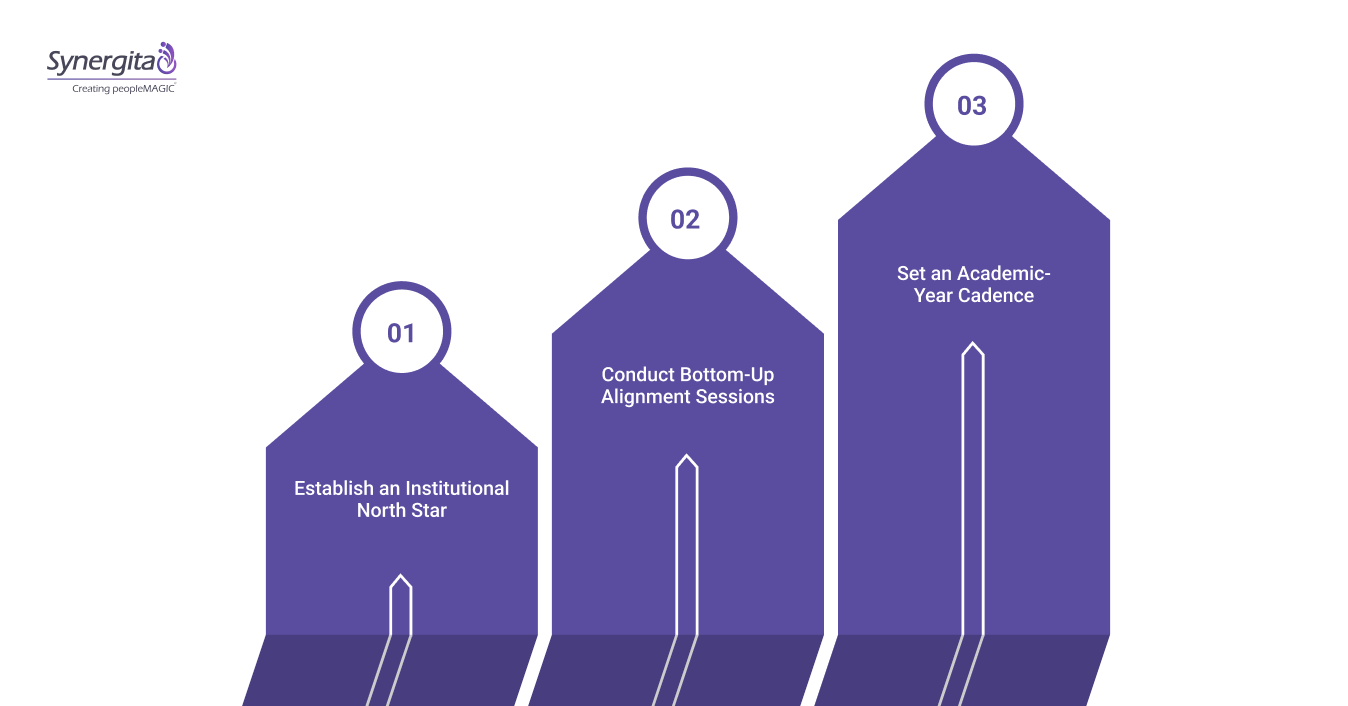
1. Establish an Institutional North Star
Identify three high-level objectives that represent the university’s top priorities for the next fiscal year. These goals should be broad enough to encompass research, teaching, and community impact. This ensures that every department understands the primary direction of the institution.
2. Conduct Bottom-Up Alignment Sessions
Allow departments and individual faculty members to define how they contribute to the university’s North Star. This protects academic freedom and encourages faculty to take ownership of their specific research or teaching goals. Top-down mandates often face resistance in academic settings without this collaborative step.
3. Set an Academic-Year Cadence
Standard business quarters often conflict with the semester-based rhythms of a traditional higher education institution. Align your OKR check-ins and reviews with mid-term and end-of-semester milestones to ensure maximum participation. This makes goal tracking a natural part of the academic calendar.
A structured rollout process helps minimize the friction that often accompanies new administrative initiatives in academia.
Also read:Best Tools for OKR Management and Visualization
Common Challenges and How to Avoid Them
Academic institutions present unique obstacles that can derail even the most well-intended goal-setting frameworks. You must proactively address these challenges to prevent the process from becoming a burden.
Address these institutional hurdles with these practical solutions:
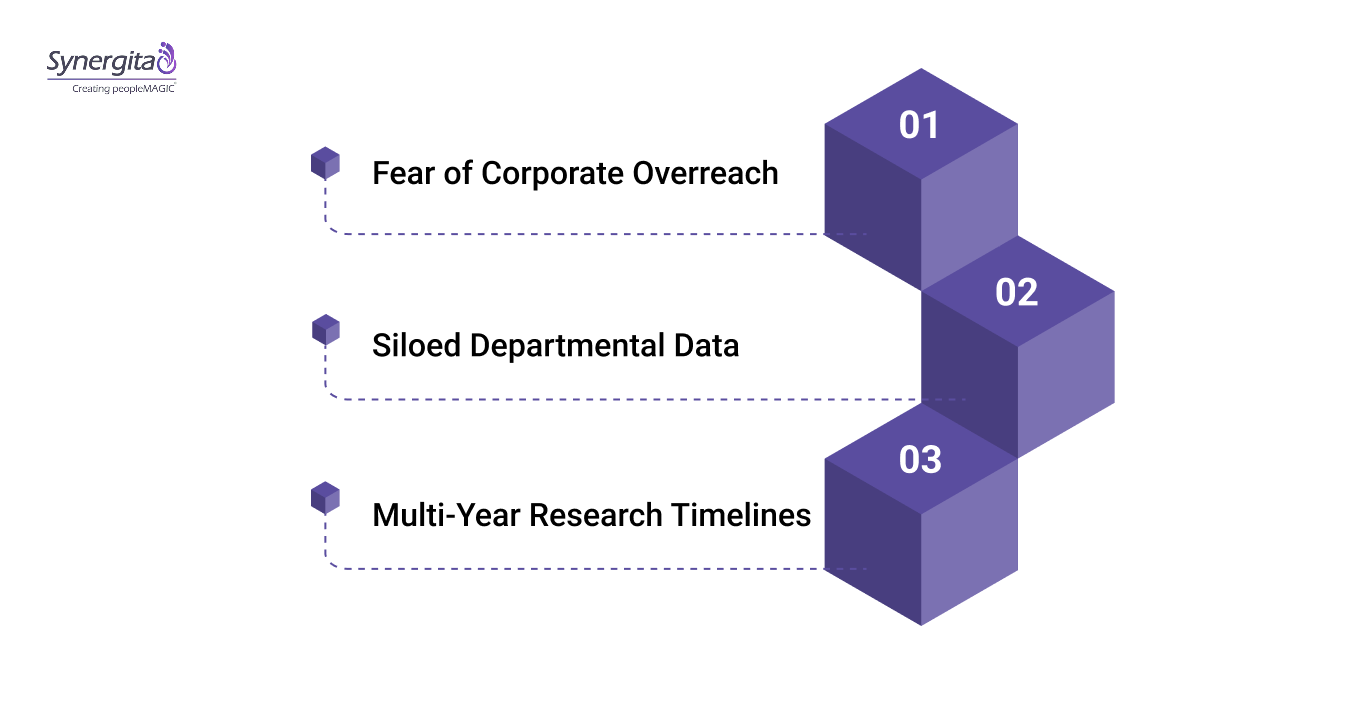
1. Fear of Corporate Overreach
Faculty members often view OKRs as a tool for corporate micromanagement that threatens academic independence.
The Solution: Frame OKRs as a tool for support and resource allocation rather than a disciplinary measure. Emphasize that the framework helps highlight the value of their research to external stakeholders.
2. Siloed Departmental Data
University departments often use disparate systems that make it difficult to aggregate data at the institutional level.
The Solution: Centralize your performance tracking on a single platform that integrates with existing academic databases. This provides deans with a unified view of progress without requiring manual data entry from faculty.
3. Multi-Year Research Timelines
Many academic research projects take years to complete, making quarterly or semester-based key results feel irrelevant.
The Solution: Break down long-term research projects into smaller, measurable milestones like “literature review completion” or “data collection phase.” This allows researchers to track progress while staying focused on the final publication.
Addressing these challenges early ensures that the framework remains a helpful asset for faculty and staff.
Don’t let institutional silos and manual data entry stall your academic progress. Book a demo to see how Synergita provides the centralized visibility needed to overcome these complex departmental hurdles.
Also read:Essential OKR Dashboard Examples for Goal Tracking
Best Practices for High-Impact Universities
Sustaining an OKR culture requires consistent leadership and a focus on long-term institutional health. You should prioritize the quality of the conversation over the perfection of the metrics.
Maximize the impact of your framework using these expert rules:
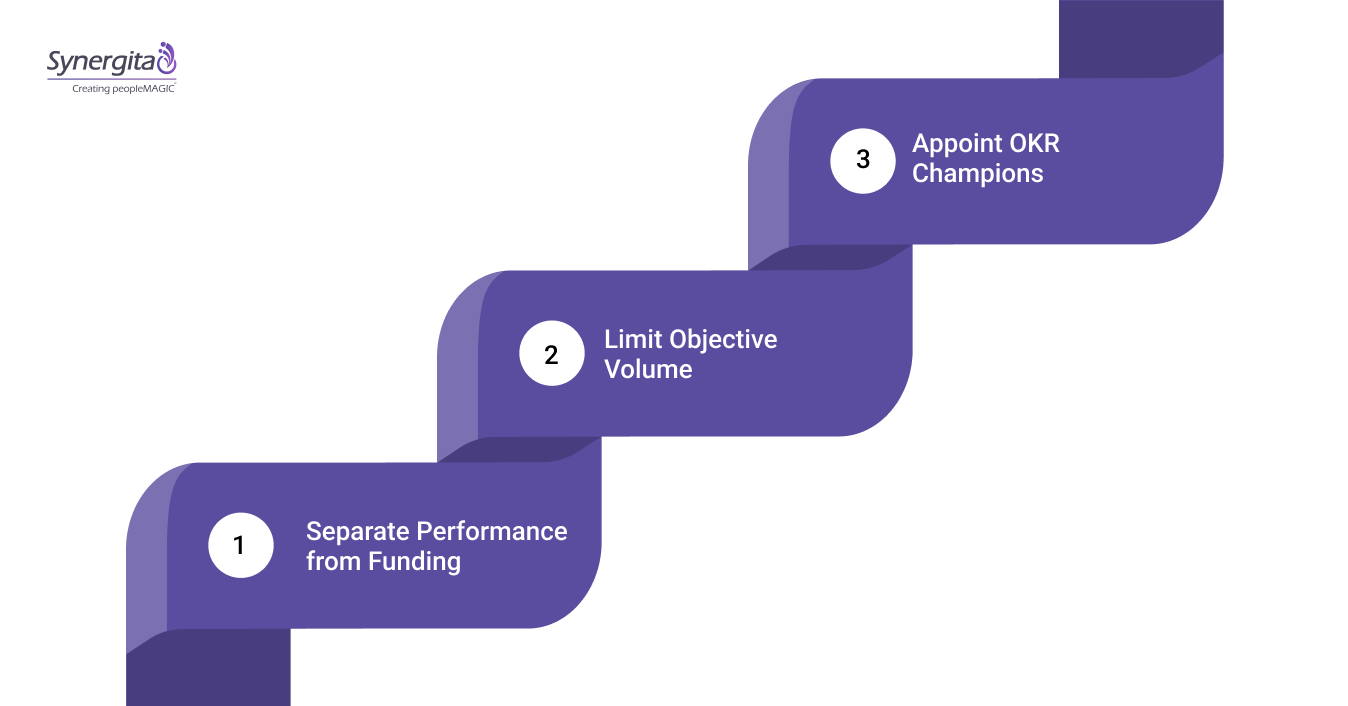
1. Separate Performance from Funding
Decouple OKR achievement from individual faculty bonuses or department budget allocations.
How it helps:
- Encourages faculty to set ambitious and innovative research goals.
- Ensures that data reporting remains honest and transparent.
- Builds trust between the administration and the academic departments.
2. Limit Objective Volume
Ensure that no department or administrative office manages more than three objectives at once.
How it helps:
- Prevents staff burnout by maintaining a clear and narrow focus.
- Increases the likelihood of achieving significant progress on key priorities.
- Simplifies the reporting process for department heads and deans.
3. Appoint OKR Champions
Identify influential faculty and staff members to serve as advocates for the framework within their units.
How it helps:
- Provides frontline staff with a peer-level resource for questions.
- Increases the cultural adoption of the framework across diverse colleges.
- Reduces the administrative burden on the central provost’s office.
Adopting these practices ensures that your institution remains focused on growth rather than just compliance.
Also read:Effective OKR Examples for Teams and Businesses
Streamlining University OKRs with Synergita
University administrators often struggle to track performance across thousands of faculty members using outdated manual systems. Fragmented spreadsheets make it impossible to see if departmental efforts actually align with the institutional mission. This lack of visibility often leads to missed funding opportunities and declining student satisfaction.
Synergita provides a specialized platform designed to manage the unique complexity of large-scale higher education institutions. Our solution offers the structure needed to align diverse academic and administrative goals in one place.
- Customizable hierarchies that mirror university structures from the provost to individual research labs.
- Real-time dashboards for tracking student retention and research milestones across every college.
- Mobile-friendly check-ins that respect the busy schedules of faculty and frontline staff.
- AI-powered analytics that identify institutional risks before they impact your global rankings.
Synergita ensures your institution maintains its strategic focus while protecting the freedom that drives academic discovery.
Conclusion
The university OKRs framework provides a necessary bridge between academic ambition and operational reality. By setting clear objectives for research, student success, and administration, you create a culture of transparency. These examples serve as a foundation for building a more resilient and focused higher education institution.
Synergita simplifies institutional alignment by providing the tracking tools necessary for large-scale academic management. Our platform handles the complexity of university structures so you can focus on excellence and innovation.
Book a personalized demo to see how Synergita aligns your university’s strategic vision with departmental action.
FAQs
Q. How do OKRs differ from traditional university accreditation metrics?
Accreditation metrics focus on meeting minimum standards for compliance and quality. OKRs are growth-focused and designed to push the institution toward ambitious strategic milestones beyond the baseline requirements.
Q. Can faculty research be accurately measured using Key Results?
Yes, by focusing on milestones like grant submissions, citations, or peer-reviewed publications. The goal is to track progress toward research impact without dictating the specific methods used by the faculty.
Q. What is the ideal frequency for university OKR reviews?
Most universities find success by aligning reviews with the end of each academic semester. This provides enough time for meaningful progress while allowing for course corrections before the next term begins.
Q. How do you handle OKRs for non-academic administrative departments?
Administrative departments should focus on operational efficiency and service quality metrics. This includes processing times for admissions, financial aid accuracy, and campus infrastructure maintenance goals.
Q. Should students be involved in the university OKR process?
Students can provide valuable input for Objectives related to campus life and educational quality. Their feedback ensures that the institution’s goals align with the actual needs of the student body.
Q. Is OKR tracking software necessary for a university?
While small departments can use spreadsheets, large universities require dedicated software to manage the complexity. A centralized platform ensures data integrity and provides leadership with a clear view of institutional progress.