
One performance review can shape an employee’s next promotion, salary increase, or career trajectory, but what happens when the rating feels unfair? When expectations are unclear, feedback is inconsistent, or achievements go undocumented, even high performers can lose confidence in the evaluation process.
If these are unresolved, it can damage employee trust, increase disengagement, and lead to avoidable turnover. According to Deloitte’s 2025 Global Human Capital Trends survey, 61% of managers and 72% of workers said they don’t trust their organization’s performance management process.
A well-defined performance appraisal appeal gives employees a fair opportunity to challenge inaccurate evaluations and helps companies ensure transparency. In this blog, we will explore what is a performance appraisal, common reasons employees appeal an appraisal and how to build a fair appraisal appeal system.
| TL;DR Employees appeal performance ratings because of factual errors, inconsistent evaluation standards, or missing documentation, rather than personal disagreement A fair performance appraisal appeal follows six structured steps, from reviewing the evaluation and gathering evidence to an independent review and a final written decision. Most appraisal disputes can be prevented through transparent evaluation criteria, continuous and 360-degree feedback and documented performance records. Good documentation and clear communication helps resolve appraisal appeals quickly and fairly |
| Table of Contents 1. What is a performance appraisal appeal and why are these increasing 2. Step-by-step performance appraisal appeal process 3. What are the common reasons employees appeal a performance appraisal 4. How to improve performance appraisal appeal process 5. Performance appraisal appeal best practices for employees and HR 6. Final thoughts 7. Frequently asked questions |
What is a performance appraisal appeal and why are these increasing
A performance appraisal is a formal evaluation of an employee’s work against agreed goals, competencies, and behaviors over a review period. It typically results in a rating, written feedback, and decisions on pay or promotion.
Unlike everyday feedback or workplace grievances, appealing appraisal decisions focus specifically on requesting a review of the evaluation based on documented evidence or procedural concerns.
- Feedback is informal, ongoing, and does not require a formal process.
- Grievance covers broader workplace complaints, such as harassment or policy violations.
- Appraisal appeal is narrowly focused on disputing a specific rating or review outcome.
Employees file appeals for three reasons, and they’re rarely emotional ones. They have evidence that contradicts the rating. The criteria used weren’t the criteria communicated at the start of the cycle, or they’ve noticed the process was applied differently to a colleague in the same role.
Why appraisal appeals are increasing
Appraisal disagreements are rising because reviews are increasingly disconnected from day-to-day work. According to SHRM, 77% of HR executives say performance reviews do not accurately reflect employee contributions.
Moreover, Select Software Reviews reports that 95% of HR leaders are not satisfied with the traditional performance appraisal process.
When most of the people running these processes do not trust the output, appraisal appeals are a predictable result, not a rare exception.
Step-by-step performance appraisal appeal process
A structured performance appraisal appeal process protects both employees and organizations by ensuring concerns are reviewed fairly, consistently, and with supporting evidence. While the exact appraisal appeal process may vary across organizations, the following steps reflect the best practices for handling appraisal disputes objectively and transparently.
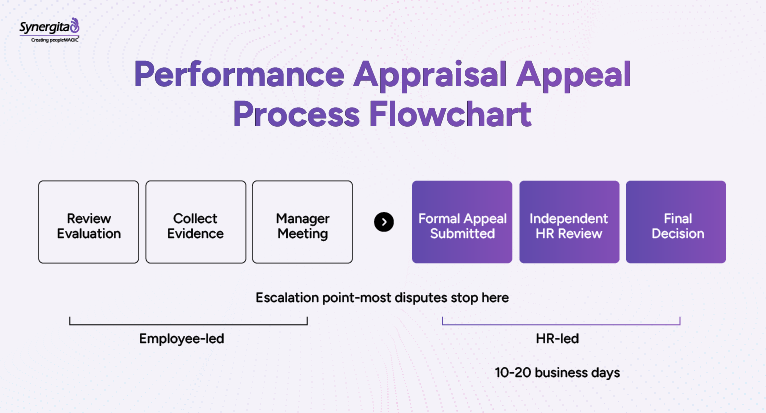
1. Performance evaluation
Carefully review your entire performance appraisal, including ratings, written feedback, and evaluation criteria. Compare the comments with your goals, achievements, and responsibilities to identify any factual inaccuracies, inconsistencies, or areas that may require clarification.
2. Collect supporting evidence
Prioritize evidence that directly influenced your performance rating, such as goal completion records, KPI reports, project outcomes, customer feedback, manager check-in notes, and documented performance discussions. Clear documentation helps reviewers understand what happened and reach a fair decision.
3. Meet your manager
Schedule a constructive discussion with your manager to understand the reasoning behind the rating and present your concerns professionally. Many issues can be resolved during the appraisal meeting without proceeding to a formal appeal.
4. Submit a formal appraisal appeal
If concerns remain unresolved, follow your organization’s appraisal appeal process by submitting a written request. Clearly explain the disputed rating, provide supporting evidence, and reference the relevant review criteria or company policy.
5. Independent appeal review
HR or an independent appeal committee reviews the case by examining the original evaluation, supporting documentation, and company guidelines. This appeal review helps ensure the final decision is fair, consistent, and free from bias.
6. Final decision
After reviewing all available evidence, the committee communicates its decision in writing, explaining the rationale behind the outcome. Whether the original rating is upheld or revised, the decision concludes the performance appraisal appeal process in accordance with company policy.
Organizations complete this cycle within 10 to 20 business days. Documentation at every step, especially goal records and prior feedback, determines how quickly and fairly the appeal review resolves. HR involvement should begin in step 4, and leadership review is reserved for appeals that remain contested after the appeal committee’s decision.
| Appeal review flow: Employee Review → Manager Discussion → Formal Appeal → HR Review → Appeal Committee → Final Decision |
What are the common reasons employees appeal a performance appraisal
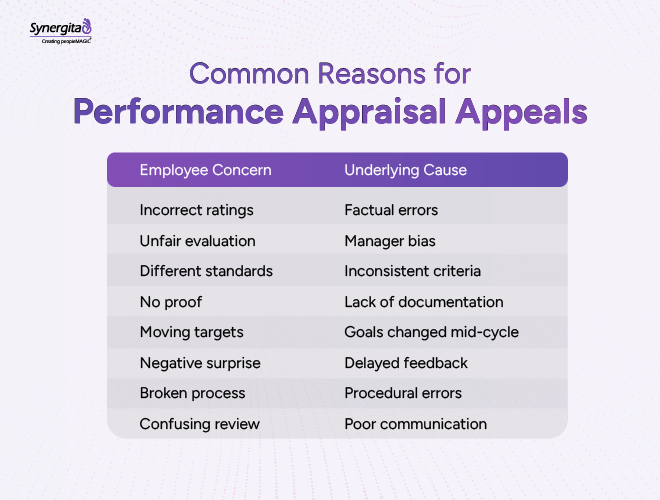
Employees file a performance appraisal appeal when they believe the review process was inaccurate, inconsistent, and does not reflect their actual performance.
- Factual errors in the review: Incorrect achievements, metrics, or project details can lead to an unfair rating.
- Perceived bias or subjective ratings: Employees may appeal if they believe personal opinions influenced the evaluation.
- Inconsistent evaluation standards: Different criteria applied to employees in similar roles can create perceptions of unfairness.
- Lack of supporting evidence: Performance ratings without clear evidence or documented goals are more likely to be questioned by employees.
- Goals changed mid-cycle: Employees may appeal if they are evaluated against goals or expectations that changed without being clearly communicated.
- Delayed feedback: Employees who receive little or no feedback throughout the year are more likely to be surprised by a negative performance review.
- Procedural errors: Failing to follow established review processes, such as calibration or approval steps, can raise concerns about the fairness of the evaluation.
- Poor communication: Unclear explanations of ratings, feedback, or expectations can leave employees confused and increase the likelihood of an appraisal appeal.
Performance management appeals process issues can be avoided by combining transparent expectations, continuous feedback, consistent evaluation standards, and evidence-based performance reviews.
How to improve performance appraisal appeal process
Many rating appeals arise because employees perceive inconsistencies in how performance is measured. Organizations can reduce these disputes by making evaluations more transparent, objective, and evidence-based from the start.
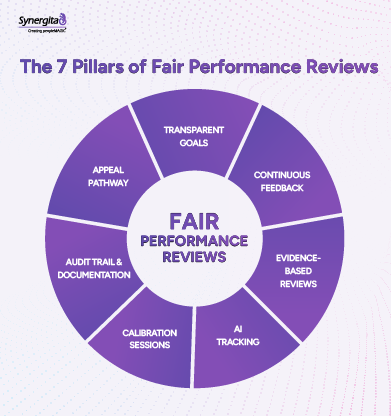
1. Transparent evaluation criteria
Clearly communicate performance expectations, goals, and evaluation criteria before the review cycle begins. When employees understand how success will be measured from the outset, they are more likely to trust the performance appraisal process and less likely to challenge the outcome.
2. Continuous and 360-degree feedback
Continuous and 360-degree feedback replaces one-time annual reviews with ongoing input from managers, peers, direct reports, and employees. This creates a more complete picture of performance and supports fairer evaluation decisions.
The key benefits include:
- Identifies performance gaps before they affect formal reviews
- Encourages regular coaching and two-way conversations
- Reduces bias through feedback from multiple perspectives
3. Evidence-backed appraisals
Support every performance rating with documented goals, measurable achievements, regular check-ins, and constructive feedback. An objective appraisal backed by clear evidence is easier to justify, improves evaluation fairness, and is far less likely to result in a performance appraisal appeal.
4. AI-assisted tracking
AI-powered performance management platforms automatically capture goals, feedback, and progress throughout the review cycle. By providing accurate, audit-ready performance records, they enable fair evaluations and contribute to a more positive appraisal experience built on transparency and evidence.
5. Consistent calibration
Conduct calibration sessions to ensure managers apply the same performance standards across teams and roles. Reviewing ratings collectively improves consistency, minimizes bias, and increases employee appreciation and confidence in the fairness of the final evaluation.
6. Appeal timelines and audit trails
Establish clear timelines for every appeal review and maintain a documented record of decisions, evidence, and communication. A transparent process improves accountability, speeds up resolution, and reassures employees that every appeal receives fair consideration.
Performance appraisal appeal best practices for employees and HR
A fair appeals process is a shared responsibility, employees should present evidence-based concerns professionally, while HR leaders must ensure every appeal is handled consistently, transparently, and without bias.
| For Employees | For HR Leaders |
| Stay professional in every appeal review and appraisal meeting | Maintain neutrality; never review your own team’s appeal |
| Use evidence, not instinct, to support your personal appeal | Standardize review criteria before appraisal planning begins |
| Focus on facts stated in the original evaluation | Document every step of the appeal review |
| Understand your company’s appraisal appeal policy | Run appeal reviews on a consistent, published timeline |
| Prepare talking points before the appraisal meeting | Communicate final outcomes clearly and in writing |
Final thoughts
Organizations looking at how we can improve the appeals process should focus on strengthening the performance review system rather than relying on the appeal itself. Every appeal that reaches HR points to a gap in how the review was built, not just a disagreement about one rating.
The companies with the fewest appeals use reliable performance management tools that allow them to deliver ongoing and multi-source feedback and document them throughout the year. This significantly reduces the disputes and appraisal appeals. If you are looking for a performance management software, try Synergita and see how it transforms performance review and simplifies the appraisal appeal process. Start your free trial today.
Frequently asked questions
Yes, most companies have a formal appraisal appeal process that allows employees to challenge a rating using documented evidence, such as goal records or prior feedback.
An appraisal appeal is essential when there are factual errors, biased reviews, undocumented data, or evidence that the rating does not reflect actual performance during the review period.
A performance appraisal appeal process is a structured sequence including review of the evaluation, gathering supporting evidence, discussing it with your manager, submitting a formal written appeal, undergoing an independent review, and receiving a final written decision.
Most organizations resolve appeals within 10 to 20 business days, depending on complexity and whether leadership review is required.
Use transparent criteria set before the cycle, continuous and 360-degree feedback, documented goals, and consistent calibration across managers before ratings are finalized.
You can conduct a fair performance appraisal by setting clear expectations at the start of the review cycle, evaluating employees against documented goals and measurable results, providing continuous feedback throughout the year, and supporting ratings with evidence rather than opinion.
Companies can improve the performance appraisal appeals process by using transparent evaluation criteria, continuous feedback, consistent documentation, and regular calibration. Performance management software makes the process easier by maintaining audit-ready records that support fair, evidence-based evaluations and reduce unnecessary appeals.