



Clear direction is the backbone of every successful team. Goals define ambition, but without a structured way to measure progress, even the most capable teams can lose focus. That’s where OKRs (Objectives and Key Results) come in, a simple yet powerful framework that turns vision into measurable outcomes.
OKRs help teams define what they want to achieve and how they’ll know they’re succeeding. The Objective captures the inspiring goal, while the Key Results quantify progress. Together, they create alignment, focus, and accountability across every level of an organization.
As teams grow and operate in increasingly dynamic environments, OKRs have become essential for maintaining clarity and cohesion. They bridge the gap between strategy and execution, ensuring everyone moves in the same direction with purpose.
Yet, while setting OKRs is straightforward, sustaining them is not. The real challenge lies in building a culture that lives and breathes OKRs, where goals aren’t just written down, but actively shape how teams think, plan, and perform.
Key Takeaways
- OKRs succeed only when they become a mindset, not a quarterly exercise. Teams thrive when goals guide daily decisions, not just end-of-cycle reviews.
- A strong OKR culture is built on leadership example, transparency, collaboration, and a learning-first approach, not rigid scorekeeping.
- Teams often struggle with OKRs due to top-down mandates, poor communication, and lack of follow-through, proving that culture, not the framework, is the real differentiator.
- Embedding OKRs into stand-ups, syncs, dashboards, and feedback loops keeps goals alive, aligned, and relevant throughout the quarter.
- Tools like Synergita OKR accelerate this culture, making alignment visible, progress trackable, and collaboration effortless across teams.
What Does an “OKR Culture” Mean?
An OKR culture goes beyond setting goals and measuring results; it’s a mindset that shapes how teams think, collaborate, and stay aligned around a shared purpose. It ensures that everyone understands not just what the organization is striving for, but why their role matters in achieving it.
The difference between having OKRs and living an OKR culture is simple but profound. Having OKRs means setting and reviewing them on schedule. Living the culture means weaving OKRs into everyday discussions, decisions, and reflections; it’s when they become part of how the team operates, not just something they measure.
When OKRs become part of the organization’s DNA, they evolve from a quarterly framework into a continuous way of working, one that drives clarity, momentum, and lasting impact.
Also Read: 10 Key Benefits of OKRs Software for Business Growth

Why Teams Struggle to Build a Sustainable OKR Culture
Many teams start strong with OKRs, energized, organized, and aligned. But after a few cycles, momentum fades. The problem isn’t with the framework; it’s with how it’s practiced. A lasting OKR culture requires consistent communication, ownership, and follow-through, three things that often go missing.
1. Treating OKRs as Top-Down Mandates: When OKRs are dictated by leadership instead of co-created, they feel like orders, not commitments. This limits engagement and turns a motivational tool into a management checklist.
2. Poor Communication and Misalignment: Without regular cross-team dialogue, OKRs become isolated efforts. Teams chase goals that may look successful in isolation but fail to drive company-wide impact.
3. Lack of Follow-Through and Accountability: Setting OKRs is easy; maintaining focus is hard. When check-ins and reviews are skipped, OKRs lose meaning and fade into background noise.
A Quick Example
A growing SaaS startup launched OKRs to accelerate innovation. Leadership sets all objectives centrally, leaving teams out of the process. Within two quarters, enthusiasm dropped, and teams didn’t feel connected to the goals they were expected to hit.
The takeaway? Sustainable OKR culture can’t be enforced; it must be built through participation, clarity, and consistent follow-up.
Foundations of a Strong OKR Culture
A strong OKR culture isn’t built overnight; it grows from consistent behaviors, open communication, and trust. When teams treat OKRs as more than a framework, they create a culture of alignment, accountability, and growth. Four key foundations make this possible:
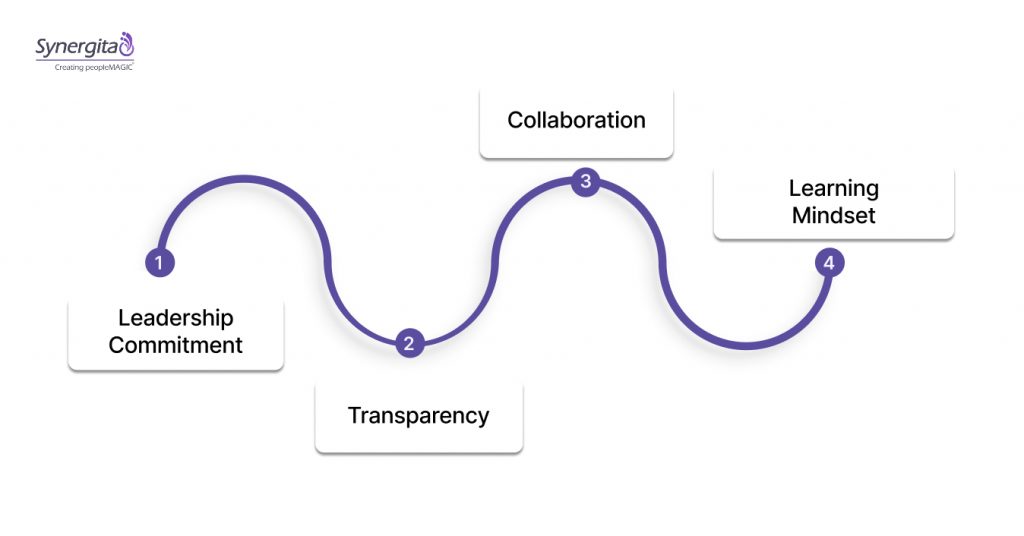
- Leadership Commitment
OKR culture starts with example, not instruction. When leaders share their own OKRs, discuss progress openly, and connect daily decisions to measurable outcomes, they show that OKRs are not just a system; they’re a standard.
- Transparency
Visibility drives alignment. Making goals accessible across teams clarifies priorities, prevents overlap, and gives everyone a shared view of success. Transparency turns OKRs into a common language that connects the organization.
- Collaboration
OKRs flourish where teams collaborate, not compete. Cross-functional alignment ensures progress in one area supports another. When teams share resources and insights, OKRs become a bridge that unites diverse efforts toward a shared mission.
- Learning Mindset
Strong OKR cultures value learning over perfection. Missed targets are seen as lessons, not failures. By reflecting, adapting, and iterating each cycle, teams turn OKRs into a tool for continuous improvement.
Together, these foundations transform OKRs from a management tool into a living culture, one that aligns people, builds trust, and sustains long-term performance.
Steps to Build and Nurture an OKR Culture
Creating a sustainable OKR culture isn’t about introducing a new process; it’s about changing how teams think, prioritize, and collaborate. Building this culture requires intention, patience, and structure. Here’s how to do it effectively:
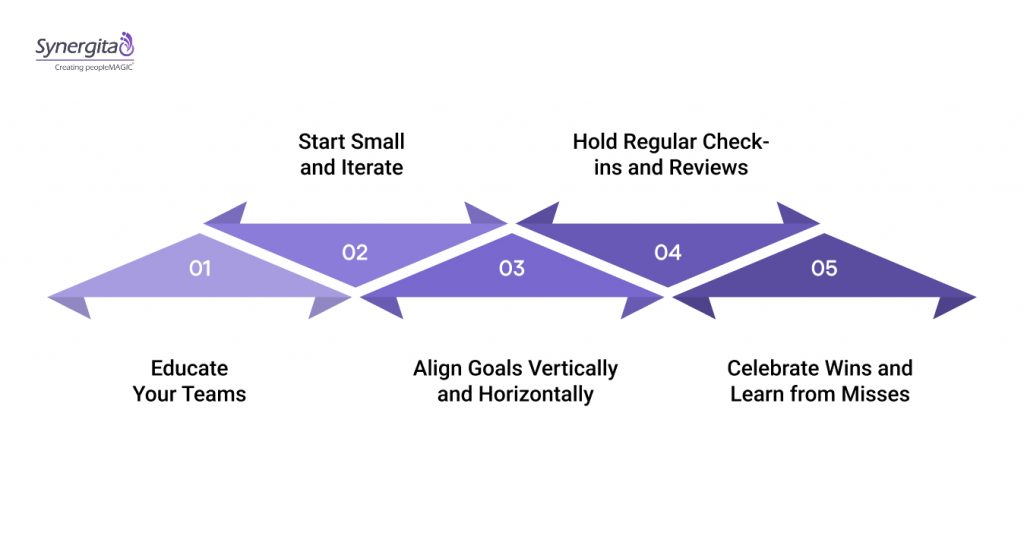
1. Educate Your Teams
Before diving into templates or tools, invest in education. People can’t commit to what they don’t fully understand.
- Explain the “Why” – Share how OKRs drive focus, alignment, and impact. Link the framework to your company’s vision and values.
- Train on the Philosophy, Not Just the Format – Move beyond writing objectives and key results. Teach the underlying mindset: stretch goals, learning from outcomes, and alignment over control.
- Empower Ambassadors – Identify early adopters or champions within teams who can coach others, answer questions, and model OKR best practices.
2. Start Small and Iterate
Rolling out OKRs across the entire organization at once can overwhelm people. Start small to build confidence.
- Pilot with One Team or Department – Choose a motivated group to experiment with OKRs for a cycle.
- Document Learnings – Capture what works, what doesn’t, and how to improve the process before scaling.
- Refine the Process – Adjust the cadence, tools, and check-in style based on real feedback, not assumptions.
3. Align Goals Vertically and Horizontally
Alignment ensures OKRs don’t become scattered wish lists but are part of a unified purpose.
- Vertical Alignment – Connect each team’s OKRs to company-wide objectives. Every goal should clearly support the broader mission.
- Horizontal Alignment – Encourage teams to share OKRs across departments. Identify interdependencies early so collaboration replaces competition.
- Create Visibility – Use dashboards or OKR software to make all goals transparent. When everyone can see each other’s OKRs, alignment naturally strengthens.
4. Hold Regular Check-ins and Reviews
Consistency is what turns OKRs from a planning exercise into a living system.
- Weekly or Bi-Weekly Check-ins – Short, focused meetings to discuss progress, blockers, and priorities. Keep them about learning, not judging.
- Mid-Cycle Reviews – Reflect on whether goals still make sense. Adjust if priorities shift; OKRs should be flexible, not rigid.
- End-of-Cycle Retrospectives – Evaluate outcomes and identify lessons. Discuss what to keep, improve, or stop doing next cycle.
5. Celebrate Wins and Learn from Misses
OKR culture thrives on recognition and reflection.
- Acknowledge Progress – Celebrate milestones, even partial ones. Public recognition builds motivation and reinforces good habits.
- Embrace Missed Goals – Use them as opportunities to learn what’s realistic, what’s not, and why.
- Share Learnings Openly – Encourage teams to discuss what worked and what didn’t without fear of blame. This honesty builds psychological safety, a key ingredient of high-performing teams.
When these steps are practiced consistently, OKRs evolve from a quarterly ritual into a daily discipline. The organization becomes more transparent, teams become more autonomous, and every person feels connected to the company’s direction.
Also Read: Why Are OKRs Important for Business Success? 12 Practical Reasons That Prove It
Embedding OKRs in Daily Operations
The true power of OKRs emerges when they become part of everyday routines, not just something revisited at the end of the quarter. Embedding OKRs into daily operations ensures that goals stay visible, actionable, and relevant across
the entire organization.
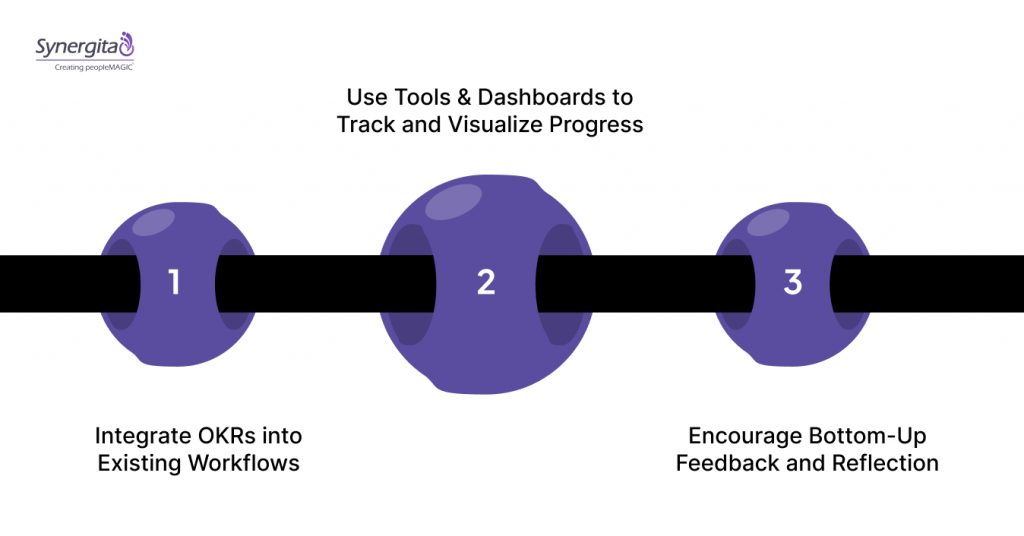
1. Integrate OKRs into Existing Workflows
OKRs should fit seamlessly into the rhythms your teams already follow. They shouldn’t feel like extra work; they shouldguide the work.
- Daily Stand-ups: Use OKRs to frame discussions around priorities. Instead of listing tasks, ask: “How are today’s efforts moving us closer to our key results?”
- Weekly Syncs: Review progress briefly, highlight blockers, and adjust short-term priorities. Keep the focus on outcomes, not activities.
- One-on-Ones: Encourage managers and team members to link performance conversations to OKRs. This helps individuals see how their contributions ladder up to broader goals.
- Retrospectives: Reflect on how effectively the team’s work aligned with OKRs, and what needs to change for the next cycle.
By weaving OKRs into existing meetings, teams naturally stay aligned without needing extra layers of process.
2. Use Tools and Dashboards to Track and Visualize Progress
Visibility turns OKRs from ideas into action.
- Centralized Tracking: Use OKR software or dashboards to visualize progress. Shared visibility keeps everyone accountable and informed.
- Real-Time Updates: Encourage teams to update key results regularly. Seeing progress made, whether up or down, keeps goals alive in daily conversations.
- Data-Driven Discussions: Use metrics and visuals in reviews to focus discussions on facts, not opinions. This promotes objective decision-making.
When progress is easy to see, engagement rises and alignment becomes effortless.
3. Encourage Bottom-Up Feedback and Reflection
An OKR culture thrives when feedback flows both ways.
- Create Feedback Loops: Give teams space to question priorities, suggest better key results, and share what’s working or not.
- Empower Ownership: When individuals contribute to shaping OKRs, they feel accountable for outcomes, not just outputs.
- Reflect Regularly: At the end of each cycle, hold open sessions where teams share insights and lessons learned. Reflection builds maturity into your OKR process.
Embedding OKRs into daily operations transforms them from a management framework into a shared language of progress.
How OKRs Support a Thriving Workplace Culture
When organisations adopt the Objectives and Key Results (OKR) framework, they create a clear line of sight between individual efforts and company purpose. This shared clarity fuels engagement, strengthens culture, and deepens belonging.
Strengthening Employee Engagement
When people see how their work matters and are empowered to contribute, engagement blossoms. Companies with engaged, satisfied employees outperform their competitors by nearly 20%.
- OKRs encourage ownership by involving employees in setting meaningful objectives, rather than simply issuing top-down tasks.
- They foster transparency around priorities so everyone knows how their efforts drive broader results.
- Regular check-ins (rather than just annual reviews) keep momentum high and feedback immediate.
Let teams co-design their key results, and schedule monthly OKR reviews to surface blockers and celebrate progress.
Enhancing Organisational Culture & Collaboration
By aligning goals openly and working across boundaries, OKRs help build a culture of trust, clarity, and cross-team collaboration.
- OKRs promote open communication and shared accountability when progress and goals are visible across the organisation.
- They help break down silos by linking cross-functional work toward common objectives and key results.
- The framework shifts focus from micromanagement to clarity-driven autonomy, reinforcing collaboration and growth mindsets.
Make team OKRs public internally, hold regular alignment meetings across functions, and reflect quarterly on how teams worked together toward shared goals.
Building a Sense of Belonging & Shared Purpose
When every person can see their role in the bigger picture, belonging and commitment increase.
- OKRs help individuals feel valued by tying their contribution directly to the organisation’s mission.
- They inspire unity by aligning everyone around a shared vision and meaningful milestones.
- The process empowers diverse voices, inviting input from all levels and reinforcing that success is collective, not solo.
- According to McKinsey research, employees now expect their work to provide a strong sense of purpose, and organizations that fail to meet this need risk losing talent to those that do.
- Communicate company-level OKRs clearly, show how team results link back to them, and at each cycle’s end, hold a “what did we learn, how did we perform” reflection session with all employees.

Empowering OKR Culture Through Synergita OKR Software
Building a thriving OKR culture requires more than a framework; it needs the right tools to bring alignment, visibility, and accountability to life. Synergita OKR Management Software is designed to do exactly that, helping organizations turn strategic intent into measurable, team-driven outcomes.
Why Synergita Stands Out
- Align Individual and Company Goals: Synergita helps teams set personal OKRs that directly connect with company objectives, ensuring everyone understands how their work drives business success.
- Transparent Progress Tracking: Real-time dashboards and hierarchy views make goal progress visible across teams, promoting clarity and shared ownership.
- Simplified Scaling: Features like goal cloning and structured templates make it easy to roll out OKRs across departments without losing consistency.
- Seamless Integration: With integrations for Slack, Microsoft Teams, Jira, and HR systems, OKR updates become part of everyday workflows instead of isolated admin tasks.
- Data-Driven Reviews: Continuous tracking and analytics encourage timely check-ins, mid-cycle adjustments, and reflection, fostering a learning mindset.
- Hierarchy Tree & alignment views: A visual map of how team and individual OKRs link to company objectives, helping clarify how each contribution fits into the bigger picture
How It Strengthens OKR Culture
Synergita reinforces the four foundations of a strong OKR culture: leadership visibility, team alignment, collaboration, and learning. By keeping goals transparent, progress measurable, and communication fluid, it transforms OKRs from quarterly checklists into living, breathing habits that guide daily decision-making.
Conclusion
Building a successful OKR culture isn’t just about mastering a framework; it’s about shaping a shared mindset of focus, accountability, and continuous learning. When teams align around meaningful objectives, track progress transparently, and learn from every outcome, OKRs evolve from a quarterly ritual into a powerful way of working.
A strong OKR culture empowers teams to think strategically, act with purpose, and grow together. And the right tools can make that transformation faster and smoother.
Synergita’s OKR Management Software helps you bring this culture to life by turning goals into clear, connected, and measurable outcomes that everyone can rally around.
Book a demo with Synergita OKR and begin building a culture where alignment drives achievement and progress becomes a habit.
FAQs
1. How do you keep teams engaged with OKRs throughout the quarter?
Frequent check-ins, progress reviews, and visible dashboards help maintain momentum. Celebrating small wins also keeps teams motivated and aligned.
2. What makes a good Objective and Key Result?
A good Objective is inspiring and qualitative; Key Results are measurable and outcome-focused. Together, they create clarity on what success looks like and how to measure it.
3. How do OKRs differ from traditional goal-setting methods?
Unlike static goals, OKRs are dynamic and measurable. They encourage ambitious objectives and data-driven progress tracking, ensuring constant alignment and adaptation.
4. What are the biggest challenges teams face when adopting OKRs?
Common struggles include treating OKRs as top-down mandates, poor communication, lack of alignment, and inconsistent follow-through. Building the right culture helps overcome these.
5. How can leadership promote a strong OKR culture?
Leaders should model OKR thinking, setting transparent goals, linking objectives to strategy, reviewing progress regularly, and encouraging honest discussions around outcomes.