



Volunteers don’t show up for a paycheck. They show up because they believe in the cause. That’s exactly why feedback matters, and why performance evaluations shouldn’t feel awkward, formal, or punitive.
There are several moments when reviewing volunteer performance makes sense: after a major event, during 30/60/90-day check-ins for new volunteers, as part of annual reviews for long-term roles, or when something isn’t working and needs to be addressed early.
In this article, you’ll find a simple, practical volunteer performance evaluation template you can copy and use right away. Plus a sample completed evaluation and clear tips to help you give feedback that’s supportive, fair, and easy to act on.
Key Takeaways:
- Evaluations build retention, not resistance: A well-designed volunteer performance evaluation template helps volunteers feel supported, recognized, and clear on expectations.
- Hours don’t equal impact: Effective evaluations focus on reliability, behavior, communication, and growth; not just time logged.
- Fairness starts before the review: Clear role expectations, defined review periods, and volunteer self-assessments make feedback more constructive.
- Keep the template simple and adaptable: One flexible volunteer performance evaluation template can work across roles with small, role-based add-ons.
- Templates are a starting point, not the end goal: As programs scale, consistent feedback and follow-through often require more continuous, system-supported approaches.
What a Volunteer Performance Evaluation Should Measure (Not Just Hours)
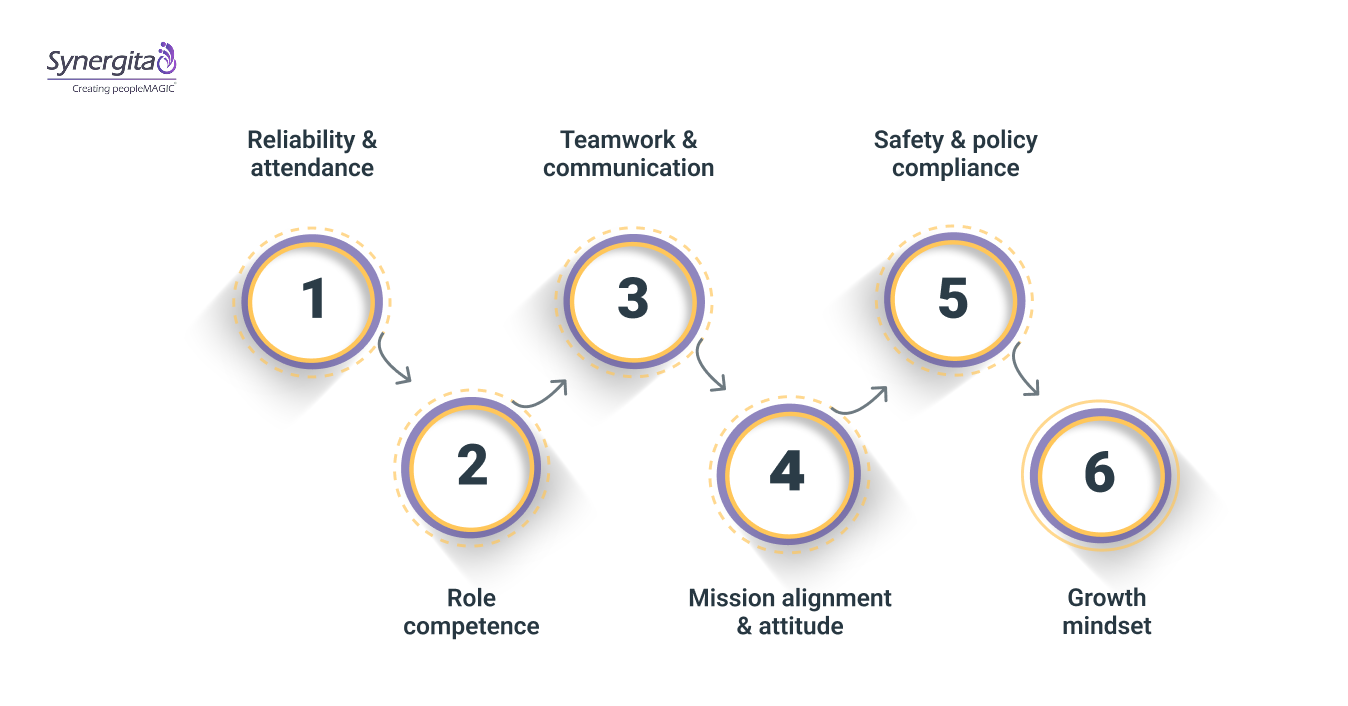
Tracking volunteer hours is easy, but hours alone don’t tell you whether a volunteer is effective, reliable, or set up to succeed. A strong volunteer performance evaluation looks beyond time spent and focuses on how the work gets done and how the volunteer shows up for the role and the mission.
The goal isn’t to judge effort. It’s to understand what’s working, where support is needed, and how to make the volunteer experience better for everyone involved: volunteers, staff, and the community you serve.
Here are the core areas a well-rounded volunteer performance evaluation should measure:
- Reliability & attendance: Shows up as scheduled, arrives on time, and communicates early if plans change.
- Role competence: Completes assigned tasks accurately, follows instructions, and understands role responsibilities.
- Teamwork & communication: Works well with staff and other volunteers, asks questions when unsure, and communicates respectfully.
- Mission alignment & attitude: Demonstrates respect, inclusivity, and professionalism while representing your organization.
- Safety & policy compliance: Follows safety guidelines, confidentiality rules, and organizational policies, especially in high-trust or client-facing roles.
- Growth mindset: Is open to feedback, learns from experience, and shows willingness to improve or take on new responsibilities.
Before you start filling out a volunteer performance evaluation template, take a few simple steps to set the right foundation.

Before You Evaluate: Set It Up for Fairness
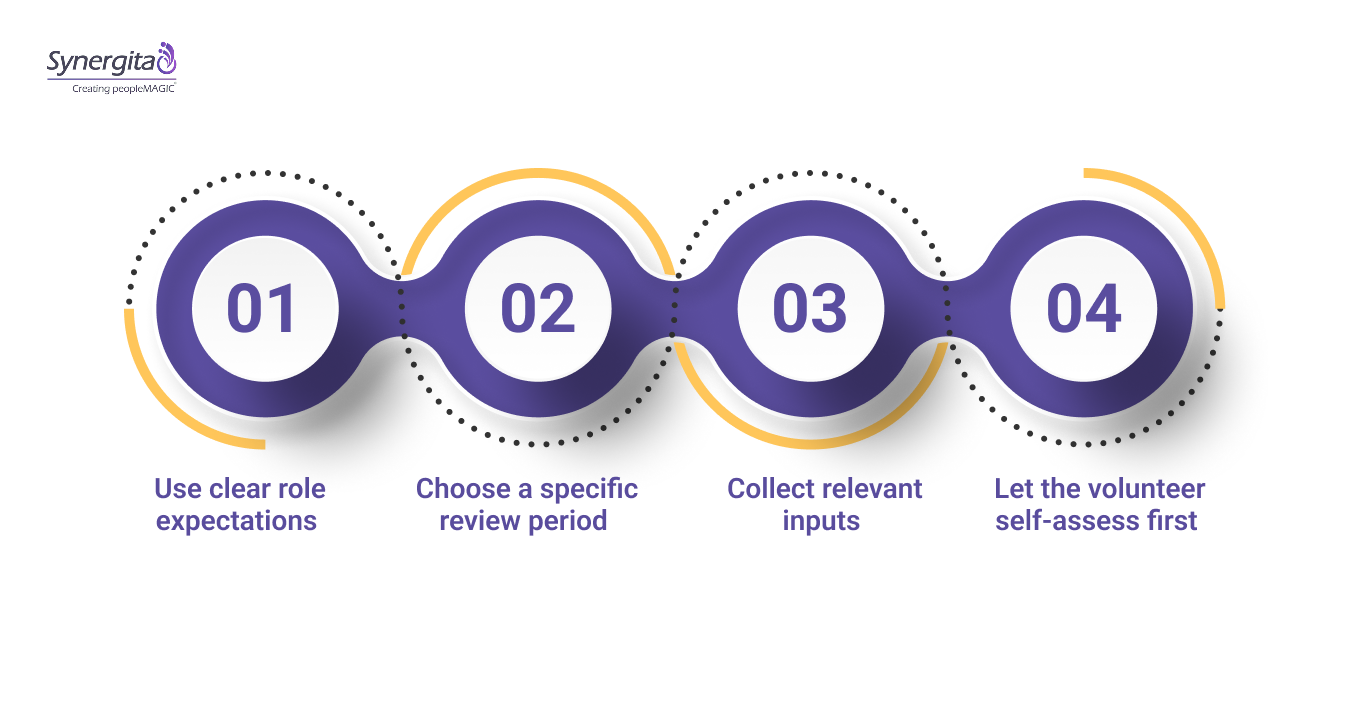
A fair volunteer evaluation starts before you fill out the form. Taking a few minutes to prepare helps ensure your feedback is based on facts, not memory or personal impressions, and makes the conversation feel supportive instead of uncomfortable.
Here’s how to set it up properly:
- Use clear role expectations
Review the volunteer’s role description or responsibilities list. Evaluate them against what they actually agreed to do, not against unspoken or shifting expectations.
- Choose a specific review period
Decide the time frame you’re evaluating (for example, the last quarter, a recent event cycle, or the volunteer’s first 60 days). This keeps feedback focused and avoids vague generalizations.
- Collect relevant inputs
Look at attendance records, task outcomes, notes from events, and any feedback from staff or fellow volunteers. This helps you give concrete examples instead of relying on memory alone.
- Let the volunteer self-assess first
Ask the volunteer to complete a short self-evaluation using the same criteria. This often reduces defensiveness, surfaces challenges you may not see, and is a common best practice in volunteer performance evaluation templates.
When evaluations are grounded in clear expectations and shared input, they’re more likely to feel fair, constructive, and genuinely useful, for both you and the volunteer.
With the groundwork in place, you’re ready to move from preparation to practice.
Volunteer Performance Evaluation Template (Copy/Paste)
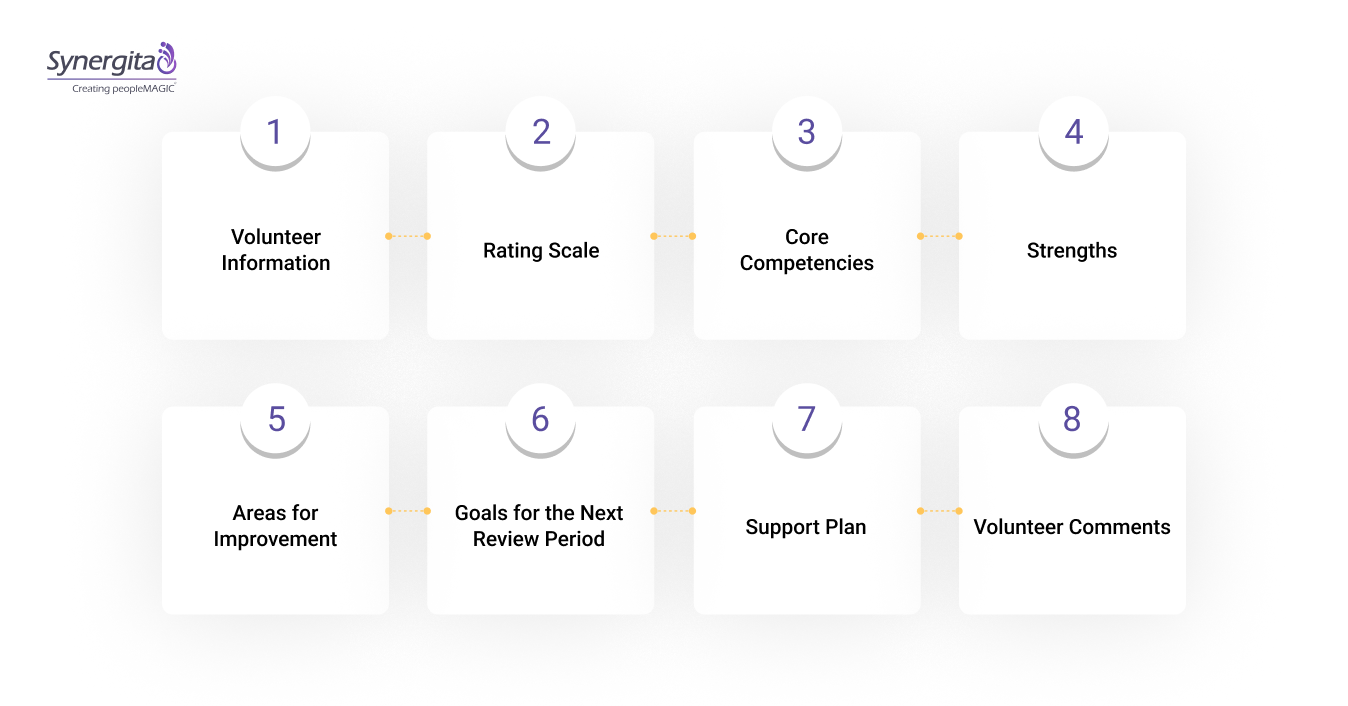
Use this template as-is in Google Docs or Microsoft Word. Keep it to one page where possible so it’s easy to complete and review together.
This volunteer performance evaluation template is designed to support constructive feedback, clarity, and growth, not lengthy paperwork. It works for both short-term and ongoing volunteer roles and can be adapted for events, programs, or year-round volunteers.
The structure balances ratings, written feedback, and goal-setting, helping evaluators give consistent input while giving volunteers space to reflect and participate in the conversation.
1. Volunteer Information
- Volunteer name
- Role/position
- Program or site
- Supervisor/reviewer
- Review period
- Hours served (optional)
- Date of evaluation
2. Rating Scale
Choose one scale and use it consistently across all evaluations.
Option A: 1–3 scale
- 1 – Needs Improvement
- 2 – Satisfactory
- 3 – Excellent
Option B: 1–5 scale
- 1 – Needs Coaching
- 2 – Developing
- 3 – Meets Expectations
- 4 – Strong Performer
- 5 – Exceeds Expectations
3. Core Competencies (Rate and Add Comments)
| Competency | Rating | Comments |
| Reliability & punctuality | ||
| Communication & responsiveness | ||
| Quality of work/task completion | ||
| Teamwork & collaboration | ||
| Initiative & problem-solving | ||
| Professionalism & conduct | ||
| Policy and safety compliance | ||
| Mission alignment & community impact (optional) |
4. Strengths
What the volunteer does especially well:
(Provide specific examples where possible.)
5. Areas for Improvement
What the volunteer should focus on improving next:
(Frame this as development, not criticism.)
6. Goals for the Next Review Period
Use SMART goals (specific, measurable, achievable, relevant, time-bound).
- Goal 1: Success criteria:
- Goal 2: Support needed:
7. Support Plan
- Training or resources to provide
- Buddy or mentor assignment (if applicable)
- Schedule adjustments or role fit changes
8. Volunteer Comments & Acknowledgement
Volunteer reflection: (Optional self-comments or responses to feedback.)
Acknowledgement
- Volunteer Comments: ____________ Date: ______
- Evaluator Comments: ____________ Date: ______
Why this template works
- Simple enough to complete quickly
- Flexible across volunteer roles
- Encourages two-way conversation
- Focuses on improvement and retention

Role-Based Criteria Add-Ons (Optional)
While the core competencies cover most volunteer roles, some positions require additional, role-specific evaluation criteria. Use the quick checklists below to customize the same volunteer performance evaluation template without creating separate forms.
Event Volunteers
- Guest interaction and friendliness
- Queue and crowd handling
- Accuracy in check-in, registration, or task execution
- Cash or materials handling (if applicable)
- Ability to stay calm during peak activity
Client-Facing Volunteers
- Empathy and active listening
- Respect for boundaries
- Confidentiality and discretion
- Cultural sensitivity and inclusivity
- Appropriate escalation of concerns
Skilled Volunteers (Design, Legal, IT, Marketing, etc.)
- Timeliness of deliverables
- Quality and completeness of work
- Responsiveness to feedback
- Communication with staff or stakeholders
- Understanding of scope and constraints
Volunteer Leaders/Captains
- Coordination of volunteers and tasks
- Clear communication and delegation
- Sound judgment in escalations
- Coaching and supporting other volunteers
- Accountability and follow-through
Even with a solid template and clear criteria, volunteer evaluations can miss the mark if the approach isn’t handled carefully.
Sample Completed Volunteer Performance Evaluation (Example)
This example shows what a completed volunteer performance evaluation template looks like in practice. Names and details are fictional, but the feedback style reflects a realistic, constructive review.
1. Volunteer Information
- Volunteer name: Sarah Mitchell
- Role/position: Event Support Volunteer
- Program or site: Community Outreach Events
- Supervisor/reviewer: Alex Rivera
- Review period: January–March 2026
- Hours served: 42
- Date of evaluation: April 5, 2026
2. Rating Scale Used
1–5 scale:
1 – Needs Coaching | 3 – Meets Expectations | 5 – Exceeds Expectations
3. Core Competencies
| Competency | Rating | Comments |
| Reliability & punctuality | 4 | Consistently arrived on time and communicated early when unavailable |
| Communication & responsiveness | 5 | Very responsive to emails and quick to ask clarifying questions |
| Quality of work | 4 | Tasks completed accurately with minimal supervision |
| Teamwork & collaboration | 5 | Actively supported other volunteers during high-traffic periods |
| Initiative & problem-solving | 3 | Handles assigned tasks well; could take more initiative during setup |
| Professionalism & conduct | 5 | Represents the organization positively with attendees |
| Policy & safety compliance | 4 | Followed procedures correctly; no safety issues noted |
4. Strengths
Sarah consistently brings a positive attitude to events and communicates clearly with both staff and volunteers. Her calm presence during peak activity helps keep operations running smoothly.
5. Areas for Improvement
Continue developing confidence in taking initiative during event setup and teardown without waiting for direction.
6. Goals for the Next Review Period
- Goal: Take lead on setup coordination for one event
- Success criteria: Independently manage setup checklist and delegate tasks
- Support needed: Brief walkthrough of setup flow with supervisor
7. Support Plan
- Shadow a volunteer captain for one event
- Provide updated setup checklist in advance
8. Volunteer Comments & Acknowledgement
Volunteer reflection:
“I enjoy event work and would like to learn more about leadership roles.”
Volunteer signature: Sarah Mitchell
Evaluator signature: Alex Rivera
The same principles behind effective volunteer evaluations also apply to how organizations manage performance at scale.
Using Synergita to Move Beyond Volunteer Evaluation Templates
While volunteer performance evaluations often start with simple templates and spreadsheets, many organizations eventually need a more structured, scalable way to track feedback, goals, and development over time, especially as volunteer programs grow.
This is where platforms like Synergita align well with the principles outlined in this guide. The same foundations that make a strong volunteer performance evaluation template: clear expectations, continuous feedback, fair reviews, and goal-setting, are core to modern performance management systems.
Instead of relying on disconnected documents, organizations can:
- Capture feedback consistently across review cycles
- Maintain performance history in one place
- Set development goals and follow up on them
- Encourage ongoing conversations rather than one-time reviews
Whether you’re managing employees or volunteers, the goal is the same: help people do meaningful work, feel supported, and improve over time.
Starting with a simple, well-designed evaluation template builds that foundation, and scalable tools make it easier to sustain as your organization evolves.
Conclusion
As volunteer programs scale, good intentions alone aren’t enough. A consistent volunteer performance evaluation template helps standardize feedback, set clear expectations, and ensure evaluations remain fair.
Platforms like Synergita reflect this shift by applying the same principles: goal clarity, continuous feedback, and development-focused reviews across people management.
Whether you’re evaluating volunteers today or building a broader performance framework for tomorrow, the foundation is the same: clarity, consistency, and growth over time.
Start your free trial and move from static evaluation templates to continuous performance management.

FAQs
1. Can a volunteer performance evaluation template be used without hurting morale?
Yes, if it’s framed correctly. A volunteer performance evaluation template should be positioned as a support tool, not a grading system. When feedback focuses on behaviors, impact, and growth (rather than judgment), volunteers are more likely to feel valued instead of scrutinized.
2. How do you evaluate volunteers who work very limited or irregular hours?
This is a common challenge. In these cases, a volunteer performance evaluation template should prioritize reliability, communication, and role clarity over volume of work. Short review periods and qualitative feedback often work better than numeric ratings.
3. What if different coordinators evaluate volunteers differently?
Inconsistent evaluations are one of the biggest pain points in volunteer management. Using a standardized volunteer performance evaluation template—with shared criteria and rating definitions—helps ensure fairness, even when multiple supervisors are involved.
4. Should volunteer evaluations be documented if there are no paid HR requirements?
Yes. Documentation protects both the organization and the volunteer. A written volunteer performance evaluation template creates clarity around expectations, feedback given, and support offered—especially useful if roles change or issues arise later.
5. How do you handle underperformance without losing the volunteer?
Underperformance doesn’t always mean poor fit—it often signals unclear expectations, lack of training, or role mismatch. A volunteer performance evaluation template helps surface these gaps early, making it easier to adjust responsibilities or provide support before disengagement happens.