



What looks like dedication may turn out to be the cause of burnout, and it happens slowly. When performance is measured by availability instead of outcomes, teams get tired and start to break down. Businesses need to replace workaholic culture with an approach that maintains a balance between productivity and well-being.
Key Takeaways
- In workaholic cultures, burnout, long hours and constant availability become normal, which makes employees feel guilty for logging out on time.
- To implement work-life balance, employers require a positive approach and set clear boundaries and realistic expectations.
- 15 work-life balance examples across areas like boundary-setting, time management, recovery, personal priorities, and mindset help employees maintain work-life balance.
- Steps like setting work hours, planning Fridays, taking breaks, and tracking workload can significantly improve employee well-being and productivity.
In most organizations, long working hours are praised while balanced work-life is questioned. Taking a vacation feels like a professional risk. Many employees feel guilty for leaving on time or anxious on a Sunday evening about the week ahead.
If this is the work culture you have implemented as a leader, you are not creating a healthy work environment. This culture is pushing your employees to burnout. According to a Gallup study, 76% of employees experience burnout on the job at least sometimes.
This blog covers what is work-life balance, 15 healthy work life balance examples and quick tips for building a strong workplace culture and a healthy work environment.
| Table of Contents 1. 10 Tips for Building a Healthy Workplace Culture 2. What Does Work-Life Balance Mean in a Workaholic Culture 3. What Are the Top Work-Life Balance Examples: 15 Practical Ideas 4. Final Takeaway 5. Frequently Asked Questions |
What Does Work-Life Balance Mean in a Workaholic Culture?
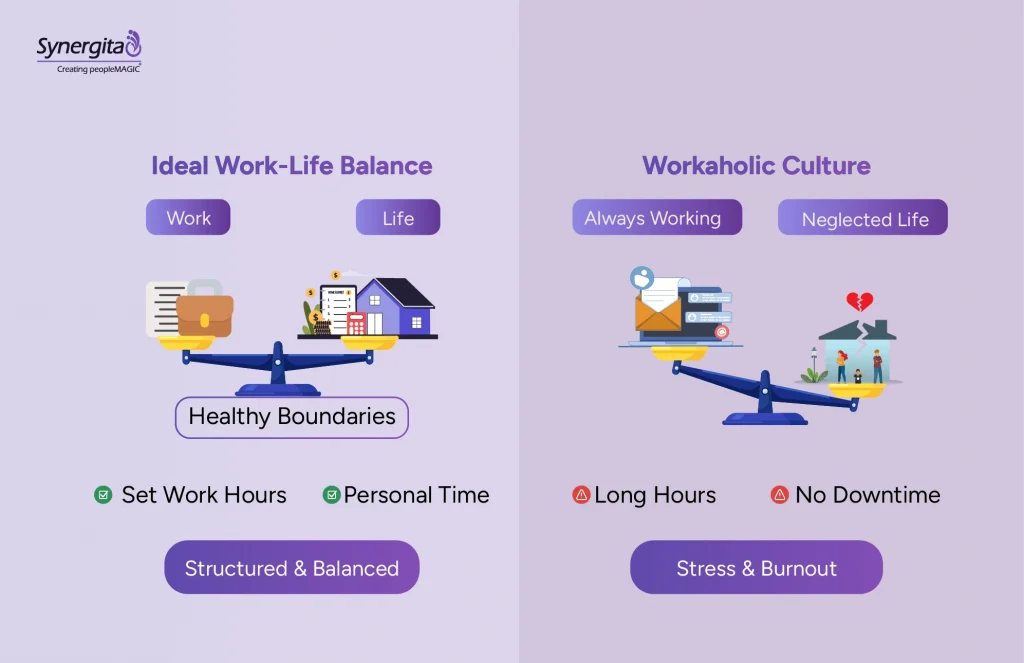
Work-life balance is not just about leaving the office on time. In a workaholic culture, it means actively managing your employees’ time, energy, and attention in a workaholic workplace. Disconnecting after work does not work in an environment where being always available is the unwritten rule.
To maintain a balance between work and personal life of your team members, you need a proper structure. This includes setting clear boundaries, realistic expectations, and continuous feedback so employees are not overburdened due to unclear priorities or last-minute changes.
What Are the Top Work-Life Balance Examples: 15 Practical Ideas
The following work-life balance examples are from various categories that you can implement irrespective of the industries.
Boundary-Setting Examples
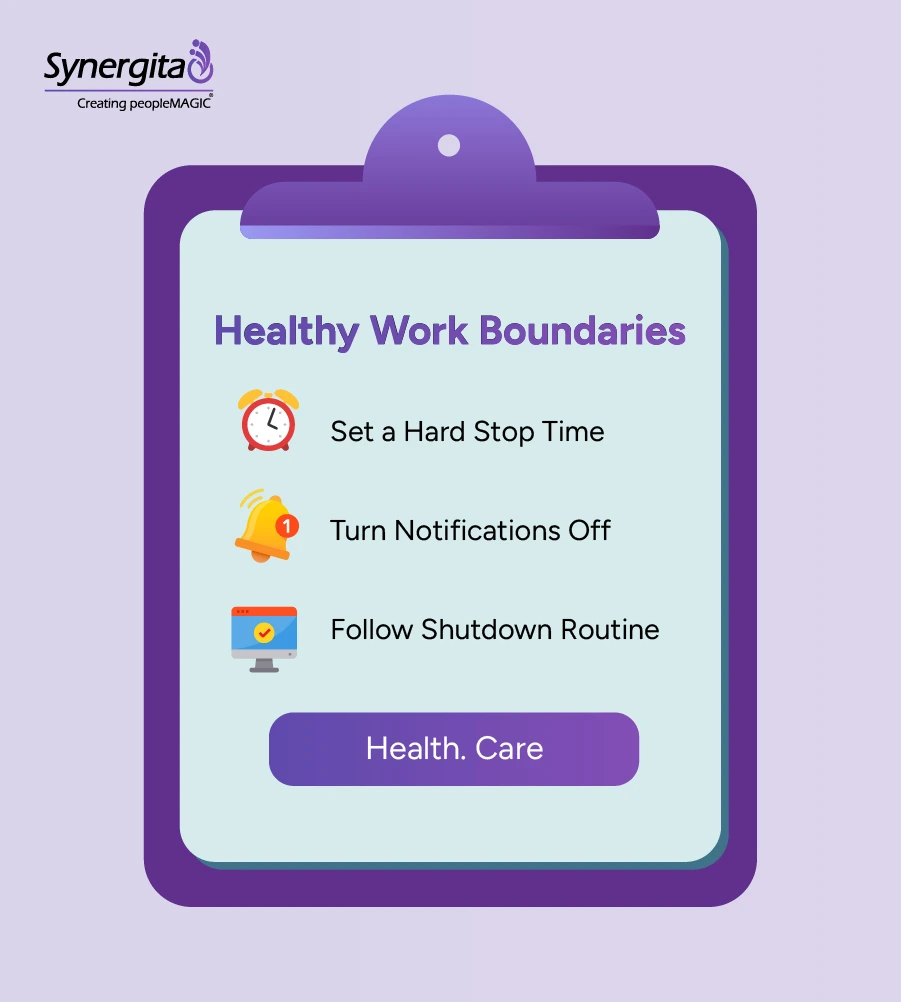
1. Set a Hard Stop Time and Inform Your Team
One of the good work life balance examples is managers setting boundaries to define the working hours and respecting that. When working hours are not clear, employees assume they are expected to be available at all times. If the manager is still online at 8 PM, the team assumes that they should have similar dedication.
For example, a manager logs off at 7 PM daily, shares next-day priorities in Slack, and does not respond to messages after working hours.
2. Switch Off Work Notifications After Hours
Telling employees to silence work notifications after hours is another work-life balance example that employers can follow. When some team members are expected to respond after hours, and others are not, the unwritten rule becomes that everyone should be available.
Managers can enforce this by setting “Do Not Disturb” after 8 PM, delaying non-urgent messages to the next day, and clearly stating that responses are not expected until working hours.
3. Encourage Employees to Block Personal Commitments on Calendar
Your employees’ personal commitments are the first things that get canceled when some urgent work comes up. Encourage employees to schedule work life balance activities like gym sessions, family dinner, and outings, and create a record and commitment that their time outside work has already been allocated. For instance, you block 7–8 PM for the gym on your calendar and decline meetings during that time.
Time Management Examples
4. Batch Your Email and Message Responses
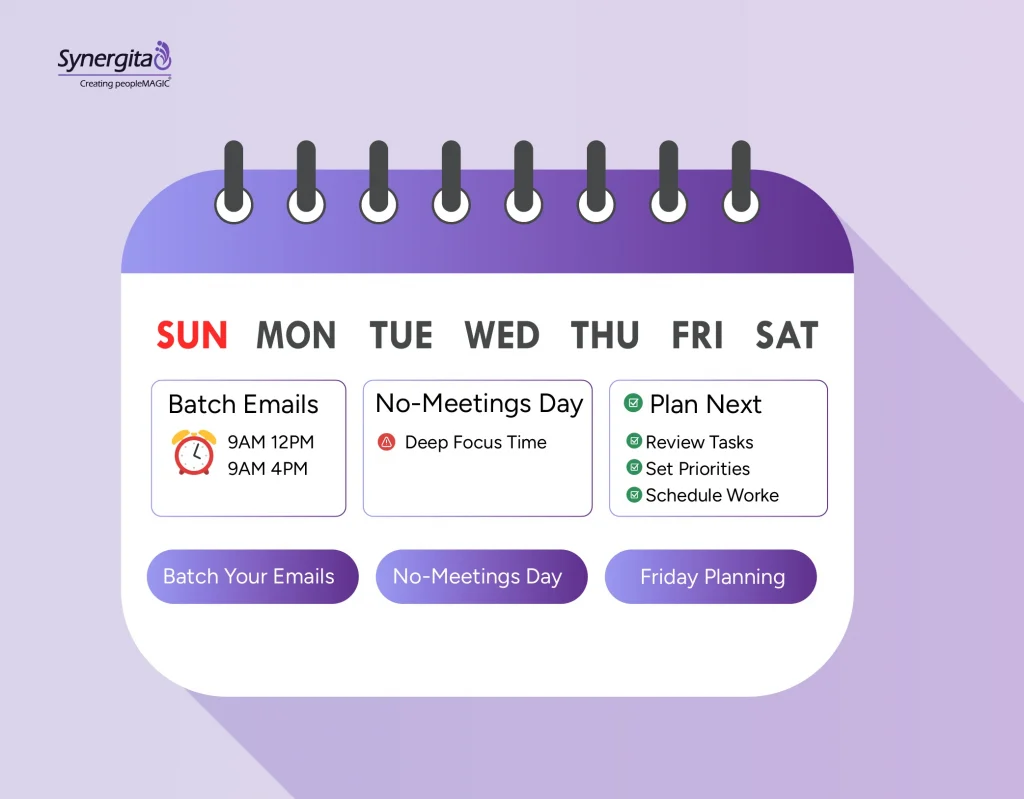
Checking messages and emails constantly impacts concentration and creates a reactive pattern that extends the workday beyond office hours. Designating specific windows for email, like morning, midday, and before the end of the day allow your team to focus on work.
One way to do this is asking your team to check emails at 10 am, 1 pm, 3 pm, and before leaving instead of treating every notification as something that needs immediate attention.
5. Negotiate a No-Meeting Day Each Week
Asking your employees to reserve one day per week without scheduled calls creates uninterrupted time for work that requires deep focus. Many organizations are formalizing this, but if it is not done in your organization, you should implement and follow it religiously.
For example, the team keeps Wednesdays meeting-free and uses that time for deep work like planning, coding, or analysis. This significantly helps increase productivity and boost employee morale.
6. Ask Team to Handle Small Tasks Immediately
Any task that takes a couple of minutes like a quick reply, a short approval, saving a file in the folder should be done immediately rather than added to a list. The reason is small incomplete tasks create mental noise that follows your employees into personal time. Clearing them as they arise is a smart way to close the loop. For instance, you reply to a quick message immediately instead of leaving it for later.
7. End the Week With a Team Planning on Friday
Another example of work life balance is encouraging teams to spend the last 15-30 minutes of Friday reviewing what was completed, what is pending, and what the priorities are for the coming week. This small habit gives the weekend a proper boundary, the week feels closed and not just paused.
Recovery and Rest Examples
8. Encourage Employees to Use Their Leave
Unused leave is one of the signs that a team’s workload or culture is not supporting recovery. Many employees hesitate to take time off because they worry about falling behind or being perceived as less committed. Managers can change this by openly encouraging their teams to plan leave at the start of each quarter and making it clear through their own behavior that taking time off is expected and permitted.
9. Create Short Recovery Moments in Workday
Continuous working drains a team’s energy and focus before the day is even halfway done. Managers can address this by leaving buffer time between meetings and work. Moreover, many people eat at their desk while working. This is not a break. The brain requires disengagement to restore concentration.
A simple way to do this is ask employees to take a 20-30 minute break away from their desks and avoid scheduling back-to-back meetings. These small changes prevent burnout and help improve employee engagement and focus.
10. Treat Sleep as a Professional Non-Negotiable
Chronic sleep deprivation affects decision-making, emotional regulation, and creative thinking. These things directly impact the quality of work your team produces. In many organisations, leaders address this by including sleep and recovery in wellness programs, discouraging the culture of late-night working. They also ensure workloads are realistic and no work-related messages after a particular time so that employees are not sacrificing sleep to keep up.
11. Track Team Workload Before Assuming Balance Is Fine
In many cases, managers assume their team has a healthy work-life balance until someone burns out or resigns. This can include reviewing logged hours and checking tools like Slack to track after-hours messaging activities. Businesses can also use performance management software to track workload patterns, employee effort, performance and run pulse surveys to identify burnout risks early.
Personal Priority Examples
12. Protect Personal Time by Respecting It Organizationally
When urgent work consistently comes in the weekend or late evening, personal commitments are the first things employees sacrifice. Managers can change this by separating the actual urgent work and what can wait till Monday. This means pushing non-urgent requests to weekdays, avoiding weekend messages, and stepping in when someone breaks this repeatedly.
13. Support Employees in Maintaining Interests Outside Work
People who have hobbies or interests outside their job are usually more focused, and less likely to burn out. Employers can encourage this through flexible working arrangements that give employees time to pursue personal interests and relationships rather than just productive resources. Another important thing managers can do is avoiding the culture of after-hours team events that replace personal social time rather than supplement it.
Mindset Examples
14. Create a Culture Where Saying No Is Acceptable
In many workplaces, overcommitment is rewarded and people following boundaries are penalized. This forces employees to take on others’ work, skip lunch/dinner to meet deadlines because the culture makes saying no feel like a career risk. The best way to handle this is when a team member says they’re at capacity, the manager reassigns the task to someone else.
15. Treat Rest as an Active Contributor to Performance
In workaholic cultures, rest is considered detrimental to productivity. But this is something employees earn after a full day of work. As an employer or manager, you need to treat it as something that complements productivity and not opposite to it. This helps employees recover both physically and psychologically the next day and come back with better focus.
10 Quick Tips for Building a Healthy Workplace Culture
Building a strong workplace culture requires clear intent and effort. Here are tips to help you start this practice.
- Set clear expectations: Define roles, goals, and priorities to avoid confusion.
- Respect work boundaries: Avoid after-hours messages and unrealistic demands.
- Recognize contributions: Acknowledge good work regularly and fairly.
- Encourage time off: Normalize breaks, vacations, and recovery time.
- Promote open communication: Encourage employees to provide honest feedback without fear.
- Prioritize well-being: Support activities for mental and physical well-being.
- Keep workloads realistic: Prevent burnout by balancing capacity and expectations.
- Support growth: Provide learning opportunities and career development.
- Address issues early: Act on conflicts and risks before they escalate.
- Lead by example: Managers should follow the rule and ensure others do the same.
Final Takeaway
Work-life balance in a workaholic culture is something you build deliberately through specific habits, clear boundaries, and measurable goals. The 15 examples in this guide provide you quick tips to start with. Pick 2-3 from different categories and apply them consistently, and evaluate the impacts for a period.
However, businesses looking to maintain work-life balance and personal sustainability without compromising performance need a proper system. Synergita Performance Management system gives you a structured way to track performance and maintain work-life balance. Try the Synergita Performance Management system for 14 days and explore how it can help you manage employee performance.

Frequently Asked Questions
1. What are examples of work life balance?
Some of the good examples of work-life balance include setting fixed working hours, switching off notifications after work, taking regular breaks, scheduling activities for next week on Friday and creating boundaries between work and personal life.
2. Why is work life balance important in a workaholic culture?
Work-life balance is essential in a workaholic culture, to prevent burnout, improve productivity, and maintain employee well-being.
3. What are the 7 aspects of a balanced life?
The seven aspects of a balanced life includes emotional, environmental, financial, intellectual, physical, social, and spiritual wellbeing.
4. What is the 8 8 8 rule work-life balance?
The 888 rule is a time management framework for maintaining balance between work and personal life that divides a 24-hour day into three equal parts: 8 hours of work, 8 hours of sleep, and 8 hours of personal time (hobbies, family, and self-care).
5. What is an unhealthy work-life balance?
An unhealthy work-life balance means working consistently and it becomes a priority over personal life. This leads to long hours, and little time for rest or personal activities, causing stress, burnout, and negative impacts on physical and mental well-being.