
Corporate leaders often fund automation initiatives that deliver impressive technical stats but fail to move the financial needle. You might see a 50% increase in script execution while your actual time-to-market remains frustratingly stagnant across departments.
This gap exists because technical teams often automate what is easy rather than what is strategically critical for the organization. Deploying bots or AI without a business-aligned roadmap creates a fragmented environment where manual workarounds still dominate the workday.
Without a unified framework, your automation budget becomes a “black hole” of capital that lacks measurable ROI or clear accountability. You need a disciplined system that connects every automated workflow to the high-stakes revenue and efficiency goals of the firm.
In this guide, we provide a data-backed playbook for implementing the OKR for automation methodology to drive competitive advantage. We will explore fifteen specific examples across DevOps, HR, and customer service to help you achieve sustainable operational scale.
Key Takeaways
- Successful automation OKRs prioritize “revenue per employee” or “cycle time” over purely technical metrics like “number of bots.”
- Focus on quality and reliability first; automating a broken or inefficient process only accelerates organizational failure.
- Use quarterly cycles to test automation in small pilot groups before committing to enterprise-wide infrastructure deployments.
- Effective key results include adoption rates and sentiment scores to ensure automated tools actually assist your human workforce.
- Measure the financial impact of manual bottlenecks to justify the upfront capital investment required for high-impact automation projects.
- Centralized goal tracking prevents departmental silos where different teams might build overlapping or incompatible automated systems.
Importance of OKRs for Automation
Automation is not a one-time project but a continuous effort to refine how your organization generates value. A structured goal-setting system provides the visibility needed to ensure your engineers are solving the most expensive bottlenecks first.
This discipline prevents “automation for the sake of automation” and ensures every line of code serves the company’s mission.
Implementing a formal framework provides several critical advantages for tech-forward leadership teams:
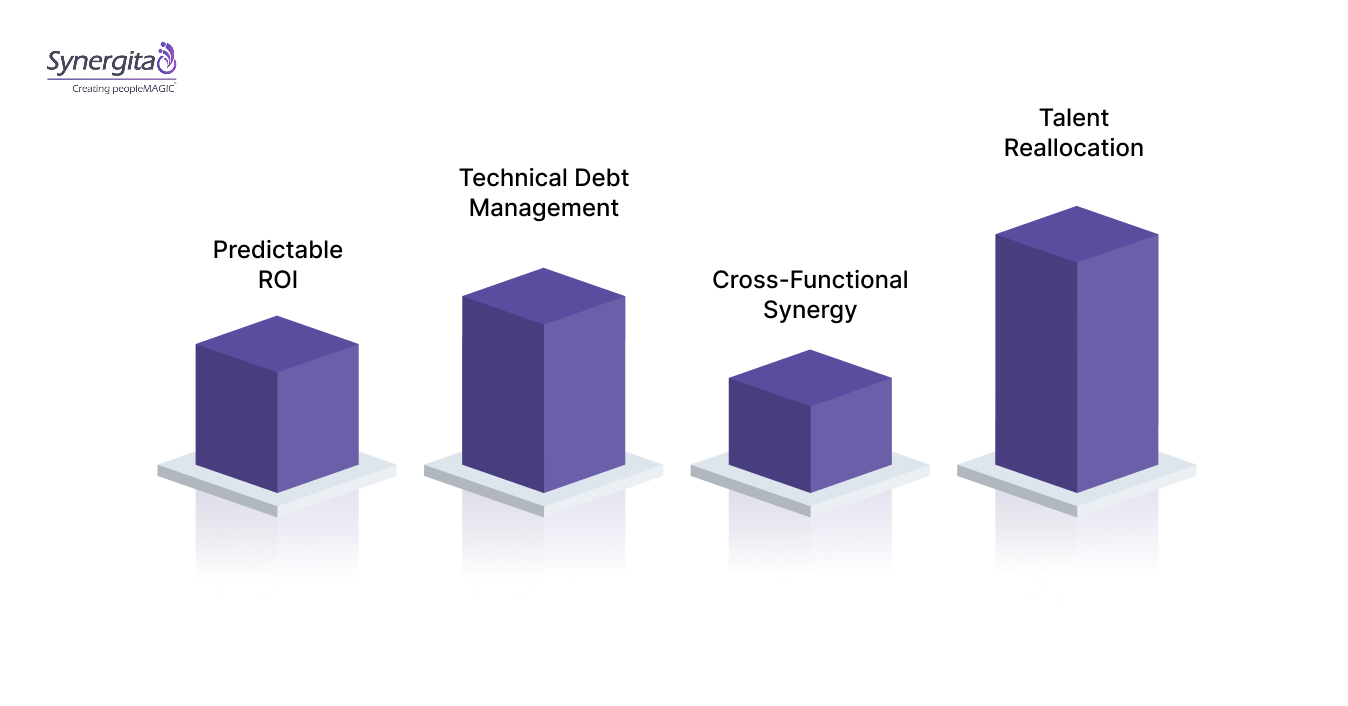
- Predictable ROI: Clearly defined key results allow finance teams to see exactly how automated workflows reduce operational expenditure and labor costs.
- Technical Debt Management: Setting specific objectives for system maintenance ensures that rapid automation does not lead to brittle or unmanageable codebases.
- Cross-Functional Synergy: Alignment features ensure that IT automation directly supports the specific throughput needs of Sales, HR, and Logistics departments.
- Talent Reallocation: Measuring the “hours saved” through automation allows HR directors to strategically reassign high-value talent to more creative, complex tasks.
A strong framework is only effective if your team knows how to draft goals that are both ambitious and measurable.
Also read: Effective OKR Examples for Teams and Businesses

How to Write Effective OKRs for Automation
Creating effective goals requires a deep understanding of the distinction between a technical metric and a strategic outcome. Your objectives should describe a qualitative state of improved operational health, while your key results provide the numerical proof.
Follow these steps to ensure your team remains focused on the outcomes that drive significant business impact:
1. Identify the Value Stream
- Analyze your current business processes to find the steps with the highest error rates or longest delays.
- Set an objective that addresses the root cause of these delays rather than just the visible symptoms.
- Ensure the objective is qualitative and inspiring, such as “Achieve instantaneous deployment for core product features.”
- Validate that this goal aligns with the top-level priorities of the CEO or Board of Directors.
2. Quantify the Efficiency Gain
- Use specific key results like “Reduce manual data entry time by 75%” to define success clearly.
- Include a quality-control metric to ensure that speed gains do not lead to an increase in errors.
- Baseline your current performance data before the quarter starts to ensure your progress measurements are accurate.
- Aim for “stretch” targets where achieving 70% of the result is considered a significant strategic win.
3. Factor in Team Adoption
- Set key results that measure how many staff members are actually using the new automated systems daily.
- Include a sentiment score to track if the automation is perceived as helpful or a hindrance.
- Monitor the training completion rates for employees who need to interact with the new automated workflows.
- Ensure that the technical transition does not negatively impact the overall employee engagement or “Culture Score.”
Establishing this disciplined approach allows you to implement specific examples that turn complex projects into business wins. Synergita provides the real-time visualization tools needed to track these trajectories.Book a demo to learn more.
Moving from high-level strategy to daily execution requires a comprehensive library of practical examples for your various departments.
15 Quintessential OKR Examples for Automation
Translating strategy into action requires concrete examples that your various technical and operational departments can customize for their needs. The following tables provide a comprehensive playbook for setting goals that cover the entire automation lifecycle within a modern enterprise.
Use these as a starting point to build your 2026 roadmap for growth, efficiency, and commercial excellence:
1. For Software Development & DevOps
| Objective 1 | Key Results |
| Achieve “Single-Click” deployment for the main production environment | 1. Reduce manual deployment steps from 12 to zero. |
| 2. Decrease the average deployment time from 4 hours to 5 minutes. | |
| 3. Maintain a 99.99% success rate for all automated production releases. |
| Objective 2 | Key Results |
| Automate quality assurance to accelerate the release cycle | 1. Increase automated test coverage for core features from 40% to 85%. |
| 2. Reduce the time spent on manual regression testing by 60 hours per month. | |
| 3. Identify and block 100% of high-severity bugs before they reach staging. |
Also read: 15 Customer Support OKR Examples: The Complete Guide to Scaling Support Quality
| Objective 3 | Key Results |
| Optimize cloud infrastructure management for cost efficiency | 1. Automate the shutdown of non-production environments during off-hours. |
| 2. Reduce monthly cloud spend by 15% through automated instance right-sizing. | |
| 3. Achieve 100% tag compliance for all cloud resources via automated scripts. |
| Objective 4 | Key Results |
| Enhance system reliability through automated incident response | 1. Reduce the Mean Time to Acknowledge (MTTA) critical alerts to under 2 minutes. |
| 2. Automate the resolution of the top 3 most frequent “low-severity” system errors. | |
| 3. Achieve a 25% reduction in total pages sent to the on-call engineer. |
2. For HR & Talent Management
| Objective 5 | Key Results |
| Modernize the employee onboarding experience through automation | 1. Reduce the time to complete onboarding paperwork from 3 days to 4 hours. |
| 2. Automate 100% of hardware and software provisioning for new hires. | |
| 3. Achieve a 95% “First Week Satisfaction” score for the automated process. |
| Objective 6 | Key Results |
| Streamline the performance appraisal cycle for the entire organization | 1. Automate 100% of review notifications and appraisal letter distributions. |
| 2. Reduce the HR administrative time spent on review cycles by 40%. | |
| 3. Achieve a 100% completion rate for self-appraisals within the first 10 days. |
| Objective 7 | Key Results |
| Improve internal mobility through automated skills matching | 1. Launch an AI-powered portal that suggests internal roles to 100% of staff. |
| 2. Increase the number of internal hires by 20% through automated notifications. | |
| 3. Maintain an 80% accuracy rating for automated “Skill-to-Role” suggestions. |
3. For Customer Service & Success
| Objective 8 | Key Results |
| Empower customers with an intelligent self-service ecosystem | 1. Reduce customer service contact rate per order by 30%. |
| 2. Resolve 50% of common support inquiries via an automated AI chatbot. | |
| 3. Maintain a CSAT score of 4.5/5 for interactions resolved by automation. |
| Objective 9 | Key Results |
| Scale proactive customer success through automated health tracking | 1. Automate the generation of “At-Risk” alerts for 100% of active accounts. |
| 2. Trigger automated re-engagement email flows for 100% of churn-risk users. | |
| 3. Reduce the average churn rate of at-risk customers by 10%. |
4. For Finance & Operations
| Objective 10 | Key Results |
| Accelerate the monthly financial close process through automation | 1. Reduce the time to close monthly books from 10 business days to 4. |
| 2. Automate the reconciliation of 95% of standard vendor invoices. | |
| 3. Achieve zero critical errors in the automated expense reporting system. |
Also read: Logistics OKR Examples: 15 Best Objectives And Key Results
| Objective 11 | Key Results |
| Optimize inventory management for the global supply chain | 1. Automate re-order triggers for the top 50 high-volume SKUs. |
| 2. Reduce out-of-stock incidents by 25% through automated forecasting. | |
| 3. Decrease the manual labor hours spent on inventory audits by 50%. |
5. For Marketing & Sales
| Objective 12 | Key Results |
| Enhance lead conversion through automated marketing nurture flows | 1. Increase lead-to-MQL conversion rate from 10% to 18%. |
| 2. Automate personalized content delivery for 100% of new inbound leads. | |
| 3. Achieve a 25% open rate for all automated email drip campaigns. |
| Objective 13 | Key Results |
| Improve sales productivity through automated CRM data entry | 1. Automate 100% of call logging and meeting notes via AI integration. |
| 2. Save each account executive an average of 5 hours per week on admin tasks. | |
| 3. Increase the total number of outbound sales touches by 30% per week. |
6. For Security & Governance
| Objective 14 | Key Results |
| Achieve “Compliance-as-Code” for the entire technical infrastructure | 1. Automate 100% of daily security scans for the production database. |
| 2. Reduce the time to remediate critical vulnerabilities to under 24 hours. | |
| 3. Pass the annual SOC2 audit with zero manual documentation requests. |
| Objective 15 | Key Results |
| Scale the legal document review process through AI | 1. Automate the initial risk assessment for 100% of standard vendor NDAs. |
| 2. Reduce the average legal review time for contracts by 48 hours. | |
| 3. Achieve a 95% accuracy rate for automated “Clause Identification.” |
Implementing these goals is significantly more effective when your organization utilizes a centralized platform for alignment. Book a demo to see how Synergita simplifies your 2026 planning with our easy-to-use administration module.
Transitioning from these examples to a successful rollout involves avoiding the subtle traps that often derail technical teams.
3 Common OKR Mistakes Automation Teams Make
Even with a strong library of examples, technical teams often fall into traps that sabotage their strategic progress. These errors usually stem from a lack of focus or a failure to align automated outputs with actual business needs.
Recognizing these pitfalls early allows you to build a more resilient and profitable organizational culture:
1. Automating Inefficient Workflows
Applying automation to a broken process only results in a faster, more expensive mess for the organization. This error often occurs when teams prioritize speed over the underlying logic of the business task.
Solution:
- Always conduct a process audit before writing any code to ensure the workflow is optimized.
- Set a key result for “Process Redesign Completion” before the automation begins.
- Consult with the actual end-users to identify where the current manual bottlenecks are.
2. Neglecting the Maintenance “Tax”
Automation scripts and bots require continuous updates as the underlying software and platform environments change. Teams often celebrate the initial launch while ignoring the ongoing labor required to keep the automation running.
Solution:
- Include a key result for “Automation Uptime” or “Script Maintenance Hours.”
- Budget time in every quarter specifically for the upkeep of existing automated systems.
- Use modular, well-documented code to reduce the future burden of technical maintenance.
3. Ignoring the “Human Element”
If your employees feel threatened by automation or find the new tools difficult to use, they will find workarounds. This leads to “Shadow IT,” where manual work continues alongside the expensive automated systems you built.
Solution:
- Measure the “Staff Adoption Rate” as a core key result for every project.
- Use Synergita’s engagement tools to capture employee feedback on new automated workflows.
- Provide clear training and demonstrate how automation frees staff for more rewarding work.
Establishing this level of discipline is easier when you follow proven implementation strategies for your department.
Also read: How to Set Effective OKRs for Startups: Examples & Strategies
Best Practices for Effective OKR Implementation
Sustaining a high-performance culture in technical departments requires more than just a good list of targets; it requires transparency. Your goal-setting process must be visible to everyone, from the DevOps engineer to the Chief Financial Officer.
This openness creates a sense of shared ownership that is vital for surviving the high-pressure environment.
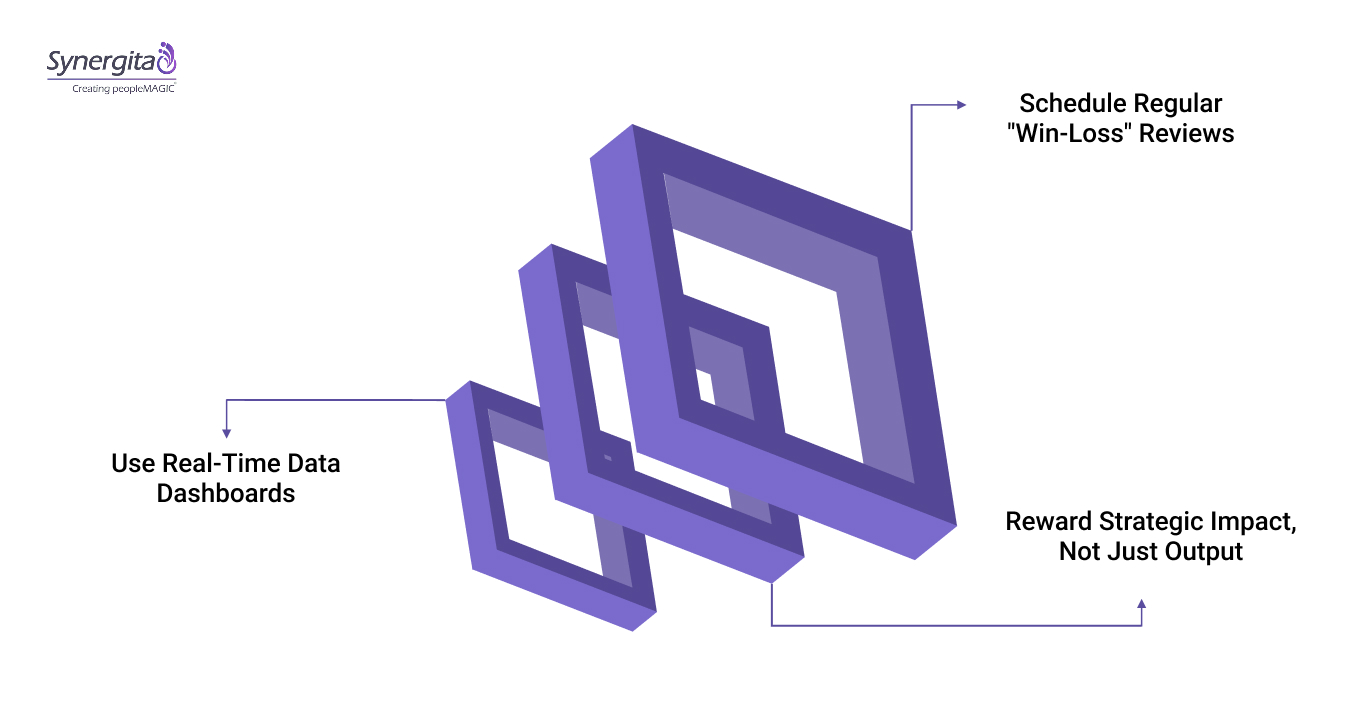
1. Use Real-Time Data Dashboards
Avoid the trap of manual spreadsheets by connecting your goal-tracking platform directly to your technical monitoring tools. This ensures that your progress measurements are objective and updated without requiring manual administrative labor.
Impact:
- Provides a single source of truth for all technical and business stakeholders.
- Allows for immediate course correction when a key result starts to lag.
- Reduces the time spent in status update meetings.
2. Schedule Regular “Win-Loss” Reviews
Conduct a formal analysis at the end of every quarter to understand why specific automation goals were missed or exceeded. Use these insights to refine your planning for the next cycle, ensuring that you never repeat the same mistake twice.
Impact:
- Encourages a culture of continuous learning and organizational growth.
- Improves the accuracy of future budget and resource allocation requests.
- Prevents the team from becoming discouraged by missed “stretch” targets.
3. Reward Strategic Impact, Not Just Output
Ensure that your performance appraisal process recognizes engineers who solve business problems, not just those who write the most code. Use your performance platform to track how individual contributions align with the company’s highest-value automation objectives.
Impact:
- Motivates the team to focus on work that truly drives the bottom line.
- Improves talent retention by providing clear career progression for high-performers.
- Reduces the amount of “busy work” that does not contribute to strategic goals.
Maintaining this level of focus requires a technical infrastructure that can support your organizational ambitions.
Synergita: Connecting Automation Strategy to Daily Performance
Automation leaders often struggle with a fragmented view of how their technical projects impact the broader workforce. You might see bots running successfully while your employee engagement scores drop due to poor change management or shifting roles.
This lack of visibility makes it impossible to manage the “human side” of the digital transition effectively.
Synergita provides a modular, cloud-based solution that specifically addresses the unique challenges of fast-moving, tech-forward organizations. Our platform consolidates your goal tracking, continuous feedback, and performance analytics into a single interface that facilitates real-time alignment.
- Lightweight OKR Module: Deploy your strategic framework across technical and operational teams in days.
- AI-Powered Analytics: Access distraction-free insights into goal trajectories and team sentiment through configurable dashboards.
- Culture Score: Monitor how automation impacts organizational values and employee alignment during periods of change.
- Continuous Check-ins: Facilitate meaningful 1:1 conversations that help staff transition into higher-value roles after automation.
By unifying your talent and goal management, you can ensure that your automation strategy is always moving in the right direction.
Also read: Performance Appraisal Best Practices for Effective Employee Reviews
Conclusion
The implementation of a disciplined OKR for automation strategy is the most effective way to drive measurable growth. By moving from purely technical metrics to business-aligned outcomes, you build the transparency necessary to optimize your capital and outpace competitors.
Avoiding common pitfalls like automating broken processes or ignoring maintenance costs will ensure your organization remains resilient and profitable. Synergita offers the modular flexibility your firm needs to scale its performance culture without the complexity of traditional enterprise software.
Our platform helps you align your team, engage your top talent, and prove your results through data-backed performance management tools. You can move beyond outdated annual reviews and create an agile culture that supports your long-term automation mission.
See how Synergita can structure and track your automation team’s goals. Book a demo to discuss your specific operational challenges.

FAQs
Q. How many automation OKRs should a technical team have per quarter?
Focus is critical for technical success. We recommend setting 2 to 3 high-level objectives with 3 to 5 measurable key results each to ensure the team can go deep on the most important work.
Q. Should we link automation OKRs directly to employee bonuses?
No, it is best to separate them to encourage ambitious “stretch” goals. If goals are tied directly to pay, teams will often set safe targets rather than the bold goals needed for breakthroughs.
Q. How do we measure the ROI of a new automation initiative?
Measure the “Cost of Manual Work” before the project and compare it to the “Cost of Maintenance + Remaining Manual Work” after. This provides a clear dollar value for the efficiency gained.
Q. What is the difference between an automation KPI and an OKR?
A KPI measures ongoing health, such as “system uptime.” An OKR drives a specific change or improvement, such as “Automate 100% of production deployments.”
Q. How do we prevent automation from hurting employee morale?
Be transparent about the goals and use the “hours saved” metric to show how staff are being freed from boring, repetitive tasks for more rewarding, strategic work.
Q. Can we use OKRs for small, two-week automation sprints?
OKRs are best suited for quarterly cycles (90 days). For two-week sprints, continue using your existing Agile or Scrum frameworks, ensuring they support the broader quarterly OKRs.