
Writing ambitious objectives is easy, but executing them before the deadline is the real challenge. As weeks pass, priorities change, and the team forgets about the key results to achieve. That’s where structured OKR management separates high-performing organizations from underperforming ones.
Quick Takeaway
- While OKRs are widely adopted, 46% of organizations rate their OKR execution below average, indicating the issue isn’t writing OKRs but rather managing them effectively.
- Strong OKRs measure change, not tasks. Define clear baselines, focus on measurable results, and move from activity tracking to outcome tracking.
- Cascading OKRs, quarterly alignment workshops, weekly check-ins, and a simple, consistent cadence prevent siloed goals and execution fatigue.
- Modern OKR tools offer a centralized platform for tracking and visualizing alignment, automating check-ins, and providing AI insights, helping teams stay focused on outcomes.
Setting OKRs sounds simple: pick some ambitious objectives, write key results, and track progress. But for many teams, the first few cycles end in frustration. Objectives are too vague, key results become task lists, and weekly check-ins feel like just another meeting.
Even experienced teams struggle with OKRs. Distributed work, hybrid schedules, and competing priorities may cause OKRs to lose relevance. The problem isn’t OKRs; it’s how they’re designed, aligned, and executed, which explains why OKRs fail for many teams.
In this blog, we will cover what OKR management is and five best practices that help you set meaningful goals in 2026, track real outcomes, and integrate OKRs into daily work, so your team can focus on impact, not just activities.
| Table of Contents 1. What is OKR Management? 2. 5 Key OKR Management Practices That Actually Work 3. How OKR Software Helps You Manage OKRs Effectively 4. Conclusion 5. Frequently Asked Questions |
What is OKR Management?
OKR management is the process of setting, aligning, tracking, and reviewing objectives and key results to ensure teams focus on measurable outcomes and progress toward company goals.
Effective OKR process management includes:
- Translating company strategy into clear, outcome-driven objectives
- Aligning team and individual OKRs with broader business priorities
- Defining measurable key results that indicate real progress
- Tracking performance through regular check-ins and reviews
- Using insights to course-correct and improve execution
5 Key OKR Management Practices That Actually Work
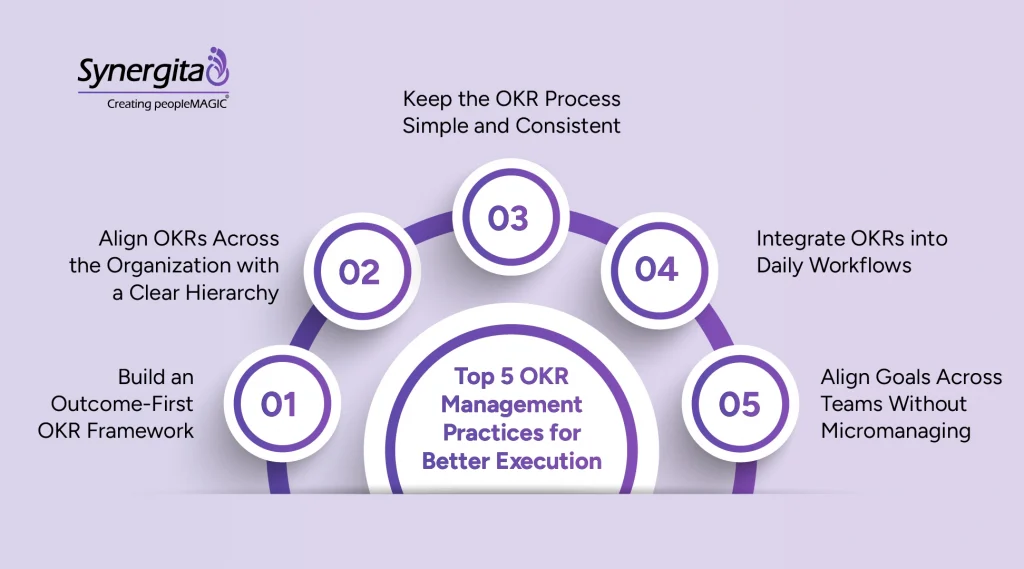
OKR management is a strategic necessity for businesses in 2026. However, 46% of organizations report performing below average on their OKRs. That’s why it is essential to manage OKRs more effectively. Here are five OKR management practices to drive results:
1. Build an Outcome-First OKR Framework
The biggest mistake teams make when creating and executing OKRs is confusing work with impact. Effective objectives should describe the change you want to create, and key results should measure whether that change happened. This helps teams move from activities to outcomes.
Example:
- Bad Objective: Improve customer support operations
- Better Objective: Reduce response time and increase customer satisfaction, or reduce turnaround time from 48 hours to 24 hours.
Quick Tip:
Document baseline metrics before starting the cycle. Without a starting point, it’s hard to know if your OKRs are making a real impact.
2. Align OKRs Across the Organization with a Clear Hierarchy
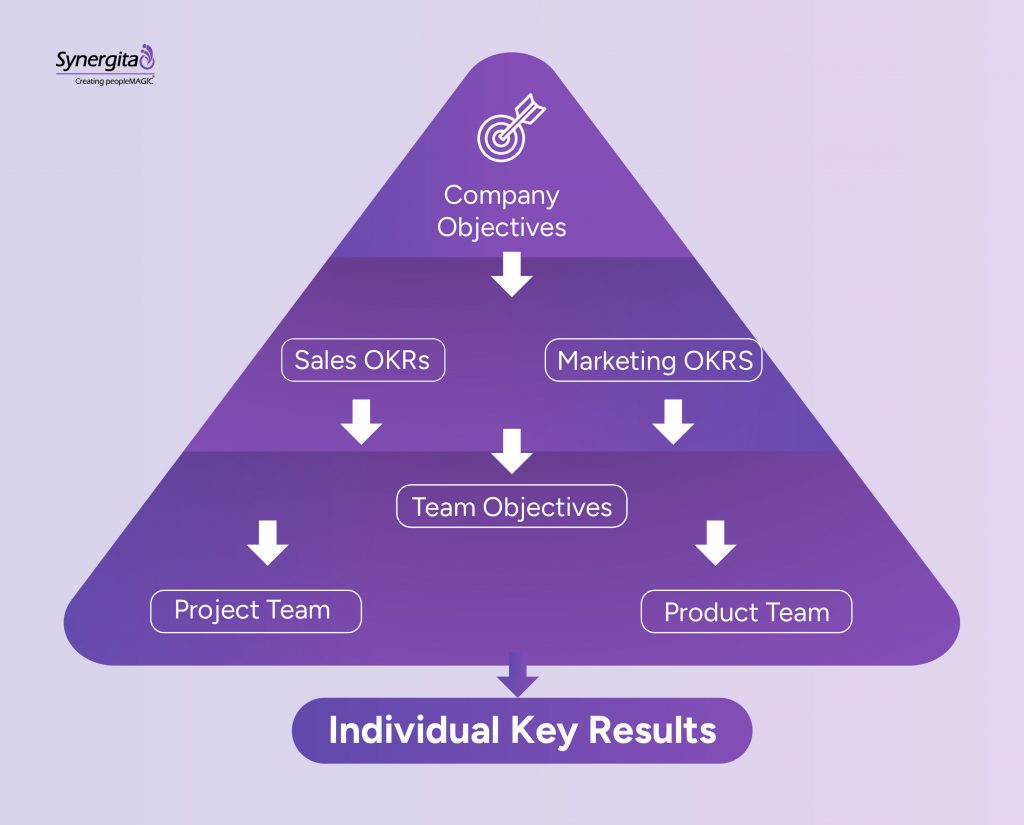
One of the biggest challenges in OKR management is ensuring that everyone’s goals align with the company’s overall strategy. Siloed goals waste time and dilute impact. A structured OKR management framework ensures that team and individual objectives follow cascading OKRs from company-wide priorities, giving everyone clarity on how their work contributes to the company’s goals.
Here is how to implement it:
- Start with 3–5 company-level objectives (e.g., “Increase customer retention by 20%”).
- Break these into departmental OKRs (e.g., Customer Success: “Improve onboarding experience” or Product: “Reduce feature delivery time by 15%”).
- Use OKR software to visualize alignment and flag any misaligned goals.
Quick tip: Host quarterly alignment workshops to refine dependencies and celebrate cross-team wins.
Suggested Reading: How Department Heads Build OKRs
3. Keep the OKR Process Simple and Consistent
Complicated processes significantly impact OKR adoption, so teams need simple templates and clarity on what they need to do every day to stay on track. A simple cadence helps maintain focus without adding unnecessary overhead.
Quick tips:
- One planning session at the start of the quarter
- Short weekly check-ins to review progress
- End-of-cycle reflection to adjust next steps
4. Integrate OKRs into Daily Workflows
OKRs must be integrated into daily workflows, not just kept in spreadsheets. When teams integrate OKRs into their workflows, they focus on performance rather than activity alone. If you are managing a team, ensure they are moving the metrics, not just checking off tasks.
Quick tips:
- Use a short OKR checklist to ensure OKRs are reviewed in weekly meetings, sprint planning, and retrospectives.
- Start meetings with a 5-minute OKR recap: “How did our work this week advance our goals?”
- Embed OKR metrics in performance reviews and sprint planning.
- Use Slack or Microsoft Teams bots to send weekly OKR reminders.
- Pro tip: Assign “OKR champions” in each team to keep goals top-of-mind.
5. Align Goals Across Teams Without Micromanaging
Objectives should translate strategy into measurable outcomes while giving teams ownership of how they achieve them. Top-down mandates can demotivate teams, while completely disconnected OKRs create confusion.
When you focus on alignment without micromanagement, it ensures that every team member understands how their work contributes to larger goals while maintaining autonomy. You can follow these tips to ensure alignment without micromanagement.
Quick tips:
- Define success criteria, but allow teams to choose the initiatives that drive results.
- Make OKRs visible across departments to encourage peer alignment instead of top-down control.
- Use quarterly cross-functional reviews to surface dependencies and resolve conflicts early.
- Measure outcomes, not activity volume, to avoid unnecessary oversight.
How OKR Software Helps You Manage OKRs Effectively
Managing OKRs manually, especially for a large or growing team, can be challenging. Aligning goals across teams, tracking real progress, and keeping everyone focused on outcomes can be overwhelming with spreadsheets and documents.
OKR management software provides a structured process that enables teams to spend more time on meaningful work. Here is how modern OKR tools improve OKR performance management.
- Simplify OKR tracking: You can see company, team, and individual OKRs in one place, making it easy to track OKR progress across the organization.
- Alignment visualization: OKR software ensures every team’s objectives connect to company priorities without micromanagement.
- Automated check-ins: Top OKR tools give reminders and updates automatically, so tracking progress doesn’t require extra meetings.
- AI-powered insights: Advanced OKR platforms like Synergita use AI to highlight stalled OKRs, predict potential roadblocks, and identify which initiatives are driving the most impact.
- Collaboration support: Cloud-based tools allow you to discuss, comment, and update OKRs in real time, even for hybrid or distributed teams.
Conclusion
OKRs can drive real impact when they are outcome-focused, aligned across teams, and tracked consistently. The practices we covered in this guide can help in OKR management, but leveraging the right tool makes execution even easier.
Synergita OKR management software helps you set objectives, track progress in real time, and keep everyone focused on outcomes rather than just tasks. It also provides AI-powered insights to identify what is working and where adjustments are needed, so your team can act quickly and stay on track.
Experience the benefits firsthand; start your free 14-day trial of Synergita OKR software today.
Frequently Asked Questions
OKR Alignment ensures each team and individual understands how their work contributes to company priorities, preventing duplicate effort and keeping everyone focused on outcomes that matter.
You can track OKRs through regular check-ins, clear metrics, and simple dashboards to track performance and keep progress visible and actionable throughout the cycle.
You should focus on 1–3 objectives per team and 2–4 key results per objective. This keeps teams focused on meaningful outcomes without overwhelming them.
Common OKR mistakes include setting too many OKRs, turning tasks into key results, skipping regular check-ins, ignoring baselines, and treating OKRs as performance evaluations.