



Are your managers defaulting to performance lectures instead of driving true development? Directive feedback often leads to resentment and short-term compliance, not sustained behavioral change. This failure to develop internal capability stunts employee growth and strains your talent pipeline.
The inability to hold effective coaching conversations represents a critical skill gap in mid-level management today. You need a system that teaches managers to ask insightful questions and guide employees to their own solutions. Shifting from telling to asking is the mark of high-maturity leadership.
This guide provides actionable frameworks for effective coaching conversations. You will learn specific techniques, timing strategies, and best practices. These methods develop self-sufficient teams that drive business results.
Quick Look:
- Coaching Defined: A collaborative discussion focused on future performance and self-discovery, not past failures.
- The Goal: Shift accountability to the individual, ensuring they own the solution and the execution.
- Core Technique: Use the GROW model to structure discussions: Goal, Reality, Options, Will.
- Best Practice: Ask open-ended questions and commit to the 70/30 rule (coachee speaks 70%).
- Strategic Timing: Intervene early on issues like missed deadlines, before they become major performance obstacles.
- System Support: Technology must capture action items and link them to performance metrics for continuity.
What Is a Coaching Conversation?
A coaching conversation is a structured, collaborative dialogue focused on developing an individual’s potential and achieving specific goals. It differs fundamentally from corrective or performance feedback by focusing on the future and the solution. The leader acts as a guide, not a judge or a source of all answers.
The conversation’s success is measured by the coachee’s ability to generate their own insights and commit to self-initiated action. This approach builds critical thinking and resilience, preparing employees for greater responsibilities. It is the most direct method for converting potential into high-impact performance.
Also read:How to Make Better Strategic Decisions in 2026: Process, Tools & Examples
Understanding the definition is only the starting point; the strategic value is realized in the measurable business impact.
Why Is a Coaching Conversation Important

Regular, effective coaching conversations are a strategic necessity for high-growth organizations. They directly impact retention, engagement, and the quality of internal decision-making.
These discussions move beyond administrative tasks to influence core business outcomes.When coaching is consistent, it builds a culture of continuous learning and psychological safety within teams.
This proactive approach prevents small issues from escalating into significant performance or morale problems. It is the essential engine of a future-focused, agile performance system.
Here’s why it is important:
1. Fosters Employee Ownership
By asking employees to create their own action plans, the leader ensures buy-in and accountability. This eliminates passive compliance and guarantees a stronger commitment to achieving the outcome. Ownership is the critical differentiator in high-performing teams.
2. Accelerates Skill Development
Coaching targets specific behavioral gaps and uses current challenges as real-time learning opportunities. It transfers problem-solving skills from the manager to the employee, creating a more capable workforce. Development becomes integrated into daily work, not siloed training.
3. Improves Communication Clarity
Structured coaching ensures that expectations are explicitly discussed, reducing ambiguity around roles and goals. The practice of active listening in coaching reduces misunderstandings and builds mutual trust. Clear communication directly supports timely project completion and collaboration.
Also read:Are You Tracking the Right Metrics for Employee Retention in 2026?
Moving from abstract benefits to consistent results requires using proven, standardized techniques across your organization.
Coaching Techniques For Effective Coaching Conversations
To ensure a productive and focused coaching conversation, leaders must use proven frameworks. These techniques provide a standard, repeatable process that guides the discussion toward actionable outcomes.
Standardizing these methods ensures consistent quality across all management levels:
1. GROW Model
This is the foundational and most popular coaching model globally for structuring discussions. It sequentially addresses the Goal, the current Reality, possible Options, and the Will to act. The GROW model ensures the conversation is focused, grounded, creative, and action-oriented.
2. Powerful Questioning
The core technique is asking open-ended questions that require thoughtful reflection, avoiding “yes/no” responses. Questions should begin with “What,” “How,” or “Tell me more about.” This technique compels the coachee to analyze the situation and explore internal resources.
3. Active Listening
This involves giving your undivided attention, noting nonverbal cues, and summarizing or reflecting back the coachee’s statements. Listening to understand, not just to reply, validates the coachee’s perspective. It builds the necessary trust for truly open, developmental dialogue.
Are you looking to reinforce a culture of continuous growth rather than relying on annual performance events? Synergita provides the Continuous Feedback Module to make coaching an ongoing, documented part of your culture. Book a demo to see how Synergita supports your agile, always-on development process.
Knowing the techniques is critical, but a high-impact leader also masters the art of timely and proactive intervention.

When To Have A Coaching Conversation

Coaching should not be reserved for annual reviews or major performance failings; it must be continuous and proactive. Strategic leaders use coaching conversations as timely interventions across various operational and developmental situations.
Recognizing the right moment is crucial for maximizing impact. Below are some situations where you can have a coaching conversation:
1. Coaching During Onboarding
Coach new employees on cultural norms, goal alignment, and navigating organizational structures during their first 90 days. This proactive guidance significantly reduces the time it takes for new hires to reach full productivity. It also establishes the developmental nature of the manager-employee relationship from the start.
How it helps:
- Reduces Time to Proficiency: Clarifies expectations early, allowing the new employee to focus energy on key results.
- Increases Cultural Acclimation: Helps the new hire understand unwritten rules and social dynamics, improving team integration.
- Establishes Accountability: Sets the foundation for future goal tracking and performance discussions immediately upon joining.
2. Coaching for Time Management
Initiate coaching when an employee consistently struggles with prioritization, meeting simple internal deadlines, or workflow organization. This intervention targets the underlying structural issues in how the employee approaches their daily tasks. It turns chronic disorganization into a manageable, coachable skill gap.
How it helps:
- Streamlines Workflows: Identifies specific bottlenecks in the employee’s process for resource allocation and planning.
- Boosts Operational Reliability: Ensures consistent delivery on smaller tasks, which builds trust and team dependability.
- Reduces Manager Oversight: Creates self-sufficiency in scheduling and priority management, freeing up leadership time.
3. Coaching After Missed Deadlines
Hold a conversation immediately after a key deliverable is missed, focusing on the system or process breakdown, not a character flaw. This timely intervention prevents excuses and quickly moves the discussion toward corrective action and accountability. It ensures performance standards are reinforced without emotional or subjective judgment.
How it helps:
- Reinforces Performance Standards: Establishes clear, non-negotiable expectations for future deliverable dates and quality.
- Identifies Systemic Issues: Uncovers organizational hurdles or dependencies that may have contributed to the failure.
- Focuses on Corrective Action: Immediately generates an action plan to prevent recurrence, limiting the focus on the past failure.
Also read:How to Develop an Effective HR Strategy Framework
4. Coaching for Overworked or Overwhelmed Employees
Coach on delegation, boundary setting, and resource allocation to prevent burnout and ensure sustainable productivity. This proactive coaching is a key retention strategy, protecting the well-being of valuable team members. It teaches employees to manage capacity, not just workload intensity.
How it helps:
- Prevents High Performer Attrition: Intervenes before burnout leads to resignation, protecting your talent investment and stability.
- Teaches Resource Management: Guides the employee on strategic prioritization and effective refusal of non-essential requests.
- Improves Decision Quality: Ensures work quality does not degrade due to excessive stress or capacity overload.
5. Coaching for Problem-Solving
Instead of handing down a solution, coach the employee through the process of generating and evaluating viable options for complex issues. This approach transforms a dependency moment into a developmental milestone for the employee’s critical thinking. It fosters independent judgment, which is crucial for rising leadership roles.
How it helps:
- Develops Independent Judgment: Teaches the employee to analyze complex issues and weigh various solutions internally.
- Scales Leadership Capacity: Managers spend less time fire-fighting and more time on strategic priorities and planning.
- Increases Solution Quality: Diverse employee perspectives often yield more creative and contextually appropriate solutions.
6. Coaching for Goal Setting
Use coaching to help employees define their OKRs and key results, ensuring goals are ambitious, measurable, and aligned with company priorities. This conversation links individual effort directly to the organizational mission, creating a clear purpose. It ensures every goal is a high-impact, strategic priority.
How it helps:
- Ensures Strategic Alignment: Guarantees individual efforts support top-down organizational OKRs and mission objectives.
- Increases Goal Clarity: Defines measurable Key Results upfront, eliminating ambiguity about what success looks like.
- Drives Motivation: Connects daily work to the bigger picture, enhancing employee purpose and engagement levels.
7. Coaching for Performance Obstacles
Address specific roadblocks, resource constraints, or skill gaps preventing an employee from reaching their agreed-upon performance level. This is a targeted intervention aimed at removing barriers to success. It reinforces that the leader is a partner in removing impediments, not just an evaluator.
How it helps:
- Unblocks Stalled Performance: Identifies and eliminates external barriers or necessary skill training quickly.
- Focuses on Development Spending: Pinpoints the precise training or resource investment required for the specific gap.
- Reinforces Partnership: Shows the leader is invested in the employee’s success, strengthening trust and collaboration.
Also read:How to Improve Employee Performance: Effective Strategies
Regardless of the timing, every discussion requires a clear, professional structure to guide the coachee toward committed action.
How To Structure Your Coaching Session

A well-structured coaching session ensures that the limited time is spent on generating insight and commitment, not just venting. Use the GROW model as your default framework for reliable, predictable results.
This professional structure demonstrates respect for the coachee’s time and focus:
1. Establish the Goal
Begin by clearly defining the specific issue and the desired outcome for the conversation itself. Agree on the contract: “By the end of this 30-minute session, what needs to be solved?”
2. Explore the Reality
Ask fact-based, probing questions to uncover the coachee’s current situation, existing resources, and past efforts. Avoid assumptions by seeking verifiable data and multiple perspectives on the challenge.
3. Generate Options
Encourage brainstorming a wide range of solutions, withholding your own judgment or suggestions completely. Quantity over quality is the rule here; explore possibilities without immediate commitment.
4. Commit to the Will
Guide the coachee to select the best option and define the precise first steps, deadline, and required support. End with a specific commitment: “What exactly are you going to do, and by when?”
Are vital coaching commitments getting lost between conversations and formal performance reviews? Synergita embeds action tracking and follow-up reminders directly into the employee’s performance profile. Book a free demo to learn more.
Applying this framework consistently demands adherence to foundational principles that ensure credibility and psychological safety.
Best Practices For Coaching Conversations
High-impact coaching transcends simple technique; it requires a foundational philosophical commitment from the leader. These best practices ensure consistency, psychological safety, and alignment with organizational goals.
Adopt these standards to create a professional, developmental environment:
1. Maintain a Future Orientation
Consistently focus the discussion on what the employee will do next, not on dwelling on past mistakes or failures. Frame challenges as opportunities for skill acquisition and growth. This shifts the mood from defensive to productive, maximizing the chance for breakthrough ideas. The conversation should emphasize forward momentum and learning application.
Action steps:
- Use “Moving forward, what is the first step you will take?” as a default question.
- Limit discussion of past errors to understanding root causes, then pivot to solutions.
- Frame all obstacles as learning data points, not as character or ability flaws.
2. Adopt the 70/30 Rule
Ensure the coachee is speaking approximately 70% of the time, guaranteeing they do the necessary analytical and reflective work. The leader’s role is primarily to guide, summarize, and ask powerful questions. This deliberate silence forces the employee to articulate complex thoughts and commit to their own solutions.
Action steps:
- Practice using pauses and silence to encourage the coachee to elaborate further on a thought.
- Limit your own contributions to open questions, summarizing, and offering clarifying data points.
- Actively resist the impulse to fill the silence or offer prescriptive advice immediately.
3. Connect to OKRs and Goals
Directly link the conversation’s action items to the employee’s measurable Objectives and Key Results. This emphasizes that coaching is a means to achieve business outcomes, not just personal development. This alignment ensures every coaching session provides a tangible return on the time invested.
Action steps:
- Review the employee’s current OKRs at the start of the coaching session for context.
- Ask, “How will this action plan move your Key Result from 0.4 to 0.6?” specifically.
- Document the agreed-upon action steps directly within the goal tracking system.
4. Create Psychological Safety
Ensure the coachee feels comfortable being vulnerable and discussing challenges without fear of immediate negative consequence. Confidentiality and non-judgmental inquiry are essential for building trust. The leader must establish that the coaching space is dedicated to learning and honest self-assessment.
Action steps:
- Explicitly state that the purpose is development, not performance assessment, at the start of the meeting.
- Use reflective listening to validate the coachee’s feelings before moving to problem-solving.
- Ensure follow-up conversations remain non-punitive, even if agreed-upon actions failed to yield results.
Beyond the fundamental principles, tailoring your approach for positive reinforcement or corrective action maximizes impact.
Tips For Effective Coaching Conversations
Tailoring your approach based on the employee’s current performance and the situation is essential for effectiveness. Different circumstances require a specific focus on either reinforcing good behavior or correcting poor behavior
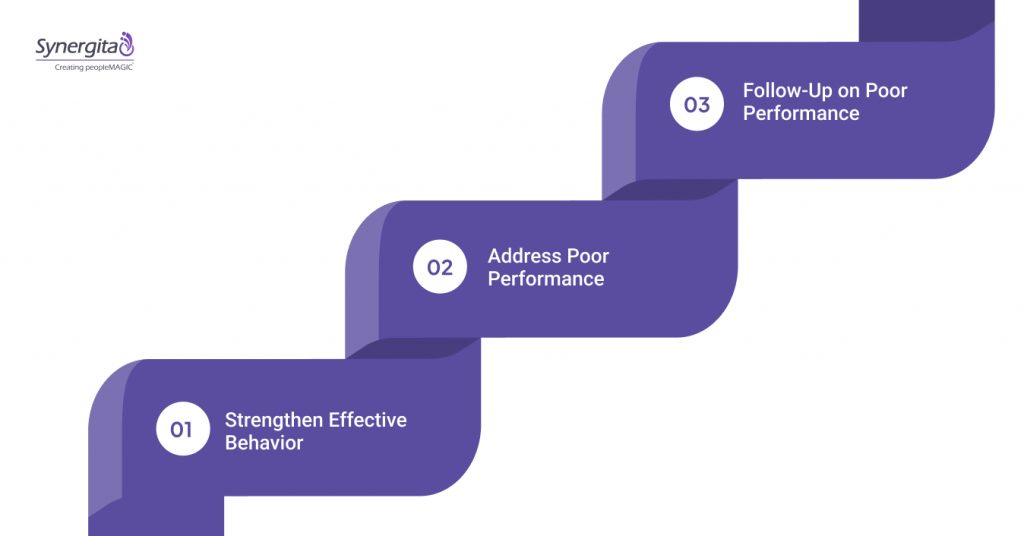
1. Tips to Strengthen Effective Behavior
Reinforcing positive actions is often neglected but critical for repeatable success.
- Acknowledge and Describe the Impact: Clearly state the specific positive behavior you observed and explain its positive business outcome. “Your proactive risk analysis saved us 20 hours of rework.”
- Explore the Success Mechanism: Ask the employee how they achieved the success, forcing them to articulate the successful process. This makes the effective behavior conscious and repeatable for the future.
- Discuss Application: Coach the employee on where else they can apply this successful process or skill in future projects. This scales individual wins into organizational best practices.
2. Tips to Address Poor Performance
Correcting performance requires data-driven clarity and a focus on the observed gap, not the individual.
- Define the Gap Factually: State the observable, measurable discrepancy between the expected standard and the actual result, using data. “The report was due Friday at 5 PM, and it was delivered Monday morning.”
- Explore Causes and Ownership: Ask the employee to identify the causes of the gap and take responsibility for the outcome, avoiding excuses. Focus on systemic or skill-based causes, not personality.
- Agree on an Immediate Action: Coach the employee to define one specific, measurable, short-term action that closes the immediate performance gap. This ensures the conversation ends with forward momentum.
3. Tips to Follow-Up on Poor Performance
Follow-up ensures accountability and reinforces the serious nature of the development plan.
- Schedule the Review Session Immediately: Establish a firm date and time for the follow-up meeting before the current conversation ends. This embeds accountability into the original agreement.
- Review Metrics and Behavior: In the follow-up, focus the discussion strictly on the agreed-upon metrics and the new behaviors. Use data to assess whether the gap has been successfully closed.
- Adjust and Continue Coaching: If the performance gap persists, coach the employee to adjust their action plan based on the data. Reiterate commitment to the standard and the path forward.
Sustaining these high standards across a large organization is challenging without the proper technological infrastructure.
Making Coaching Conversations Consistent With Synergita
Organizations struggle to maintain coaching quality across all management levels. Inconsistent approaches create development gaps and fairness concerns. This variability undermines coaching effectiveness and credibility.
Synergita provides the infrastructure to standardize coaching practices enterprise-wide. Our platform embeds coaching frameworks into daily management workflows. This ensures consistent development experiences for all employees.
The platform delivers these specific capabilities:
- Aspiration Tracking: Store individual development plans and career goals discussed during coaching sessions for easy reference and review.
- Progress Tracking Systems: Document coaching commitments and follow-up actions with automated reminder systems.
- 360° Feedback: Use data from multi-rater feedback to inform coaching topics, making discussions data-driven and focused.
- Development Plan Integration: Connect coaching outcomes to individual development plans and career aspiration tracking.
- Feedback Analytics: Use sentiment analysis to assess coaching effectiveness and identify manager development needs.
This systematic approach transforms coaching from occasional events into measurable business processes.

Conclusion
Mastering coaching conversations is non-negotiable for building a high-performing, resilient organization. These structured dialogues shift the leadership focus from merely telling to developing capability and ownership.
Adopting models like GROW and prioritizing active listening creates powerful developmental moments. Consistent coaching requires more than individual skill; it needs organizational infrastructure.
Synergita provides the framework and tools to make developmental conversations systematic and measurable. Book a free demo to see how Synergita’s integration strengthens leadership capability across your organization.
FAQs
Q. What is the 70/30 rule in coaching?
The 70/30 rule suggests that the coachee should be speaking approximately 70% of the time. Conversely, the coach should speak only 30% of the time. This ensures the focus remains on the coachee’s thinking, ownership, and self-discovery.
Q. What are the most effective coaching questions?
The most effective questions are open-ended and future-focused. They encourage self-discovery rather than providing direct answers. Questions should stimulate thinking about possibilities and solutions.
Q. How often should leaders use coaching questions?
Incorporate coaching questions into regular one-on-one meetings and check-ins. Use them when team members face challenges or make decisions. Balance coaching with direct guidance based on the situation’s urgency.
Q. What is the GROW model in coaching?
GROW represents Goal, Reality, Options, and Will. This framework structures conversations from desired outcomes to concrete actions. It provides logical progression for developmental discussions.
Q. How do coaching questions differ from regular questions?
Coaching questions are open-ended and non-leading. They explore thinking processes rather than just gathering information. Their purpose is development rather than simple inquiry.
Q. Can coaching questions work with senior team members?
Absolutely, with an adjusted focus on strategic impact and organizational outcomes. Frame questions around broader business implications and leadership challenges. Respect their experience while still promoting discovery.