



Providing feedback is one of the most powerful drivers for employee engagement, performance, and workplace culture. Done right, feedback cultivates trust, clarity, and motivation, qualities that determine an organization’s success and retention rates.
According to Gallup, 80% of employees who received meaningful feedback in the past week report being fully engaged at work.
And organisations practising frequent feedback, not just occasional check-ins, see a significantly greater lift in engagement compared with simply getting the “right number” of office days.
In this blog, we unpack practical strategies, feedback models, and real-world examples, guiding HR professionals and leaders on giving feedback that truly makes an impact.
Key Takeaways
- Effective feedback is clear, specific, and timely, focusing on behaviors and outcomes to guide employee growth.
- Balancing positive and constructive feedback motivates employees while helping them improve.
- Deliver feedback with empathy, choosing the right setting, and encouraging open, two-way conversations.
- Managers and HR play vital roles in nurturing a feedback culture by setting processes, training, and supporting ongoing dialogue.
- Using technology like Synergitamakes feedback continuous, measurable, and aligned with organizational goals, boosting engagement and performance.
Importance of Clarity in Feedback
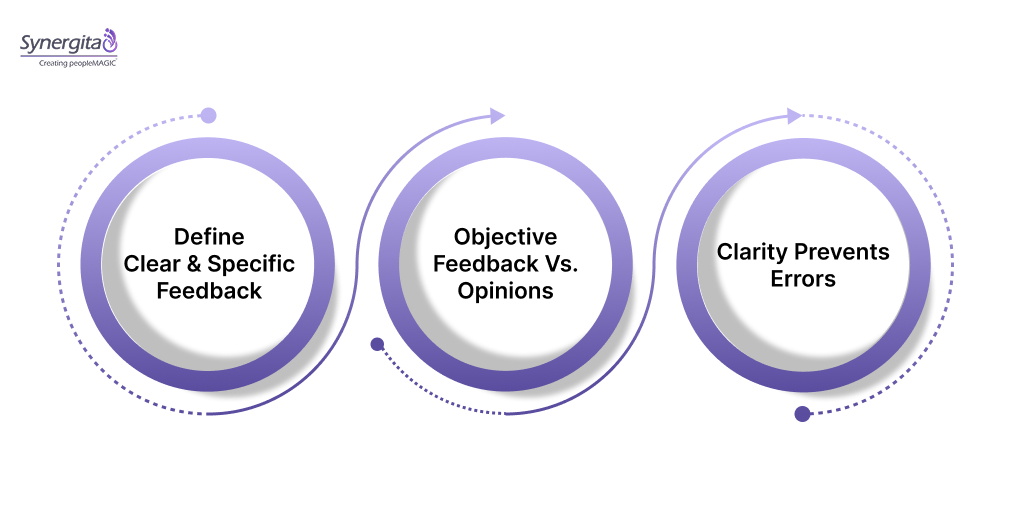
Feedback that lacks clarity is either ignored, misunderstood, or resisted. A Gallup study revealed that employees who receive clear, meaningful feedback are four times more engaged than those whose feedback is vague or infrequent.
Clarity starts with defining what needs improvement, why it matters, and how change can happen.
Define Clear and Specific Feedback
Specific feedback focuses on observable actions and outcomes, not general or subjective statements.
For instance, instead of saying “good job,” clarify what was good: “Your monthly report was well-organised and made complex data accessible for the team.” This specificity makes feedback actionable and measurable.
Objective Feedback vs. Subjective Opinions
Objective feedback is built on facts and direct observations. It leaves little room for argument or defensiveness.
If someone arrives late to meetings, say “You joined the last three meetings five minutes late,” rather than “You’re always late.” Objective feedback helps build trust and credibility by sidestepping personal judgments.
The Role of Clarity in Preventing Miscommunication
A lack of clarity in feedback often leads to misunderstandings, frustration, and a breakdown in trust. When employees are not sure what is expected from them, or which specific behaviours or outcomes need to improve, they may feel uncertain about their performance, which can negatively impact confidence and productivity.
Clear feedback removes ambiguity. It helps employees understand the why, what, and how behind expectations, making it easier for them to take meaningful action. When managers offer specific examples, outline measurable goals, and describe the desired outcome, feedback becomes a tool for empowerment rather than criticism.
Clarity also supports accountability and alignment. When expectations are explicit, employees can prioritise effectively, collaborate better, and stay motivated because they understand how their efforts contribute to team and organisational success.
Also Read: Continuous Feedback in Performance Management System – Is it relevant?
Balancing Positive and Constructive Feedback
Positive feedback acknowledges achievements and reinforces desired behaviors. Gallup found that employees who receive strengths-based feedback have turnover rates 14.9% lower than those who receive none.
Recognizing effort boosts morale, encourages repetition of good work, and fosters a positive feedback culture.
Constructive Feedback with a Growth Mindset
Constructive feedback should be framed as an opportunity for growth. Avoid blame or negativity; focus on what can be improved.
“Your presentations are engaging, but providing a summary at the end can help the audience retain information.” This approach inspires learning rather than defensiveness.
Using the Feedback Sandwich and Other Models
The Feedback Sandwich (positive comment – constructive feedback – positive reinforcement), SBI (Situation, Behavior, Impact), and STAR (Situation, Task, Action, Result) models provide structure:
- Feedback Sandwich: Soften criticism with recognition and encouragement.
- SBI (Situation-Behavior-Impact): Describe situation, observed behavior, and resulting impact. Clearly describe context and behavior, and highlight its impact.
- STAR (Situation-Task-Action-Result): Recount the context, assigned task, action taken, and outcome. Detail the situation and actions leading to an outcome; this reduces bias and makes feedback actionable.
Discover how Synergita automates feedback cycles using structured models to create balanced, actionable conversations across teams.
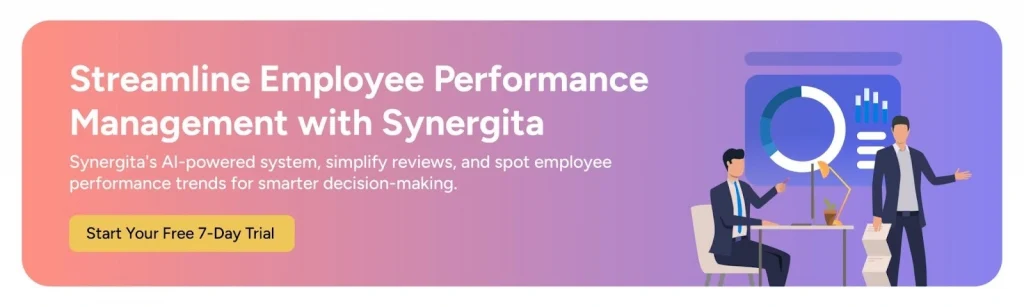
Timing Feedback Appropriately
Feedback should be given soon after an event, while details are clear and behaviors are fresh.
Employees who receive daily input from managers are 3.6 times more likely to feel motivated to excel, compared to those who wait for annual reviews. Ongoing feedback keeps goals and standards visible.
Recognizing When to Hold Feedback Conversations
Not every moment is right for feedback. Be aware of emotional state, privacy, and readiness to receive input.
Timely feedback should respect context: avoid giving criticism during stressful or public situations. Schedule check-ins—digital feedback platforms can enable quick, informal exchanges.
Using Technology for Timely Feedback
Continuous employee feedback tools, as used by companies like Adobe and Google, create more agile and responsive workplaces. They replace annual reviews with ongoing dialogue and facilitate immediate improvements, leading to higher employee retention.
Synergita’s real-time feedback loops empower teams with instant insights, making check-ins and timely feedback part of everyday workflow.
Also Read: A Successful Performance Culture depends on Continuous Feedback
Providing Real Examples and Clarifying Impact
Select specific events, behaviors, or outcomes when delivering feedback. For instance: “In last week’s client call, you addressed the technical issue promptly, which reassured the customer.”
Grounding feedback in reality removes ambiguity, reduces defensiveness, and reinforces trust.
Explaining the Impact on Team and Organizational Goals
Effective feedback should clarify its broader effects. “Your consistent deadlines helped us deliver the project on time, strengthening our reputation with the client.”
Linking individual behaviors to business outcomes, team goals, or company values elevates the feedback’s significance.
Making Feedback Measurable
Provide data or performance metrics where possible: “Your customer satisfaction scores increased by 20% after implementing feedback.” Measurable progress helps motivate further improvement.
Synergita’s analytics module lets managers track impact and improvement, ensuring feedback is linked to concrete results and strategic goals.
Also Read: How does Synergita help align YOUR OKRs with Organizational Goals?
Encouraging Two-Way Dialogue
Invite employees to share their perspectives and feelings about the feedback.
Use open-ended questions like,
- “What do you think went well in that presentation?”
- or “How can I support your growth in this area?”
Listening demonstrates respect and invites meaningful dialogue.
Psychological Safety and Building Trust
Create an environment where feedback can be shared honestly without fear of reprisal. When employees feel safe to speak up, share challenges, ideas, or criticisms, feedback becomes a tool for growth rather than a source of anxiety.
Interestingly, only 42% of employees report formally giving feedback to their managers. This suggests a large majority remain silent, perhaps due to hesitation, uncertainty, or lack of trust.
By encouraging upward feedback, peer-to-peer comments, and cross-team input in a respectful and supportive setting, organisations can build a culture of openness. This not only fosters trust but also ensures that valuable insights from across the team are heard and acted upon.
Collaborative Action Plans
Turn feedback into joint action steps. Work together on specific goals, timelines, and follow-up plans, making improvements a shared responsibility.
Use Synergita’s continuous feedback platform to create ongoing two-way conversations, building a transparent and inclusive feedback culture.
Also Read: The Future of Performance Assessment: From Evaluation to Dialogue
Offering Solutions and Clear Guidance
Providing feedback without offering concrete next steps can leave employees feeling uncertain or unsupported. Solutions turn constructive criticism into development opportunities and show commitment to employee success.
Clear guidance ensures the feedback is a starting point for progress, not just a list of faults.
Collaboratively Setting Development Plans
- Engage employees in creating their improvement plans. Ask questions like, “What steps do you see as helpful to address this?” or “How can I support you to build this skill?”
- Set realistic, measurable goals with timelines. For example, “Complete the advanced Excel certification within the next quarter” or “Lead the next team meeting to build public speaking confidence.”
- Document plans together, making them a shared responsibility rather than a top-down mandate.
- Regularly review these plans during 1:1s to track progress, celebrate small wins, and adjust if necessary.
Providing Resources and Support for Growth
Offer tailored resources like training programs, workshops, or mentorship relevant to the feedback given.
- Encourage the use of internal tools or platforms that facilitate skill-building aligned with organizational goals.
- Support through coaching or pairing with more experienced colleagues to practice new skills in a safe space.
- Clear guidance combined with resource availability improves motivation and reduces resistance to change.
Tracking Progress and Adjusting Plans
Follow up on progress with structured check-ins to show ongoing support and accountability.
- Use feedback tools that allow easy documentation of milestones and offer visibility to both employee and manager.
- If goals are off-track, diagnose barriers together and redefine strategies.
- Reinforcement helps employees learn that feedback is a journey, not a one-time event.
Synergita simplifies this process with dedicated modules for setting goals, tracking development, and offering personalized learning—helping organizations build a growth-focused culture.
Delivering Feedback with Empathy and Care
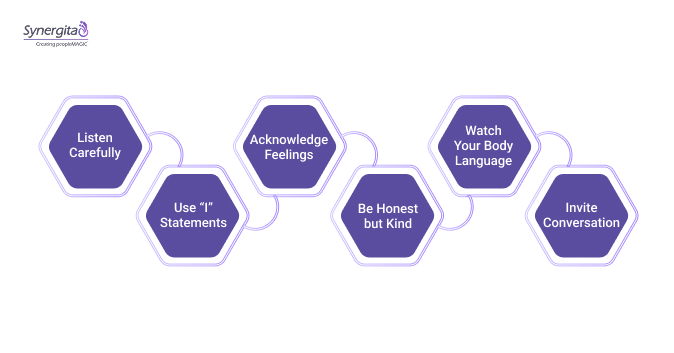
Recognize how feedback might make someone feel. Stay calm, acknowledge emotions, and give time for reflection. “I understand this feedback may be hard to hear—I’m here to support your growth.”
Giving feedback with empathy makes it easier for people to listen and improve. It shows you care about them as a person, not just their work.
In fact, 85% of employees take more initiative at work when feedback is delivered supportively and empathetically.
Listen Carefully
- Give your full attention.
- Show you understand by nodding or repeating key points.
- Listening makes employees feel respected and safe.
Use “I” Statements
- Focus on your experience, like “I noticed…” instead of “You always…”
- This helps reduce defensiveness.
Acknowledge Feelings
- Say things like, “I know this might be tough to hear.”
- Recognize their emotions to build trust.
Be Honest but Kind
- Speak honestly about behaviors, not personality.
- Use positive language to encourage growth.
Watch Your Body Language
- Keep an open posture and a friendly tone.
- Good eye contact shows you care.
Invite Conversation
- Ask questions: “What do you think about this?”
- Make feedback a two-way talk.
Synergita’s Sentiment Analysis enables managers to deliver empathetic, structured feedback supported by real-time analytics—boosting engagement and performance with care.
Choosing the Right Setting and Method
The place and way you deliver feedback matter a lot. The right setting helps the person feel comfortable, safe, and open to hearing your message.
Pick a Private, Comfortable Space
- Use quiet rooms or offices where conversations won’t be overheard or interrupted.
- Privacy helps employees feel secure, avoiding embarrassment or defensiveness.
- A calm, relaxed environment with good lighting and seating encourages openness.
One-on-One vs. Group Feedback
- Sensitive or critical feedback works best in one-on-one settings.
- Group feedback is appropriate for celebrating team wins or sharing common reminders.
- Avoid delivering negative feedback publicly to maintain respect and trust.
Use the Right Feedback Channel
- Verbal feedback allows tone, body language, and immediate dialogue.
- Written feedback creates clear records and is good for detailed points that employees can review.
- Digital tools (like Synergita) enable timely and documented feedback that can be tracked easily.
Also Read: How to Improve Employee Performance: Effective Strategies
Following Up and Recognizing Progress
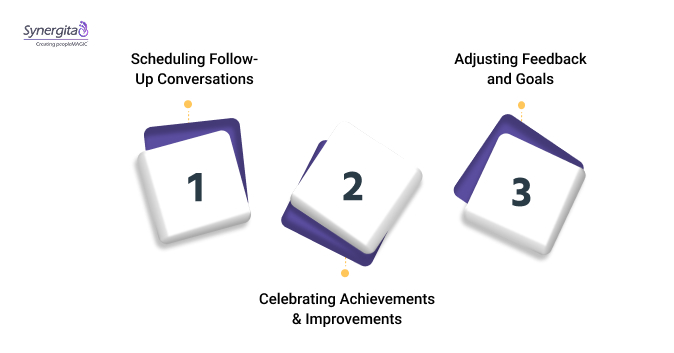
Follow-up and recognition are vital to making feedback meaningful. They show that feedback is not a one-time event but a continuous journey toward improvement and success.
Scheduling Follow-Up Conversations
- Set regular check-ins after giving feedback to discuss progress and challenges.
- Use these sessions to answer questions, clarify expectations, and adjust plans.
- Managers who follow up consistently build trust and accountability.
- Digital tools like Synergita help automate scheduling and reminders so feedback doesn’t get lost.
Celebrating Achievements and Improvements
- Acknowledge even small progress publicly or privately to boost morale.
- Celebrate milestones with praise, awards, or team shoutouts.
- Positive recognition reinforces good behaviors and motivates sustained effort.
- According to research, 69% of employees want more recognition at work, making celebration critical for engagement.
Adjusting Feedback and Goals
- Be flexible—if progress stalls, explore obstacles and update goals collaboratively.
- Provide additional resources, coaching, or training if needed to support growth.
- Feedback is an evolving conversation; revising goals shows commitment to employee success.
- Encourage employees to share their own feedback and suggest changes.
Synergita’s performance tracking tools make follow-ups simple and effective—helping managers celebrate wins and fine-tune development strategies with real-time insights.
Building a Feedback Culture in the Workplace
A strong feedback culture creates an environment where giving and receiving feedback is a normal, valued, and ongoing part of work. This leads to better communication, higher employee engagement, and continuous improvement.
Creating Policies and Systems
- Establish clear policies that define when and how feedback should happen.
- Encourage regular feedback sessions, such as weekly check-ins or quarterly reviews.
- Train managers and employees on giving and receiving feedback effectively.
- Make feedback a shared responsibility at all levels, not just management.
- Ensure feedback balances positive recognition with areas for improvement.
- Follow up on feedback outcomes to show it is meaningful and valued.
Encouraging Peer Feedback
- Promote a culture where colleagues give feedback to each other, not just from managers.
- Peer feedback increases trust and transparency within teams.
- Use tools or sessions to make peer feedback easy and comfortable.
- Recognize and reward teams that actively practice peer-to-peer feedback.
- Peer feedback helps identify different perspectives and encourages collaboration.
Embracing Technology
- Use platforms like Synergita to streamline feedback processes.
- Technology can automate reminders, document feedback, and offer easy access for all employees.
- Digital tools support continuous, real-time feedback rather than waiting for formal reviews.
- Integrated analytics help track feedback trends and employee development over time.
Synergita makes building a feedback culture easy by offering tools for continuous, peer, and manager feedback all in one platform—boosting team success.
Start Building Your Feedback Culture
Common Feedback Mistakes to Avoid
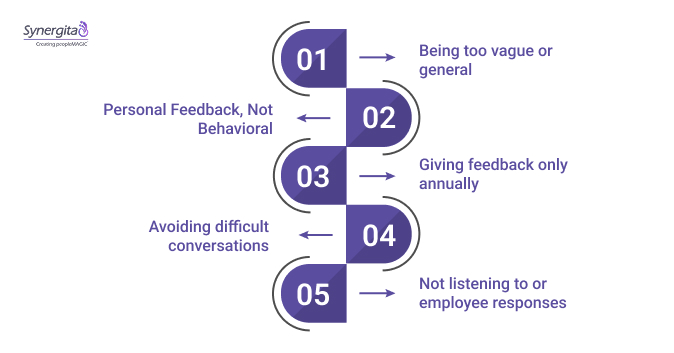
Avoid these pitfalls to ensure your feedback is effective and well-received.
- Being too vague or general.
- Making feedback personal, not about behavior.
- Giving feedback only annually.
- Avoiding difficult conversations.
- Not listening to or inviting employee responses.
Role of Managers and HR in Facilitating Feedback
Effective feedback depends heavily on managers and HR creating a supportive, open environment where feedback is regular, constructive, and acted upon.
Role of Managers
- Give clear, specific, and timely feedback to employees.
- Listen carefully and encourage open, two-way conversations.
- Create a safe space where employees feel comfortable sharing ideas and concerns.
- Follow up on feedback and support employee growth.
- Lead by example by asking for feedback themselves and acting on it.
Role of HR
- Set up regular feedback processes like one-on-ones and 360-degree reviews.
- Train managers and employees on how to give and receive feedback effectively.
- Provide tools that make feedback easy, timely, and trackable.
- Encourage upward feedback where employees can share honest thoughts about managers.
- Use feedback data to find patterns, fix issues, and improve culture.
- Act as neutral helpers to resolve conflicts and support communication.
Also Read: How to Get Better Feedback from Managers?

Wrap-Up: Empower Your Team with Meaningful Feedback
Creating a culture of clear, timely, and empathetic feedback drives continuous growth and stronger teams. When feedback becomes a regular, two-way conversation, employees feel valued, motivated, and aligned with company goals.
Use practical strategies and the right tools to make every feedback moment count and unlock your team’s full potential.
Synergita is a leading cloud-based platform designed to simplify OKR tracking, performance management, and continuous employee engagement.
Trusted by global organizations, Synergita helps streamline feedback, align goals, and empower employees with real-time insights.
Synergita Services
- OKR & Goal Management for transparent alignment
- Continuous Feedback & 360-Degree Reviews
- AI-Powered Analytics for actionable performance insights
- Employee Engagement Tools to boost morale and retention
- Customizable Workflows and Role-Based Access Controls
Ready to transform your feedback process and boost team performance? Get started with Synergita today and create a culture of growth and success!
Frequently Asked Questions (FAQs)
1. What is effective feedback?
Effective feedback is clear, specific, timely, and focused on behaviors or outcomes rather than personal traits. It helps employees understand what they are doing well and where to improve.
2. How often should feedback be given?
Continuous and frequent feedback is more effective than annual reviews. Regular check-ins, ongoing conversations, and real-time input foster growth and engagement.
3. Isn’t feedback just criticism?
No. Feedback includes positive recognition and constructive suggestions. Balanced feedback motivates and supports development.
4. How do I give feedback without hurting feelings?
Use empathy, focus on facts, and deliver feedback privately. Frame feedback with “I” statements and invite conversation for mutual understanding.
5. Can peer feedback be trusted?
Yes. Peer feedback provides valuable insights from different perspectives and increases team collaboration and trust.
6. How do I handle resistance to feedback?
Address concerns openly, explain benefits, and offer support. Build trust and create a safe environment for honest dialogue.