



Global supply chains face unprecedented volatility that erodes profit margins overnight. Missed deliveries, rising fuel costs, and inventory disconnects often signal a deeper operational failure. You cannot manage this complexity with static annual goals or gut feelings.
You must bridge the gap between strategic planning and daily execution. OKR logistics frameworks provide the agility needed to adapt to market shifts instantly. They turn high-level efficiency goals into specific, trackable actions for every warehouse manager and driver.
In this guide, we provide actionable frameworks to optimize your supply chain operations. We focus on concrete examples that drive cost reduction and service reliability.
Quick Look
- Service over speed: Speed means nothing if the goods arrive damaged or incomplete. Balance velocity goals with quality assurance metrics.
- Inventory velocity: Focus on increasing inventory turnover rates to free up working capital. Stagnant stock is a silent budget killer.
- Safety as a metric: Include safety incidents as a Key Result. A safe warehouse is efficient, while accidents cause costly operational shutdowns.
- Vendor accountability: Use OKRs to measure supplier performance rigorously. Hold partners accountable for lead times and accuracy to protect your downstream reliability.
- Digitization is non-negotiable: Shift from paper trails to digital tracking. Key Results should measure the adoption rates of new tracking software or scanners.
What Are Logistics OKRs?
Logistics OKRs connect supply chain strategy to daily operational metrics. An Objective defines a qualitative goal, such as “Improve Delivery Speed.” Key Results provide the quantitative evidence of success, like “Reduce average transit time by 20%.”
This framework helps logistics leaders move beyond standard KPI monitoring. While KPIs track health (e.g., fuel costs), OKRs drive change (e.g., implement a new route optimization system). They align diverse teams, from warehouse staff to fleet managers, toward common business outcomes.
Also read: OKR vs KPI: Key Differences and How to Use Both
Defining the goal is simple, but understanding why it matters ensures team buy-in across the warehouse and fleet.

Why Use OKRs For Logistics Specialists
Logistics teams often suffer from silos where drivers, dispatchers, and warehouse staff operate independently. OKRs force these distinct units to align on shared priorities that impact the bottom line.
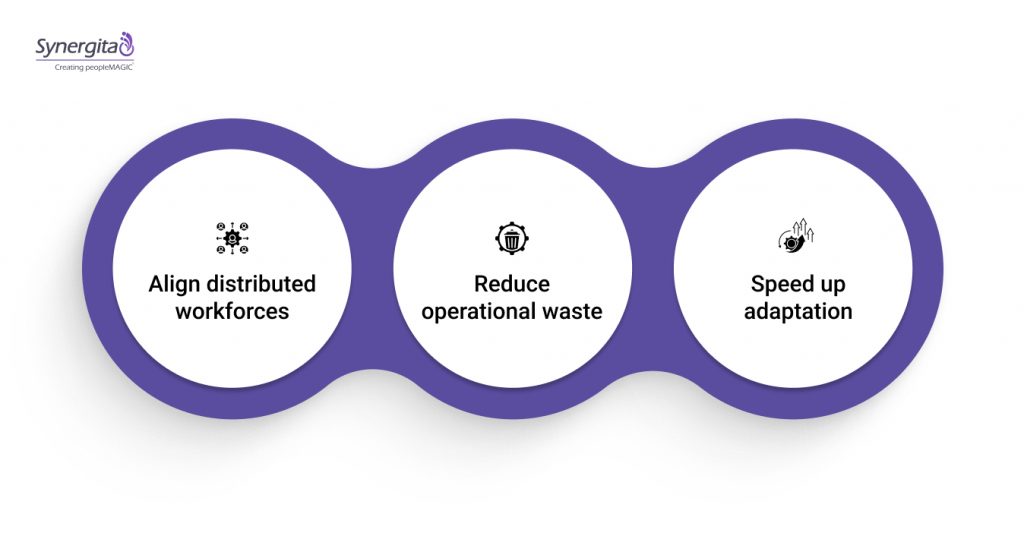
Here is why you need this framework:
1. Align distributed workforces
Drivers and warehouse staff rarely interact but share the same goals. OKRs ensure that a packer’s accuracy directly supports the driver’s delivery success. Everyone understands their role in the final customer experience.
2. Reduce operational waste
Hidden inefficiencies bleed budget in logistics operations. OKRs focus the team on reducing specific waste points like idle time or packaging overuse. You stop solving the wrong problems.
3. Speed up adaptation
Supply chains break due to weather, strikes, or shortages. Quarterly OKRs allow you to pivot focus quickly when external conditions change. You remain agile rather than sticking to irrelevant annual plans.
Align your drivers and dispatchers seamlessly. Book a demo with Synergita to visualize your entire supply chain hierarchy.
Also read: How to Improve Employee Performance: Effective Strategies
Now that you understand the value, let’s look at specific frameworks and metrics you can apply immediately.
Top 15 Logistics Objectives And Key Results
General goals like “do better” do not work in high-stakes logistics environments. You need precise targets that balance cost, speed, and quality.
Here are 15 OKR logistics examples to drive performance:
1. Optimize Inventory Management
Objective: Increase inventory turnover to free up working capital.
| Key Result | Target |
| Inventory Turnover Ratio | Increase from 4x to 6x annually. |
| Stock-out Rate | Reduce stock-outs to less than 2% of orders. |
| Obsolete Inventory | Liquidate 100% of stock older than 12 months. |
2. Reduce Transportation Costs
Objective: Lower shipping expenses without compromising delivery speed.
| Key Result | Target |
| Cost Per Mile | Decrease the average fleet cost per mile by 10%. |
| LTL to TL Conversion | Consolidate 30% of LTL shipments into Full Truckload. |
| Carrier Renegotiation | Secure 5% rate reduction with the top 3 carriers. |
3. Improve Supplier Reliability
Objective: Ensure upstream partners meet strict quality standards.
| Key Result | Target |
| On-Time Inbound Delivery | Increase the supplier’s on-time rate to 95%. |
| Order Accuracy | Achieve 99% accuracy on inbound manifests. |
| Vendor Lead Time | Reduce average lead time from 14 days to 10 days. |
4. Enhance Last-Mile Delivery
Objective: Perfect the final leg of the customer journey.
| Key Result | Target |
| On-Time Delivery Rate | Achieve 98% on-time delivery for end customers. |
| Customer Complaints | Reduce delivery-related tickets by 25%. |
| Cost Per Delivery | Lower the last-mile cost per unit by $0.50. |
Also read: Don’t Miss Out These 10 Best OKR Examples for Operations
5. Strengthen Warehouse Safety
Objective: Create a zero-accident culture in all distribution centers.
| Key Result | Target |
| Safety Incidents | Maintain zero “Lost Time Injuries” this quarter. |
| Safety Training | Ensure 100% of staff complete updated OSHA training. |
| Hazard Reporting | Increase near-miss reporting by 20% to identify risks. |
With Synergita, you make safety a visible priority across all distribution centers. Book a demo to track compliance and incident reduction.
6. Accelerate Order Fulfillment
Objective: Speed up processing time inside the warehouse.
| Key Result | Target |
| Order Pick Time | Reduce average pick time per order by 15%. |
| Dock-to-Stock Time | Process inbound goods within 4 hours of arrival. |
| Shipping Accuracy | Maintain a 99.9% packing accuracy rate. |
7. Implement Green Logistics
Objective: Reduce the environmental footprint of supply chain operations.
| Key Result | Target |
| Carbon Emissions | Reduce CO2 emissions per shipment by 10%. |
| Packaging Waste | Switch 50% of packaging to recyclable materials. |
| Route Optimization | Reduce total fleet idle time by 20%. |
8. Digitalize Supply Chain
Objective: Remove paper processes to improve data visibility.
| Key Result | Target |
| Manual Data Entry | Reduce manual entry errors by 90% via automation. |
| IoT Adoption | Install trackers on 100% of high-value assets. |
| Real-Time Visibility | Achieve 100% shipment tracking coverage. |
9. Improve Fleet Maintenance
Objective: Maximize vehicle uptime and reliability.
| Key Result | Target |
| Unplanned Downtime | Reduce vehicle breakdown incidents by 30%. |
| Preventive Maintenance | Complete 100% of scheduled services on time. |
| Asset Utilization | Increase fleet utilization rate to 85%. |
Also read: What are OKR Retrospectives? Key Practices and Strategies
10. Optimize Reverse Logistics
Objective: Streamline the returns process to recover value faster.
| Key Result | Target |
| Return Processing Time | Process all returns within 24 hours of receipt. |
| Cost of Returns | Reduce logistical cost per return by 15%. |
| Value Recovery | Increase the resale of returned items by 20%. |
11. Enhance Customer Communication
Objective: Provide proactive updates to reduce support volume.
| Key Result | Target |
| WISMO Tickets | Reduce “Where is my order” tickets by 40%. |
| Tracking Page Visits | Increase customer engagement with tracking links to 80%. |
| Notification Accuracy | Ensure 100% of delays trigger an automated alert. |
12. Reduce Packaging Waste
Objective: Optimize box utilization to lower shipping weight.
| Key Result | Target |
| Air Shipment Ratio | Reduce “shipping air” (empty space) by 15%. |
| Dimensional Weight | Lower average DIM weight charges by 10%. |
| Material Costs | Reduce packaging spend per unit by 5%. |
13. Streamline Freight Auditing
Objective: Eliminate overpayment on carrier invoices.
| Key Result | Target |
| Billing Errors | Identify and recover 100% of billing discrepancies. |
| Audit Cycle Time | Reduce invoice audit time from 5 days to 1 day. |
| Duplicate Payments | Eliminate all duplicate carrier payments. |
14. Improve Cross-Docking Efficiency
Objective: Move goods faster through the transfer points.
| Key Result | Target |
| Dwell Time | Reduce average pallet dwell time to under 2 hours. |
| Handling Touches | Decrease touches per unit by 20% via cross-docking. |
| Throughput Volume | Increase cross-dock throughput by 15%. |
15. Vendor Contract Negotiation
Objective: Secure better terms for the upcoming fiscal year.
| Key Result | Target |
| Payment Terms | Extend payment terms from Net 30 to Net 45. |
| Service Level Agreements | Sign updated SLAs with the top 5 vendors. |
| Rate Locking | Lock in fixed fuel surcharges for 12 months. |
Having the right goals is only half the battle; you also need the right execution discipline to avoid operational drift.
Do’s and Don’ts When Using OKRs for Logistics Specialists
Success depends on execution, not just writing goals down. You must avoid common pitfalls that turn OKRs into administrative burdens.
Follow these guidelines to keep your logistics team on track:
| Do’s | Don’ts |
| Focus on Outcomes: Measure the result (e.g., delivery time), not the activity (e.g., attend meetings). | Don’t Track BAU: Do not set OKRs for “Business as Usual” tasks like “load trucks daily.” |
| Update Weekly: Logistics moves fast; check progress every week to catch delays early. | Don’t Set Too Many: Limit objectives to 3-5 to prevent loss of focus in a busy warehouse. |
| Involve Drivers: Ask frontline staff for input to ensure targets are realistic. | Don’t Ignore Safety: Never set speed targets that encourage unsafe driving or handling. |
| Link to Strategy: Ensure every metric supports the broader company profit or growth goals. | Don’t Set and Forget: Do not review goals only at the end of the quarter. |
Also read: OKR Software Isn’t One-Size-Fits-All: Here’s How to Find Yours
Discipline helps, but manual tracking eventually breaks down; you need a dedicated platform to scale these habits.

From Operational Chaos to Strategic Execution With Synergita
Logistics leaders often struggle to translate strategic goals into daily warehouse and transportation priorities. Spreadsheets and sporadic meetings fail to create the visibility and alignment needed for complex supply chains. This disconnect results in costly inefficiencies and missed service-level agreements.
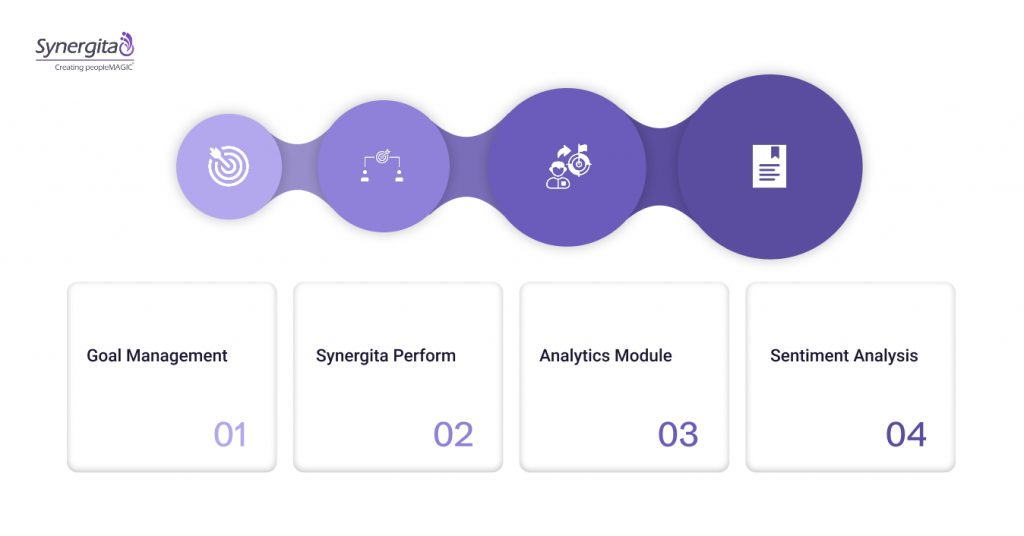
Synergita provides a unified platform that turns your logistics strategy into measurable execution. Our OKR module allows you to set, track, and align goals across your entire logistics function in real time.
- Goal Management: Cascade company objectives to the warehouse, transportation, and procurement teams. Visual dashboards show real-time progress on key results, like on-time delivery and cost per shipment.
- Synergita Perform: Automate performance check-ins and 360-degree feedback. Align individual development plans with operational OKRs for warehouse and fleet managers.
- Analytics Module: Gain instant visibility into OKR progress with configurable dashboards. Identify bottlenecks in fulfillment cycles or carrier performance with advanced analytics.
- Sentiment Analysis: Use AI to gauge morale and operational stress from feedback. Proactively address issues that could impact safety or productivity in distribution centers.
This integrated approach ensures your entire logistics organization moves in lockstep toward common, measurable objectives.
Conclusion
Logistics OKRs provide the critical framework for aligning complex supply chain operations with overarching business goals. They replace vague directives with specific, measurable outcomes for cost, service, and efficiency. The examples provided offer a practical starting point for implementation in your organization.
A dedicated platform is essential for managing this process without adding administrative overhead. Synergita operationalizes your logistics OKRs, providing the visibility and alignment needed for success.
Schedule a personalized demo to see how Synergita’s OKR platform can transform your logistics performance.
FAQs
Q. What is a good OKR for a logistics company?
A good logistics OKR has a clear, ambitious objective and 3-5 measurable key results. For example, “Objective: Become the industry leader in on-time delivery. Key Results: 1) Achieve a 99% on-time delivery rate. 2) Reduce average transit time by 10%. 3) Decrease customer complaints about late shipments by 90%.”
Q. What are the 5 key performance indicators in logistics?
Five key KPIs in logistics are On-Time Delivery (OTD) rate, Order Accuracy, Cost Per Shipment, Inventory Turnover, and Warehouse Picks Per Hour. These metrics provide a comprehensive view of supply chain health, from customer service to operational efficiency.
Q. How do you write a logistics objective?
Write a logistics objective by starting with a clear, qualitative, and inspirational goal. Focus on the desired outcome, not the method. For example, “Dominate our regional last-mile delivery market” or “Achieve flawless inventory accuracy across all distribution centers.”
Q. What is an example of an OKR for a supply chain planner?
An example OKR for a supply chain planner could be: “Objective: Optimize inventory levels to maximize working capital. Key Results: 1) Increase inventory turnover ratio from 6 to 8. 2) Reduce slow-moving inventory by 25%. 3) Maintain a 99% service level for all A-class SKUs.”