



Most organizations fail at OKRs because they set them and then immediately neglect them. This “set it and forget it” mentality ensures your strategic initiatives die a quiet death. You cannot expect quarterly results without consistent, short-term monitoring.
You must implement some best practices for the OKR weekly check-ins to keep teams aligned and accountable. This discipline directly impacts your bottom line; highly engaged employees achieve 14% higher productivity. Regular scrutiny converts abstract goals into concrete, weekly actions that drive this business value.
Without this cadence, your team effectively operates in the dark until the quarter ends. In this guide, we provide the specific checklists and strategies you need to drive execution. We move beyond theory to give you a practical playbook for performance management.
Key Takeaways
- Frequency beats intensity: Short, consistent weekly syncs are far superior to long, infrequent reviews.
- Focus on leading indicators: Discuss future outputs and actions rather than dwelling solely on past results.
- Keep it tight: Limit meetings to 20 minutes to respect high-value engineering and leadership time.
- Use confidence scores: Rate goals (Red/Yellow/Green) to spot “at-risk” objectives before they become failures.
- Separate status from strategy: Do not use this time for general project updates or to-do lists.
- Action over analysis: Leave every meeting with three clear priorities that directly impact the numbers.
What Is OKR Check-In
An OKR check-in is a brief, scheduled meeting to review progress against Key Results. It is not a general status update or a time to list every completed task. The focus remains strictly on data, roadblocks, and confidence levels regarding quarterly goals.
Teams assess whether current actions are moving the needle on agreed-upon metrics. This discipline forces course correction early when strategies fail to yield results. It ensures that daily work stays connected to the broader company mission.
Defining the meeting is simple, but understanding why it is critical ensures your team commits to the process.
Stop letting your goals die in spreadsheets. Book a demo to see how Synergita keeps OKRs alive and visible.
Importance Of Weekly OKR Check-In
Regular syncs are the difference between a wish list and a strategy. They force the team to confront reality and adjust tactics in real time.
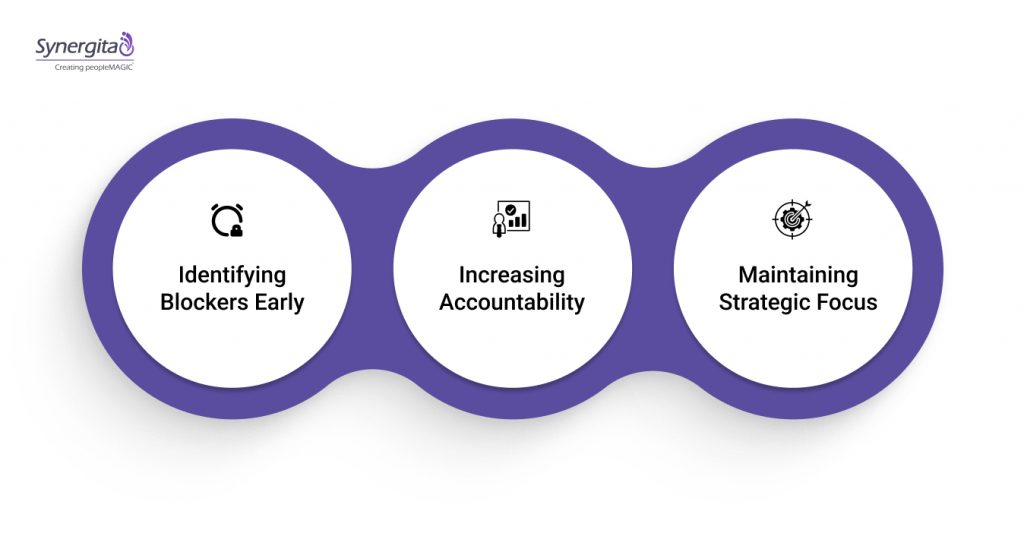
Regular syncs drive performance by:
1. Identifying Blockers Early
You catch resource gaps or technical hurdles weeks before the deadline. This allows leadership to reallocate budget or personnel immediately. You solve problems while they are still manageable.
2. Increasing Accountability
Team members own their specific numbers when they must report on them weekly. It eliminates ambiguity about who is responsible for which metric. Peer pressure drives performance in this transparent setting.
3. Maintaining Strategic Focus
Routine meetings prevent the urgent “whirlwind” of daily operations from burying long-term strategy. It forces the team to prioritize high-impact work over noise. You ensure resources always flow to the most critical objectives.
Also read: The Secret to Hitting Bigger Goals Faster? Pairing OKRs with CFRs
Understanding the value is the first step; next, you need a reliable protocol to ensure readiness.
Checklist: Preparing The OKR Check-In
A check-in fails if the team arrives unprepared and wastes time finding data. You must establish a strict pre-meeting protocol.
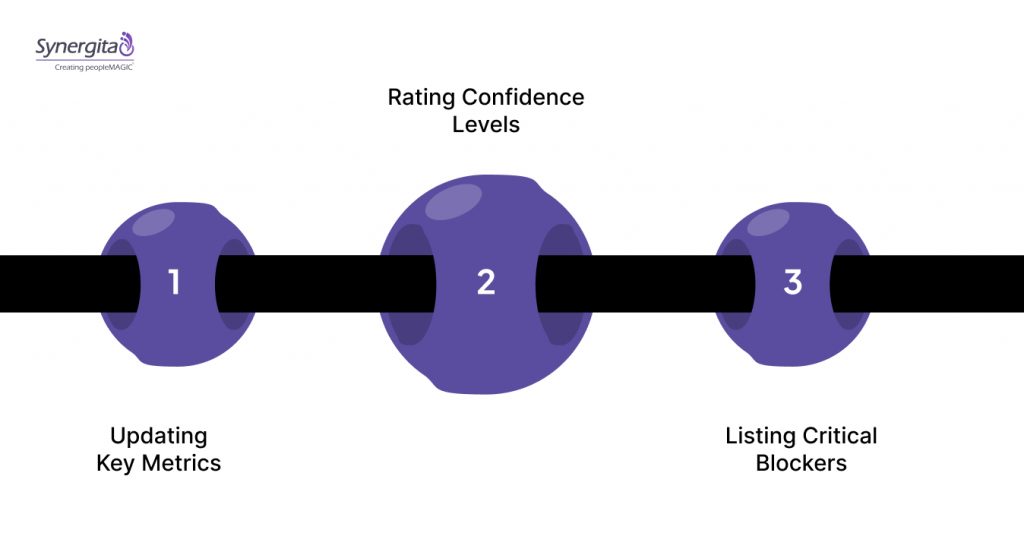
Ensure your team arrives ready by:
1. Updating Key Metrics
Participants must input current data points into the tracking system before the meeting starts. No one should waste time calculating numbers during the call. The dashboard must reflect reality at the start.
2. Rating Confidence Levels
Assign a simple color code or score to each Key Result. This highlights immediately which goals require discussion and intervention. It focuses the conversation on the “Red” items.
3. Listing Critical Blockers
Attendees should prepare a concise list of obstacles preventing progress. This keeps the conversation focused on solutions rather than complaints. You can then address these hurdles efficiently.
Also read:How to Handle a Performance Review Effectively
Preparation sets the stage, but you also need a rigid structure to execute the meeting efficiently.
4 Easy Steps To Run Your Weekly OKR Check-In
Efficiency is paramount; these meetings should be short, sharp, and data-driven. Stick to a rigid agenda to prevent scope creep.
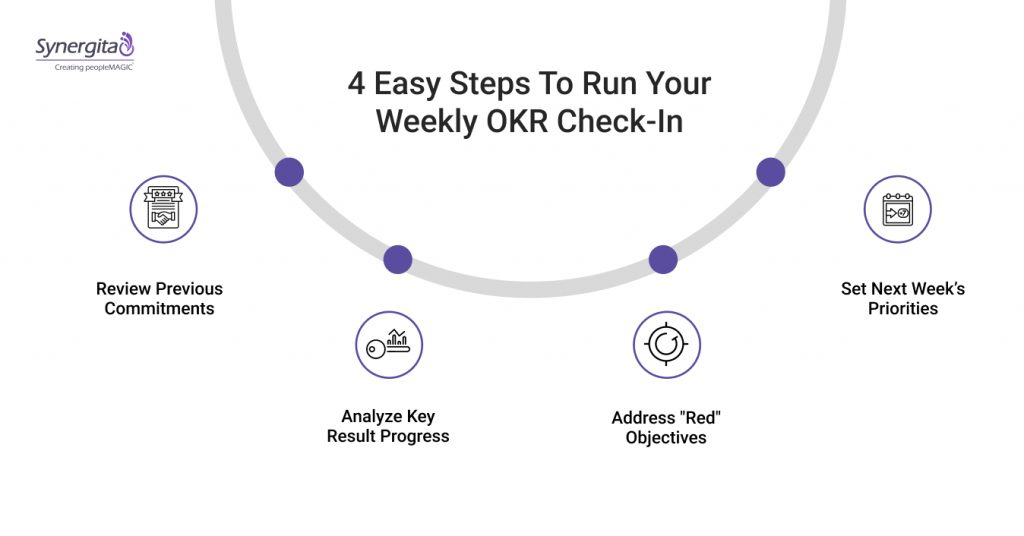
Execute the meeting efficiently using these steps:
1. Review Previous Commitments
Start by checking if the team completed the specific actions promised last week. This builds a culture of reliability and follow-through. It ensures that plans translate into action.
2. Analyze Key Result Progress
Look at the actual data movement for the primary metrics. Discuss why numbers went up or stayed flat. Ground every claim in the data displayed on the dashboard.
3. Address “Red” Objectives
Focus the bulk of the discussion on goals that are falling behind. Brainstorm immediate tactics to get these back on track. Do not waste time patting backs for “Green” goals.
4. Set Next Week’s Priorities
Define the top three actions that will impact the Key Results over the next five days. Ensure these tasks directly influence the numbers. Assign clear owners to each action.
Also read:The Strategic Purpose of Performance Management: Boost Growth & Engagement
A structured agenda is the baseline; now let’s explore the advanced behaviors that drive high performance.
Top 10 OKR Weekly Check-In Best Practices
Creating a high-performance culture requires rigorous discipline and a psychological shift in how teams view failure. This effort pays a direct dividend, as highly engaged employees achieve 23% higher profitability.
You must refine the quality of the conversation to ensure it drives decision-making, not just reporting. Maximize the strategic value of your sessions with these rules:
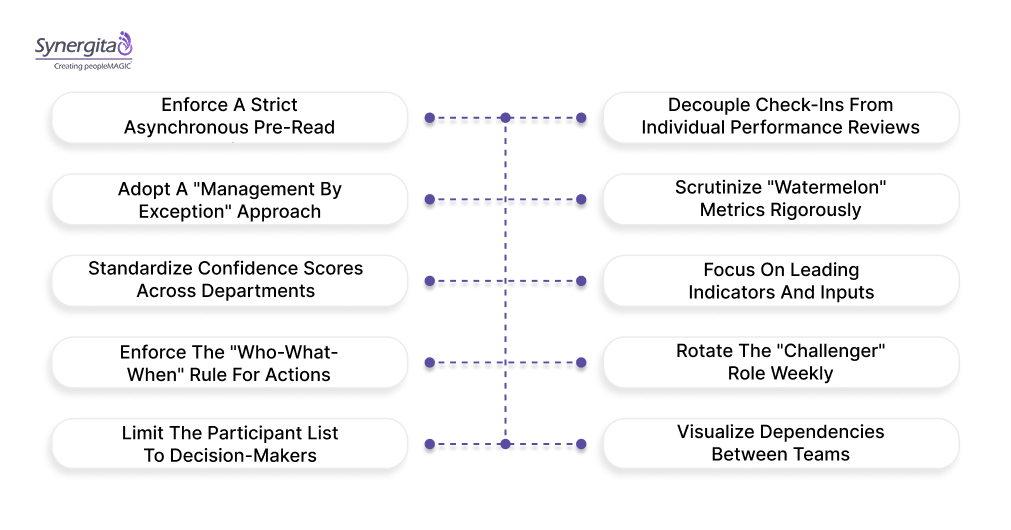
1. Enforce A Strict Asynchronous Pre-Read Policy
Require all data entry and status updates to happen 24 hours before the meeting starts. This ensures the live session focuses exclusively on problem-solving and decision-making. You waste expensive leadership time if you use the meeting for data entry.
Why This Drives Results:
- Eliminates the “meeting that could have been an email” frustration.
- Increases decision velocity by jumping straight to the critical issues.
- Forces team members to own their numbers before walking into the room.
2. Decouple Check-Ins From Individual Performance Reviews
Employees will hide data and sandbag goals if they fear these meetings impact their bonuses. You need accurate data to steer the ship, not a sanitized report designed to please management. Frame these sessions as “work” meetings, not “evaluation” meetings.
Why This Drives Results:
- Ensures data integrity by removing the fear of punishment.
- Encourages teams to set ambitious “stretch” goals without risk.
- Builds psychological safety, allowing for faster error correction.
3. Adopt A “Management By Exception” Approach
Skip the metrics that are clearly on track and require no intervention. Devote the entire meeting energy to unblocking the specific Key Results that are “at risk” or “behind.” This creates focus and prevents the meeting from dragging on unnecessarily.
Why This Drives Results:
- Optimizes executive attention span for high-stakes issues.
- Prevents meeting fatigue by keeping the energy high and focused.
- Signals to the team that “Green” means you are autonomous, while “Red” get support.
4. Scrutinize “Watermelon” Metrics Rigorously
Challenge metrics that look “Green” on the outside but are “Red” on the inside. A Key Result might show progress, but the underlying quality or sustainability might be failing. Ask tough questions to ensure teams aren’t hiding structural issues behind vanity metrics.
Why This Drives Results:
- Prevents late-quarter surprises where “completed” goals yield no business value.
- Uncovers root cause issues regarding quality or technical debt.
- Ensures that speed does not compromise the long-term health of the project.
5. Standardize Confidence Scores Across Departments
Ensure that “70% confidence” means the same thing to Engineering as it does to Sales. A lack of shared language regarding risk leads to miscommunication and missed deadlines. Calibrate these definitions early to ensure everyone assesses risk accurately.
Why This Drives Results:
- Removes subjectivity and “gut feeling” from risk assessment.
- Enables leadership to compare performance accurately across different functions.
- Aligns expectations so resources can be deployed objectively.
Also read:Easy 360 Degree Appraisal Sample You Can Start Using Today
6. Focus On Leading Indicators And Inputs
Discuss future probabilities and current activities rather than dwelling solely on past results. You cannot change last week’s numbers, but you can influence next week’s activities. Shift the conversation to what will happen, not just what did happen.
Why This Drives Results:
- Enables agility and course correction before the deadline passes.
- Shifts the mindset from “autopsy” (analyzing failure) to “prevention.”
- Empowers the team to control their outcomes rather than just reporting them.
7. Enforce The “Who-What-When” Rule For Actions
Reject vague commitments like “I will look into it” or “We will try to fix it.” Leave the room with specific owners assigned to specific recovery actions with hard deadlines. Accountability evaporates without precise ownership attached to every recovery plan.
Why This Drives Results:
- Closes the execution gap between strategy and reality.
- Eliminates ambiguity regarding who is responsible for the next step.
- Creates a culture of reliability and high-integrity commitments.
8. Rotate The “Challenger” Role Weekly
Assign one person to ask tough questions about the data and the validity of the plans. This prevents groupthink and ensures the team doesn’t become complacent with mediocre results or vague explanations. It normalizes constructive conflict as a tool for improvement.
Why This Drives Results:
- Prevents groupthink and exposes blind spots in the strategy.
- Trains future leaders to think critically and ask probing questions.
- Normalizes healthy conflict as a tool for improvement, not an attack.
9. Limit The Participant List To Decision-Makers
Invite only the core team members who own the Key Results and can authorize changes. Large meetings inevitably devolve into lectures where passivity becomes the norm. You need a small, agile group capable of pivoting strategy in real time.
Why This Drives Results:
- Increases candor, as people speak more freely in smaller groups.
- Speeds up the meeting by reducing the number of voices and opinions.
- Reinforces that this is a working session, not a spectator sport.
10. Visualize Dependencies Between Teams
Explicitly discuss how a delay in one Key Result impacts other departments or objectives. Siloed check-ins often miss the downstream effects of a missed target. This ensures cross-functional alignment and prevents one team from blocking another.
Why This Drives Results:
- Prevents “siloed successes” where one team wins but the company fails.
- Fosters collaboration by highlighting shared risks and goals.
- Improves predictability for product launches and major initiatives.
Visualize how your team’s work connects to the big picture. Book a demo to see our alignment maps in action.
Even with best practices in hand, leaders often fall into specific execution traps you must avoid.
Common Mistakes Made with OKR Check-Ins
Avoiding these frequent errors protects the integrity and effectiveness of your check-in process. Recognize these pitfalls to keep your meetings on track:
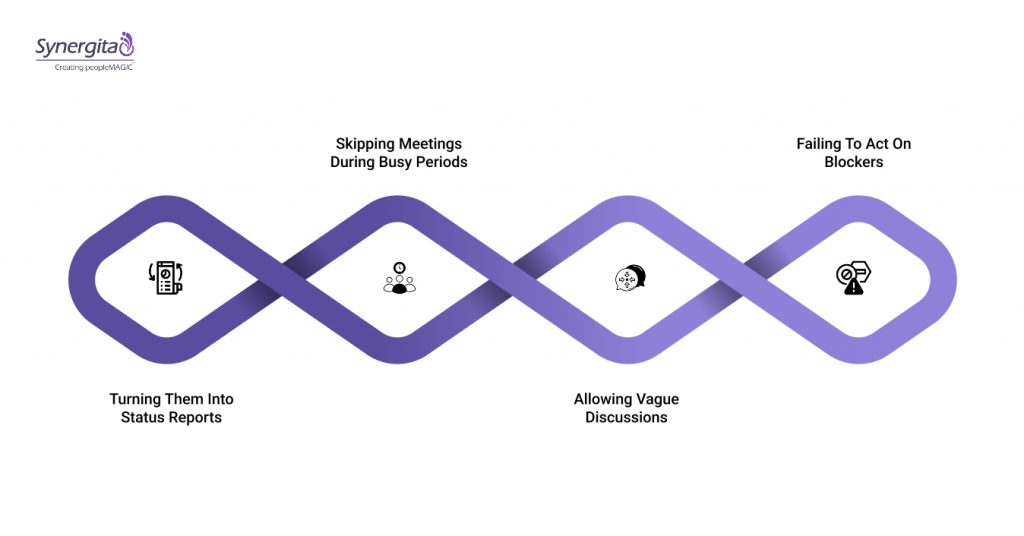
1. Turning Them Into Status Reports
The check-in becomes a one-way monologue of updates from each person. This wastes time and fails to generate collaborative problem-solving. The facilitator must insist on a participatory, discussion-based format.
2. Skipping Meetings During Busy Periods
Teams cancel check-ins when under delivery pressure, which is counterproductive. This is precisely when alignment and blocker removal are most critical. Protect the weekly cadence as non-negotiable.
3. Allowing Vague Discussions
Conversations lack specificity, using phrases like “still working on it.” This prevents the team from understanding real progress or concrete obstacles. Require participants to quantify progress and specify blockers.
4. Failing To Act On Blockers
Teams identify impediments but take no concrete steps to resolve them. This erodes trust in the process and leads to cynicism over time. Every documented blocker must have a clear owner and next step.
Avoiding these manual pitfalls is difficult without the right technology to automate the process.
From Manual Tracking To Strategic Execution With Synergita
Many organizations rely on spreadsheets and slide decks for OKR tracking. This manual approach creates administrative drag and poor visibility. It makes weekly check-ins a chore of data consolidation rather than strategic dialogue.
Synergita transforms the weekly OKR check-in from a reporting burden into a strategic advantage. Our platform provides the integrated tools to make these meetings efficient, data-driven, and actionable.
- Automated Progress Tracking: Sync goals with work tools to update Key Results automatically.
- Visual Alignment Maps: See how team and individual goals connect to company objectives instantly.
- Integrated Meeting Agendas: Build and run check-in agendas directly within the platform, linking discussions to specific OKRs.
- Blocker Logging and Resolution: Tag, assign, and track impediments to closure without switching contexts.
- Real-Time Dashboards: Provide everyone with a single source of truth for goal progress and priorities.
Synergita embeds OKRs into your team’s daily workflow, making strategic execution a natural habit.
Also read:15 Effective Feedback Models: Definition and Examples

Conclusion
Weekly OKR check-ins are the engine of continuous performance management. They convert ambitious goals into measurable, week-over-week progress. The structure and best practices outlined here create the discipline needed for success.
Manual processes cannot sustain the rhythm and transparency these check-ins require. A dedicated platform is essential for scaling this practice across your organization. Synergita provides that foundation with automated tracking and integrated collaboration.
Schedule your Synergita demo to see how our OKR module streamlines your weekly check-in process. Move from tracking goals to actively achieving them with greater alignment and less effort.
Frequently Asked Questions
Q. What is the ideal duration for a weekly OKR check-in meeting?
Limit these meetings to 25-30 minutes. This timeframe forces focus on the most critical updates and blockers. Longer meetings often lead to unproductive tangents and status reporting.
Q. Who should attend the weekly OKR check-in?
The core team working on the objectives must attend. This includes the goal owner, key initiative owners, and any cross-functional partners. Keep the group small enough to maintain a focused discussion.
Q. How do we prevent check-ins from becoming repetitive status updates?
Enforce a rule that all status reading happens before the meeting. Dedicate the live session entirely to analyzing progress and solving problems. The facilitator must steer the conversation away from pure narration.
Q. What should we do if there is no progress on a Key Result?
Investigate the root cause, don’t just note the lack of progress. Ask if the key result is still relevant, if initiatives are ineffective, or if external blockers exist. Use the data to decide whether to pivot or persevere.
Q. Can we combine OKR check-ins with other team meetings?
Resist this temptation to preserve the unique focus of the OKR conversation. Combining it with operational or project meetings often dilutes the strategic purpose. Protect this dedicated time for goal-specific dialogue.