



Quick Summary
- Performance appraisals are shifting from traditional annual reviews to continuous, real-time feedback that drives employee development and boosts performance.
- AI is transforming performance evaluations by reducing bias, predicting performance risks, automating review workflows, and giving leaders data-backed insights for better decisions.
- Skill-based, future-ready evaluations and 360-degree feedback are becoming standard to provide a complete view of employee performance.
- AI-powered appraisal systems (like Synergita) help in transparent, personalized, and faster performance reviews.
Do you think the traditional performance appraisal methods still work for today’s workforce? In most cases, the answer is no!
Employee expectations have evolved significantly. Skilled professionals actively explore opportunities that offer growth and a supportive environment, making it essential for companies to adopt a modern appraisal system.
Organizations can’t rely on outdated, once-a-year reviews that do not recognize ongoing contributions or address challenges in real time. This shift in workforce behavior demands adopting modern performance management trends, because conventional appraisal methods may feel misaligned.
In this guide, we will explore the latest performance appraisal trends, best practices for implementing them, and how the latest technology and AI tools are transforming performance appraisals.
What Are the Latest Performance Appraisal Trends?
Here are the key trends in how organizations appraise performance today that reflect evolving work environments, expectations, and technology.
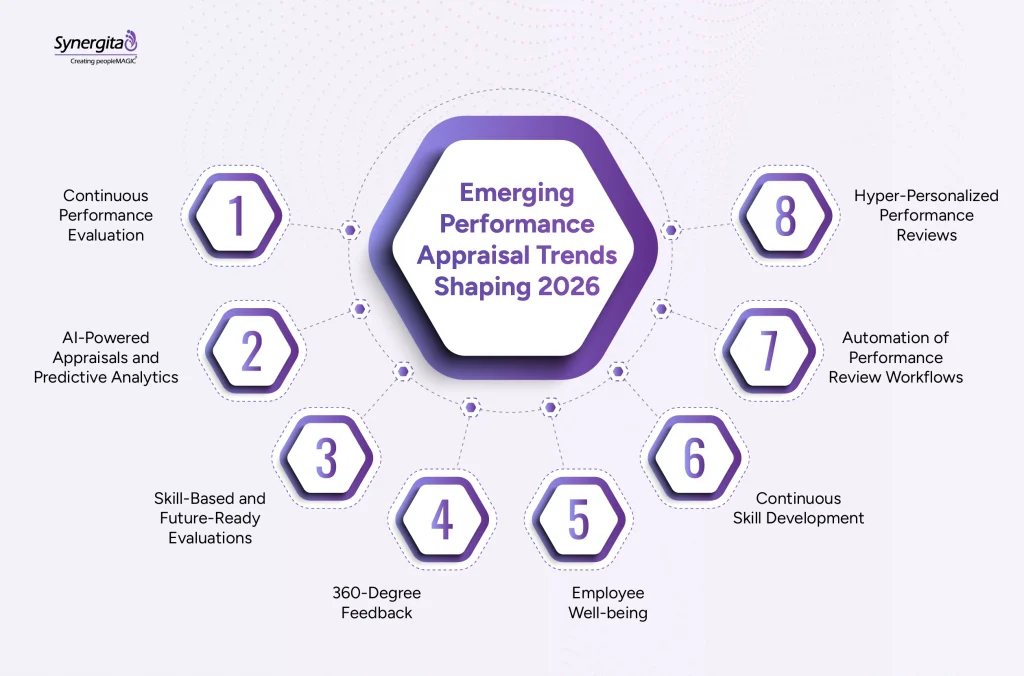
1. Continuous Performance Evaluation
Traditional annual reviews are ineffective in today’s dynamic business environment, where customers’ expectations and technology are evolving fast. Continuous performance management has emerged as one of the latest trends today, and here are the reasons why it is important.
- Employees don’t have to wait months to learn what’s working or needs improvement.
- Managers and teams can regularly calibrate goals, tweak execution, and realign efforts, ideal for uncertain business contexts.
- Frequent check-ins and coaching promote stronger manager–employee relationships, psychological safety, and dynamic career growth.
For example, a sales team might shift from quarterly or annual reviews to weekly or biweekly pulse check-ins. If a campaign underperforms, they can immediately regroup, adjust key metrics or strategy, and course-correct, instead of learning about the issue later.
2. AI-Powered Appraisals and Predictive Analytics
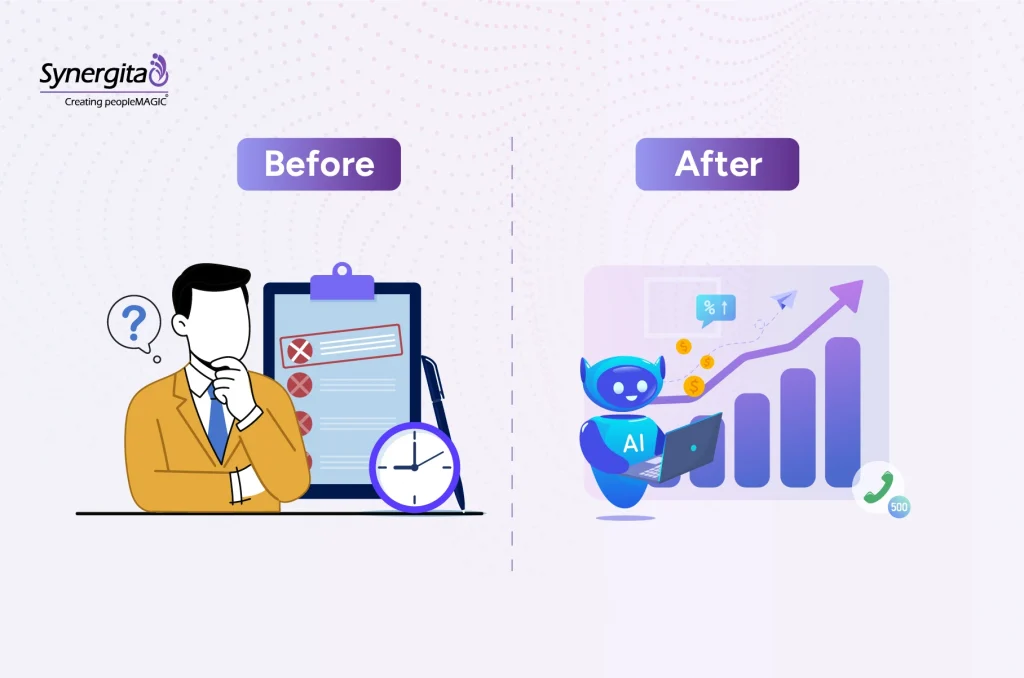
Artificial Intelligence (AI) is one of the performance management latest trends, helping businesses quickly identify performance issues and patterns before they become major issues. According to recent research, the organization using AI for HR analytics experiences a 25% reduction in voluntary attrition (from 18% to 13.5%) and a 21% increase in workplace satisfaction scores.
Here are the key benefits of using AI for performance management:
- Bias reduction: By standardizing evaluation criteria and highlighting anomalous patterns, AI-based performance management can reduce bias and make feedback more transparent.
- Predictive analytics: AI can spot early signs of disengagement, performance drift, or turnover risk, ensuring proactive talent interventions.
- Efficiency and scale: Automating repetitive tasks (data gathering, report generation), freeing HR teams to focus on coaching, development, and strategic decisions.
3. Skill-Based and Future-Ready Evaluations
The new trends in the performance appraisal systems are shifting away from tenure-based evaluations toward competency-driven frameworks. It reflects a broader organizational shift: performance reviews are not about past achievements, but future potential and growth. By evaluating employees on skills and potential, companies can:
- Identify skill gaps early and direct learning resources strategically,
- Promote a growth mindset across teams,
- Align talent development with bu/siness evolution (digital transformation, innovation needs, etc.).
4. 360-Degree Feedback
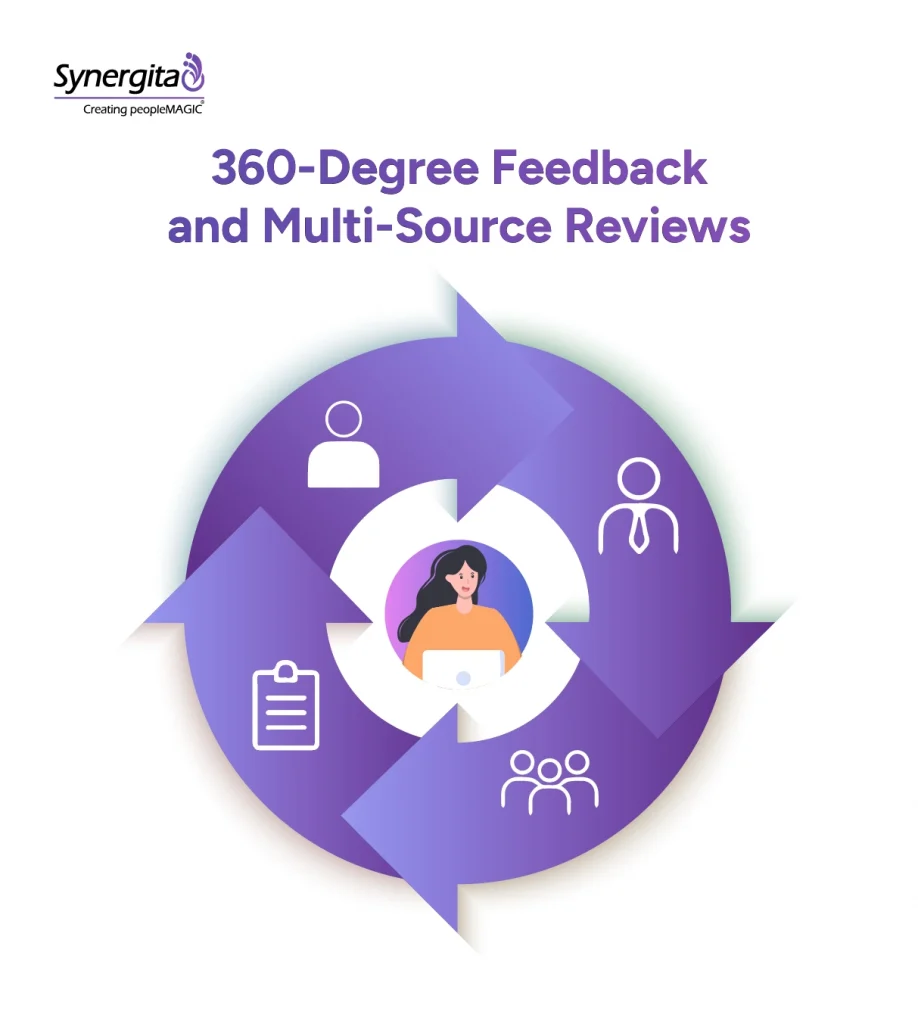
360-degree feedback or multi-source reviews are among the performance management latest trends that offer the most comprehensive performance review. This approach collects input from peers, direct reports, managers, and even external stakeholders, offering a complete perspective on employee performance and behavior.
The benefits of multi-source reviews:
- Comprehensive assessment beyond just output or results.
- Reduces manager bias or over-reliance on a single viewpoint.
- Makes it easier to find strengths and areas for improvement
5. Employee Well-being
Work pressure is a major obstacle to employee well-being, making it essential to support employees’ mental and physical health. The benefits of employee well-being include higher engagement, better focus, and lower burnout.
According to a Deloitte survey, 74% people surveyed say that well-being is more important than advancing their career. This shows that performance conversations must include how employees feel, not just what they deliver.
Related Reading: 10 Ways to Promote Employee Well-being
6. Continuous Skill Development
Modern performance evaluation is about employee development and growth rather than just a performance review. Appraisals are increasingly related to personalized learning paths, coaching, and development plans. Instead of rating employees once a year, companies now use appraisal systems to:
- Identify skill gaps and suggest upskilling opportunities
- Create individualized development trajectories
- Encourage continuous professional growth.
7. Automation of Performance Review Workflows
Automating appraisal workflows helps HR teams scale their processes without increasing administrative overhead. AI-assisted review-writing, analytics, and predictive insights further reduce HR burden, allowing managers to focus on coaching and development rather than paperwork and admin.
The benefits of automation in performance review include:
- Auto-scheduled feedback prompts, reminders, and review cycles,
- Template-based evaluation forms,
- Digital dashboards consolidate performance data, peer feedback, goals, progress tracking, and historical trends.
8. Hyper-Personalized Performance Reviews
Every employee has a different skillset and unique development needs, and that is why personalized performance reviews have become one of the latest performance management trends.
New-age performance appraisals should be highly personalized and adjusted to role, seniority, team structure, and individual goals. This personalization boosts engagement, aligns career paths with employee aspirations, and improves retention.
Best Practices for Implementing Performance Management Latest Trends
Here are the best practices to ensure your performance appraisal process aligns with evolving employee expectations.
- Train managers on continuous feedback: Equip managers with the skills to provide timely, constructive, and consistent feedback.
- Ensure fairness and transparency: Use standardized evaluation criteria across roles and teams and reduce bias with AI-supported insights.
- Integrate with L&D and OKRs: Ensure development plans are part of the continuous performance cycle rather than an afterthought.
- Link performance to business outcomes: Ensure individual and team contributions reflect strategic priorities such as revenue, productivity, customer satisfaction, or innovation.
- Encourage employee self-reviews: Allow employees to reflect on achievements, challenges, and development needs.
- Document performance continuously: Capture achievements, feedback moments, skill gaps, and wins throughout the year so reviews are based on evidence, not memory.
Suggested Reading: Best Self-Assessment Examples
How Technology Transforms Performance Appraisals
Modern AI-powered performance management systems address key challenges in managing performance, such as inconsistent reviews, delayed feedback, manager bias, scattered data, and a lack of real-time visibility. Technology and AI bring structure, speed, and intelligence into the process, helping organizations modernize their appraisal cycles.
Here are the key ways technology and AI are transforming performance reviews.
1. Real-time Performance Visibility
Performance management platforms offer real-time visibility into reviews, feedback, and achievement. So, managers can accurately assess progress without relying on periodic review.
2. Reduced Bias in Performance Evaluations
Standardized workflows and AI-supported analysis highlight anomalies and ensure every employee is evaluated using clear, objective performance standards.
3. Continuous Insights for Proactive Decisions
Analytics dashboards reveal skill gaps, performance trends, disengagement signals, and potential risks early, enabling timely interventions.
4. Faster and More Efficient Review Cycles
Automated reminders, review templates, and documentation reduce administrative workload and free managers to focus on coaching.
5. Better Alignment with Organizational Goals
AI can connect company objectives with individual and team goals, ensuring clarity, accountability, and alignment across the organization.
6. Enhanced Employee Experience
Regular check-ins, transparent progress tracking, and personalized development insights make the appraisal process more meaningful for employees.
Conclusion
A modern performance appraisal strategy is critical for every organization to improve productivity, transparency, and create a positive work environment. The new trends in performance appraisals 2026 show a clear shift toward continuous conversations, data-backed insights, and structured development pathways. Companies that adapt these trends early can build more engaged, agile, and high-performing teams.
If your organization wants to modernize its appraisal process with a structured, reliable, and employee-centric system, Synergita offers all the tools you need. It helps you provide continuous feedback, track goals, conduct competency evaluations, and plan development with precision. Explore the Synergita Performance Management system with a free trial for seven days.
Frequently Asked Questions
1. What is the purpose of performance appraisals in modern organizations?
Performance appraisals help companies evaluate employee contributions, identify strengths, find improvement areas, and check if individual performance is aligned with business goals.
The 5 C’s of performance management are clarity, communication, consistency, coaching, and commitment.
Companies can use standardized evaluation criteria and competency-based scoring to ensure fairness and transparency in performance evaluations. Performance management tools like Synergita reduce bias by offering AI-assisted insights and maintain consistent review workflows, ensuring every employee is assessed using the same structured framework.
Employee performance evaluation helps identify high-potential employees, map skill gaps, and recommend training programs to prepare future leaders.
Yes, Synergita offers a simple dashboard and seamless navigation, which makes it suitable for startups and growing companies. It is also highly scalable and offers a cost-effective OKR solution, ideal for small and medium businesses.