



Is your leadership team spending too much time giving answers instead of building capability? A reliance on directive management creates dependence and stifles innovation among high-potential employees. This approach slows down decision-making and limits your organization’s agility and growth capacity.
Effective leadership is about cultivating independence and critical thinking in your teams. You must shift the focus from solving problems for your people to developing their ability to solve problems themselves. This strategic change significantly increases organizational resilience and speed.
This guide provides 40 powerful coaching questions for leaders to drive development and accountability. We will analyze proven coaching models and provide a playbook of strategic questions. These methods will help you build a culture of self-directed, high-impact performance.
Quick Look:
- Coaching vs. Directing: Coaching uses inquiry to develop the coachee; directing tells them what to do.
- The Goal: Shift accountability to the individual, accelerating their decision-making capability.
- Three Models: The GROW, CLEAR, and OSKAR models provide structured conversation frameworks.
- Focus Areas: Questions cover goal clarity, reality assessment, options generation, and commitment to action.
- Critical Skill: Inquiry fosters critical thinking, intellectual independence, and ownership in employees.
- Systemic Support: Platforms must support continuous feedback to reinforce coaching discussions and track commitments.
What Are Coaching Questions And Why Should Leaders Ask Them
Effective leaders recognize that their primary role is to develop human capital, not simply manage tasks. Coaching questions are the mechanism for activating employee ownership of their professional growth and problem resolution. They redirect the cognitive effort from the manager to the team member, maximizing engagement and skill transfer.
This structured inquiry approach creates a sustainable model for high performance. It ensures that solutions are rooted in the employee’s understanding, increasing commitment to the action plan. This process fundamentally transforms management interactions into strategic development opportunities.
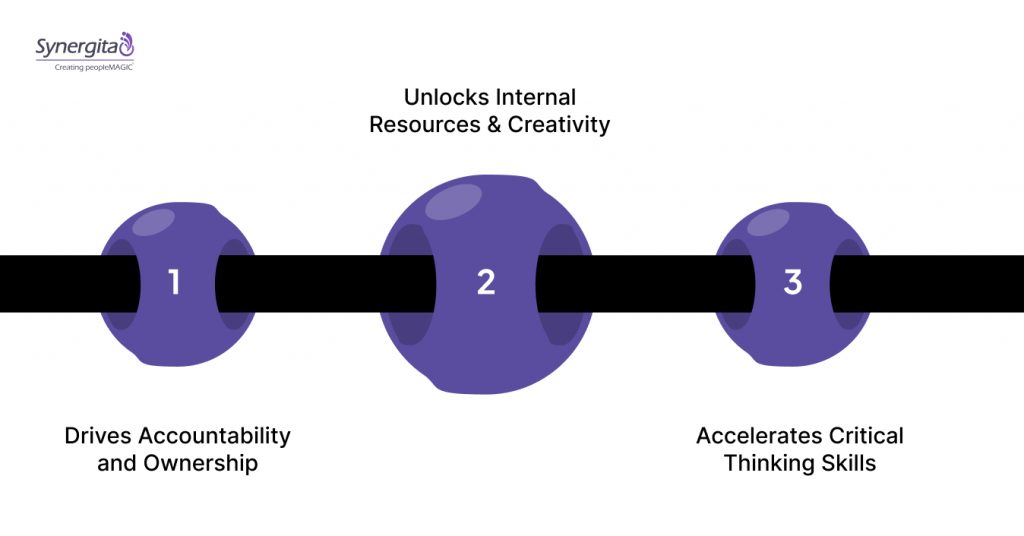
The shift from telling to asking provides specific advantages:
1. Drives Accountability and Ownership
Asking questions forces the employee to articulate the path forward, taking full responsibility for the solution. This practice eliminates the reliance on managerial directives for problem-solving. It embeds a sense of personal stake in the successful execution of the action plan.
2. Unlocks Internal Resources and Creativity
The leader is not expected to hold all the answers for every complex operational challenge. Coaching questions prompt the employee to access their own knowledge, skills, and unique insights. This fosters innovative solutions that are often missed by external direction.
3. Accelerates Critical Thinking Skills
When leaders consistently use inquiry, employees practice analyzing situations from multiple angles. They learn to evaluate risks and anticipate obstacles independently before seeking assistance. This repetition is crucial for developing high-level decision-making capability.
Also read: How to Implement Key Performance Indicators (KPIs) Effectively
Does your leadership team lack a consistent framework for developmental conversations? Synergita offers structured guidance for every discussion. Book a demo to learn more.
Moving beyond the ‘why,’ you need repeatable frameworks to structure these valuable development conversations consistently.
Different Types of Coaching Methods
Effective coaching requires a structured framework to ensure conversations remain focused and productive. These models provide leaders with a clear roadmap for guiding individuals from a stated problem to a committed action plan. Utilizing a defined structure maximizes the impact of the coaching discussion.
1. GROW Model
The GROW model is perhaps the most widely recognized and simplest framework for structured coaching conversations. It guides the coachee through four distinct phases: Goal, Reality, Options, and Will (or Way Forward). This model is excellent for addressing specific performance issues or defining career paths.
- How it works: The conversation starts by defining the Goal to establish the destination. It then assesses the current Reality, exploring obstacles and resources. Next, it brainstorms Options for action, concluding with the Will to commit to a concrete plan.
- Pros and Cons:
- Pros: Highly linear and easy for first-time coaches to adopt, providing a clear structure.
- Cons: Can sometimes feel rigid or overly focused on a single, immediate goal, limiting systemic thinking.
2. CLEAR Model
The CLEAR model is a more holistic framework designed for continuous development and building stronger working relationships. It stands for Contract, Listen, Explore, Action, and Review. This approach places greater emphasis on deep listening and relationship building.
- How it works: The leader first Contracts the discussion to agree on the topic and outcome. They listen actively and then explore the situation fully with the coachee. An Action plan is set, followed by a review of learning and success criteria.
- Pros and Cons:
- Pros: Focuses on relationship and mutual commitment, making it excellent for ongoing mentorship.
- Cons: Requires more time and advanced listening skills from the leader than the simpler GROW model.
3. OSKAR Model
The OSKAR model is a Solution-Focused framework, placing its emphasis firmly on desired outcomes rather than dwelling on past problems. It uses five stages: Outcome, Scaling, Know-how, Affirm & Action, and Review. This model encourages positive, forward-looking thought.
- How it works: It establishes the desired Outcome, then uses Scaling questions (e.g., on a 1-10 scale) to measure progress. Know-how identifies past successes and strengths, and Affirm & Action outlines steps. Finally, they review the progress made.
- Pros and Cons:
- Pros: Shifts focus away from problems to strengths and solutions, accelerating forward momentum.
- Cons: Might overlook critical external barriers or root causes that a Reality-focused model would address.
These models are valuable tools for ensuring consistency in leadership development across the organization. They standardize the approach to problem-solving and growth conversations. This repeatable structure makes the practice of coaching scalable throughout your management ranks.
Also read: Create a Workforce That Stays: HR’s Guide to Employee Retention
With a structured model in mind, you need the right specific questions to guide the coachee through each critical phase.
40 Powerful Coaching Questions For Leaders
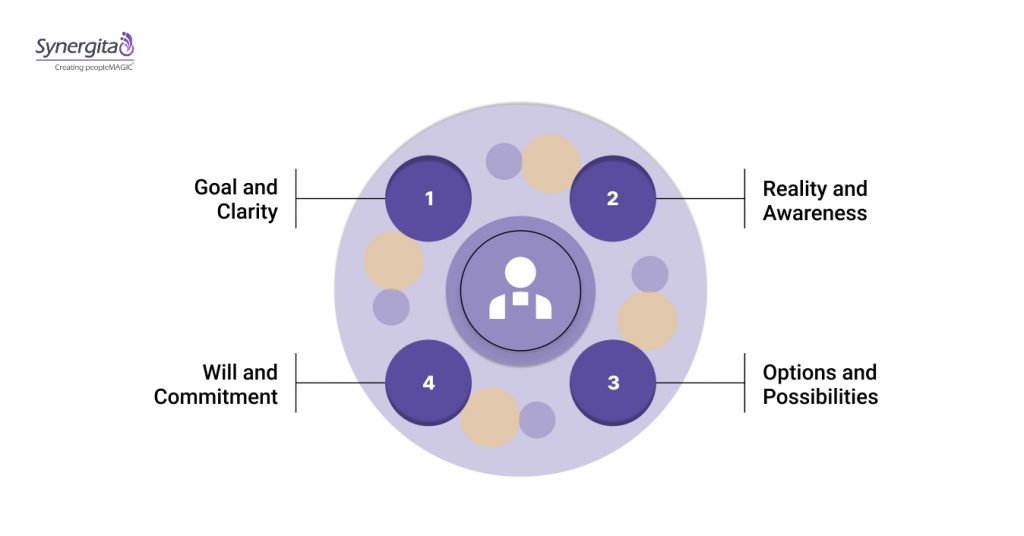
Great coaching questions for leaders move the coachee through definition, analysis, creation, and commitment. Categorize your questions to match the flow of a productive development conversation.
Use these questions to guide your team to their own solutions and increase their ownership:
1. Goal and Clarity
These questions help the coachee define the challenge or opportunity and establish a clear, measurable objective. This ensures the discussion starts with a shared and desirable destination.
- What specific outcome do you want to achieve today from this discussion?
- How will you measure success for this project or development area?
- If this were completely successful, what would the result look like in six months?
- What is the most critical priority for you to address right now?
- How does this goal directly align with the team’s or company’s OKRs?
- What is the precise nature of the challenge you are currently facing?
- What criteria will confirm to you that the problem is fully resolved?
- What is the one thing you are currently unwilling to change about this situation?
2. Reality and Awareness
These questions ground the coachee in their current state, forcing an honest assessment of obstacles, resources, and past performance. This stage prevents simplistic solutions by defining the current facts.
- What is currently working well in this specific area or process?
- What have you already attempted to do to address this situation?
- What resources, internal or external, do you currently have available?
- Who else is directly affected by this challenge, and what is their perspective?
- On a scale of one to ten, how confident are you in your current approach?
- What assumptions are you currently making about the people involved?
- What organizational barriers or constraints are slowing your progress?
- When have you successfully handled a similar challenge in the past?
- What might you be doing currently that is unintentionally contributing to the problem?
- What facts do you have, and what information is based on speculation?
- How has your personal leadership style impacted the current team dynamics?
- What is the biggest consequence if you choose to do nothing differently?
Also read: Leadership Development in 2026: Strategies for HR Leaders
3. Options and Possibilities
These questions encourage expansive thinking and force the coachee to brainstorm multiple solutions before committing to one. The quantity of ideas is prioritized over immediate quality in this creative phase.
- What are three entirely different approaches you could take to solve this?
- If time and budget were not an issue, what would be the ideal solution?
- If you were advising a colleague, what solution would you suggest they pursue?
- Which of these options utilizes your team’s greatest collective strength?
- Who within the organization could offer an unexpected, valuable perspective?
- What small, initial action could you test immediately to gather more data?
- Which option feels the most creatively exciting or motivating to you?
- What are the potential risks and rewards associated with each of your top three ideas?
- If you had to delegate this solution, how would you instruct your best team member?
- What new skill or knowledge would be required to execute this particular option?
- What makes one of these options superior to the others you have generated?
- What might be the unintended negative consequences of implementing this solution?
Do your best coaching insights get lost in notes that are never revisited? Synergita captures action items and progress within employee performance profiles. Book a demo to explore how we manage performance.
4. Will and Commitment
These final questions solidify the choice of action and establish accountability for follow-through. They ensure the coachee leaves the discussion with a clear plan, date, and support system.
- Which single action will you commit to executing within the next 72 hours?
- What specific support do you require from me or from another leader to proceed?
- How will you ensure you remain fully accountable to this commitment next week?
- What is the date by which you expect to see the initial results of this action?
- What possible obstacles might derail your plan, and how will you preemptively address them?
- How will you incorporate learning from this experience into your future practice?
- What is the single most important lesson you have taken away from this conversation?
- When should we schedule our follow-up to review the progress of this specific action?
Also read: Measuring HR Success: Key Metrics Every Leader Should Know
Generating these commitments is only half the effort; the challenge is tracking and sustaining development over time.
Solving The Development Crisis With Synergita
Coaching commitments often get lost between conversations and formal reviews. Leaders lack a system to track follow-ups and connect them to performance outcomes. This gap diminishes coaching’s impact and return on investment.
Synergita embeds coaching directly into your performance management workflow. Our platform tracks development goals and connects coaching outcomes to performance profiles. This creates continuity between coaching conversations and measurable results.
Our features include:
- Continuous Feedback Module: Capture detailed coaching notes, action items, and follow-up reminders immediately after a discussion.
- Aspiration Tracking: Store individual development plans and career goals discussed during coaching sessions for easy reference and review.
- OKR Alignment Visualization: Instantly connect an individual’s coaching action plan to specific Objectives and Key Results they influence.
- 360° Feedback: Use data from multi-rater feedback to inform coaching topics, making discussions data-driven and focused.
- Smart Goals: Structure development commitments as measurable, time-bound goals that automatically update in the performance record.
Conclusion
Effective coaching questions transform leadership from directive management to developmental partnership. They build capability, increase engagement, and drive organizational performance. Mastering this skill creates leaders who develop other leaders.
Consistent coaching requires more than individual skill; it needs organizational infrastructure. Synergita provides the framework and tools to make developmental conversations systematic and measurable.
Book a free demo to see how Synergita’s integration strengthens leadership capability across your organization.
FAQs
Q. What are the most effective coaching questions?
The most effective questions are open-ended and future-focused. They encourage self-discovery rather than providing direct answers. Questions should stimulate thinking about possibilities and solutions.
Q. What is the 70/30 rule in coaching?
The 70/30 rule suggests that the coachee should be speaking approximately 70% of the time. Conversely, the coach should speak only 30% of the time. This ensures the focus remains on the coachee’s thinking, ownership, and self-discovery.
Q. How often should leaders use coaching questions?
Incorporate coaching questions into regular one-on-one meetings and check-ins. Use them when team members face challenges or make decisions. Balance coaching with direct guidance based on the situation’s urgency.
Q. What is the GROW model in coaching?
GROW represents Goal, Reality, Options, and Will. This framework structures conversations from desired outcomes to concrete actions. It provides logical progression for developmental discussions.
Q. How do coaching questions differ from regular questions?
Coaching questions are open-ended and non-leading. They explore thinking processes rather than just gathering information. Their purpose is development rather than simple inquiry.
Q. Can coaching questions work with senior team members?
Absolutely, with an adjusted focus on strategic impact and organizational outcomes. Frame questions around broader business implications and leadership challenges. Respect their experience while still promoting discovery.