
Most organizations don’t struggle with talent; they struggle with managing performance consistently. Manual reviews, unclear goals, and delayed feedback create performance gaps and ambiguity. A structured performance management system brings alignment, visibility, and measurable impact.
Quick Takeaway
- Companies actively managing performance are 4.2 times more likely to outperform peers, yet many companies still rely on outdated annual reviews, manual tracking, and inconsistent feedback processes.
- Performance management systems turn unclear expectations into SMART goals, replace bias with data-driven decision-making, identify skill gaps early, and boost employee engagement, thereby improving productivity.
- Common implementation challenges include manager resistance, low employee adoption, and inconsistent standards, which can be solved through early involvement and calibration meetings.
- Key features to look for when choosing a performance management system include continuous feedback tools, customizable workflows, competency tracking, and performance analytics.
A small business owner is evaluating the benefits of implementing a performance management system for her business.
Companies that actively manage employee performance are 4.2 times more likely to outperform their peers. Yet many organizations still rely on annual reviews, manual tracking, outdated tools, and inconsistent feedback processes.
As the business environment becomes increasingly competitive, companies must invest in a structured performance management system to enhance productivity and sustain growth. It helps you streamline evaluation processes and promotes continuous feedback, goal alignment, and employee development.
In this guide, we will explore seven key reasons why you should adopt a performance management system in 2026.
| Table of Contents 1. Why Your Organization Needs an Employee Performance Management System? 2. What are the Common Challenges of Implementing Performance Management Systems and Their Solutions 3. Key Features to Look for When Selecting a Performance Management System 4. Conclusion 5. Frequently Asked Questions |
Why Your Organization Needs an Employee Performance Management System?
Here are the top reasons every business must use employee performance management software.
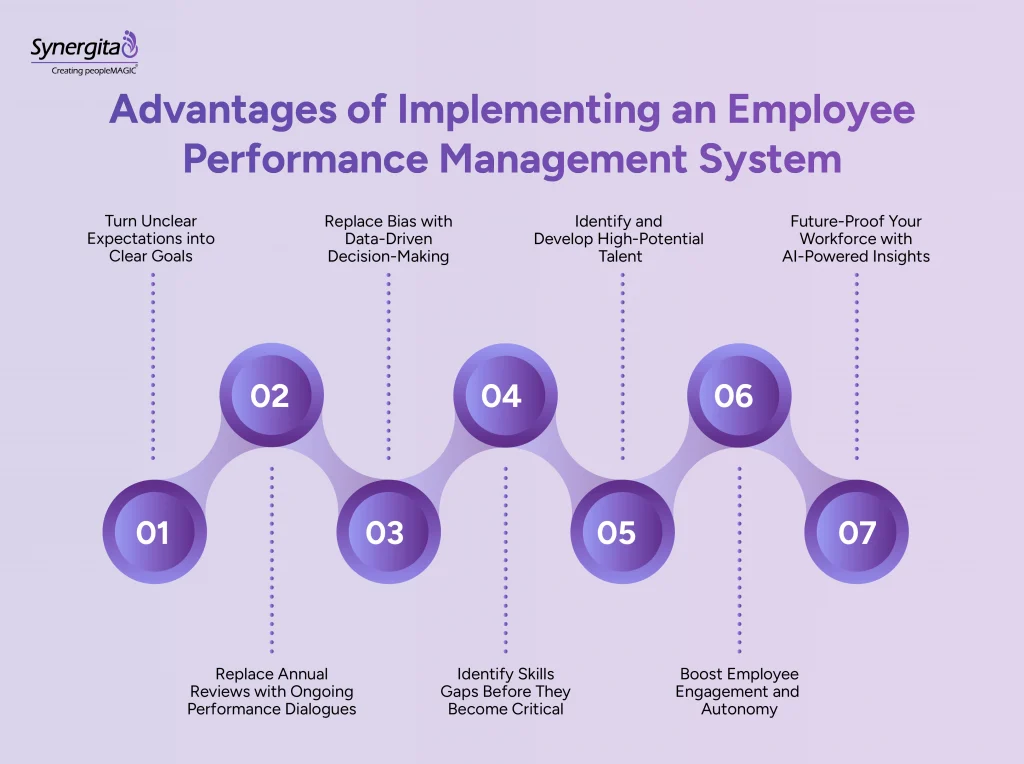
1. Turn Unclear Expectations into Clear Goals
A lack of clear expectations is one of the most common challenges team members face in workplaces. This confusion creates misaligned priorities, wasted efforts, and missed deadlines. A robust performance management system eliminates this ambiguity and helps in creating a SMART goal framework.
A performance management system also provides a real-time dashboard that shows continuous visibility into progress. This helps managers boost employee performance and improve job satisfaction, as employees see the direct impact of their contributions.
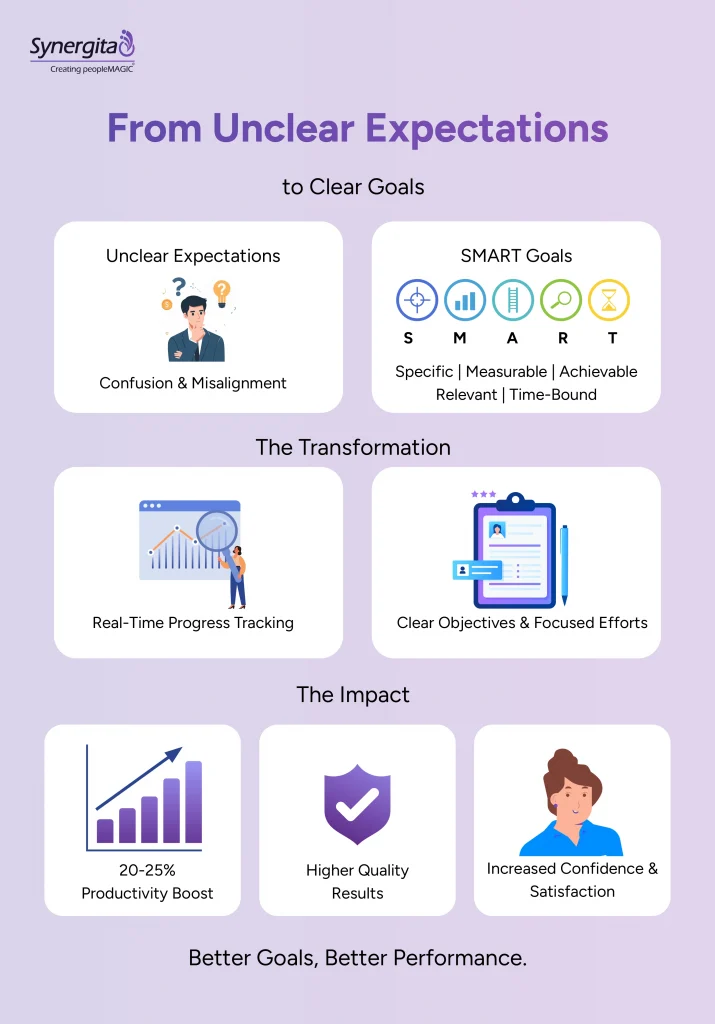
The impact:
- Significant productivity improvements
- Higher quality work with fewer revisions
- Increased employee confidence and job satisfaction
2. Replace Annual Reviews with Continuous Growth Conversations
Traditional annual performance reviews create anxiety, deliver feedback too late for course correction, and consume enormous resources for minimal impact. Imagine how an employee feels when they have to wait 12 months for recognition.
A Gallup report shows that only 3 out of 10 U.S. employees report receiving recognition for good work in the past seven days. Moreover, managers must wait a year before addressing performance issues when employees deliver poor performance.
A structured performance management system helps companies implement regular feedback, align goals, and address performance gaps before they impact results.
3. Replace Bias with Data-Driven Decision-Making
Unconscious and conscious bias significantly impact decisions like promotions, compensation, and performance ratings. This creates unfair outcomes that damage employee morale and expose companies to legal risk. Subjective evaluations are particularly vulnerable when managers rely on memory and personal preferences rather than documented evidence.
Performance management systems provide standardized assessments, multi-source 360-degree feedback, and continuously captured performance data. The key benefits of reducing bias include:
- Improvement in promotion decision quality
- Reduction in regrettable attrition
- Significantly fewer discrimination-related complaints
Suggested Reading: How to Overcome Bias in Performance Reviews: A Leader’s Guide
4. Identify Skills Gaps Before They Become Critical
With traditional annual reviews, most organizations discover skill gaps only when projects fail or employees continuously struggle. This approach can significantly impact the company’s reputation and growth prospects.
Using performance management software, companies can identify issues earlier by analyzing data from continuous assessments. This helps managers to create tailored development plans and provide integrated training programs to accelerate career growth.
5. Identify and Develop High-Potential Talent
Every organization has talented employees who consistently deliver results, but sometimes they don’t get the recognition from leadership they deserve. One reason could be bias, but another critical issue is the lack of data to highlight their performance.
A sophisticated performance management system can help managers find high-potential employees and groom them for the next level. Here is how nurturing high performers can benefit your organization.
- Significant improvement in internal promotion rates
- Reduction in time-to-fill for leadership positions
- Higher retention among high-potential employees
6. Boost Employee Engagement and Autonomy
Are you aware that low engagement costs the global economy $8.9 trillion annually? This shows that employees who are not engaged deliver poor-quality work, miss more days, and eventually quit.
What is the fix? You should stop delivering employee reviews like annual judgments. Instead, use modern performance management systems to make employees active participants in their performance journey through:
- Collaborative goal-setting where employees can share their feedback
- Continuous recognition from peers and managers
- Transparent career paths showing what they need to do
- Self-service tracking to monitor progress anytime
Apart from individual metrics, an employee performance management system transforms the culture through ongoing 360-degree feedback and regular 1-on-1 meetings.
Suggested Reading: 9 Ways to Enhance Employee Experience
7. Future-Proof Your Workforce with AI-Powered Insights
Traditional ways of managing employee performance are ineffective in today’s tech-driven environment. Your organization may lack real-time visibility of performance and make strategic decisions based on assumptions or without specific data.
With a modern performance tool, you can use the power of artificial intelligence to analyze data and make informed performance decisions based on real data. Here is how it helps your business:
- Predictive analytics identify future high performers and retention risks
- Intelligent recommendations suggesting personalized development programs
- Sentiment analysis helps detect early signs of disengagement in feedback
- Matching employees’ skills to project requirements
What are the Common Challenges of Implementing Performance Management Systems and Their Solutions?
Performance management systems offer a wide range of benefits, but many organizations struggle to implement them. Here are the common challenges and steps to resolve them.
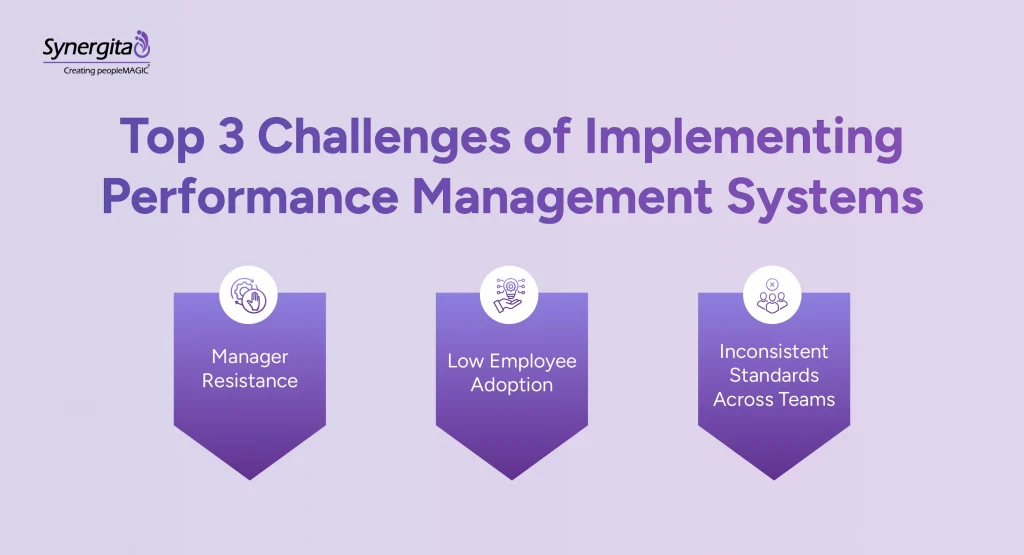
1. Manager Resistance
Managers may view performance management as additional work that takes time away from core work, which is why they may resist adopting a performance management system.
Solutions:
- Involve managers early and train them properly.
- Explain the purpose clearly and connect it to individual benefits.
- Start with a pilot team and share its impact internally.
2. Low Employee Adoption
Employees don’t like a slow, ineffective system or feel like it’s just watching them. If logging in takes too many clicks and the navigation is slow, adoption will take time.
Solutions:
- Test the platform with actual employees during vendor selection
- Choose mobile-first systems that work like the apps people already use daily
- Roll out features gradually instead of overwhelming everyone on day one
3. Inconsistent Standards Across Teams
Different managers interpret “good performance” differently. One manager’s “exceeds expectations” is another’s “meets expectations”. This can create bias and confusion.
Solutions:
- Define what each rating level actually means with specific examples
- Hold calibration meetings quarterly, where managers compare notes and adjust ratings
- Use PMS analytics to spot managers whose ratings are way off from the norm
Key Features to Look for When Selecting a Performance Management System
When selecting a performance management system, you need to consider some key features.
- Continuous Feedback Tools: Supports regular check-ins, real-time feedback, and structured one-on-ones.
- Customizable Review Workflows: Allows you to configure review cycles, rating scales, and approval processes.
- Competency and Skills Tracking: Helps you identify development needs and monitor capability growth over time.
- Performance Analytics and Reporting: Provides dashboards and insights to support informed decision-making.
- User-Friendly Interface: Ensure it offers simple navigation for managers and employees without extensive training.
- Integration Capabilities: It should connect seamlessly with HRIS, payroll, and other business systems.
- Scalability and Flexibility: A scalable system can accommodate growth and adapt as your performance strategy evolves.
Conclusion
Performance management impacts how teams perform, grow, and stay engaged. A structured system provides consistency to conversations, connects individual efforts to business priorities, and gives managers better visibility into progress.
Synergita performance management software helps organizations run continuous reviews, align goals, and track development without adding complexity. If you are looking for a simple, effective tool to manage performance, consider the Synergita performance management system.
Start your 14-day free trial today.
Frequently Asked Questions
A performance management system is a comprehensive software that helps organizations set goals, track performance, provide continuous feedback, and develop talent while connecting individual performance to organizational objectives.
HRIS systems handle administrative HR functions (payroll, benefits, compliance), but performance management systems are used for feedback, reviews, and talent development. Most organizations use both, with integrations connecting performance data to compensation and succession planning in the HRIS.
Usually, implementing a performance management tool takes 30-60 days. Synergita offers quick implementation and support to ensure you can implement the tool quickly.
Performance management system costs vary depending on features and providers. Most SaaS-based systems cost between $3 and $15 per employee per month. However, Synergita offers cost-effective pricing starting at $0.33 per user per month.
Synergita integrates seamlessly with major HRIS platforms, payroll systems, and collaboration tools like Microsoft Teams, Slack, and Google Workspace. This ensures performance data flows into compensation decisions and eliminates duplicate data entry.