
You have interviewed brilliant candidates. On paper, they seem to be the right fit. But something doesn’t feel right, and you can’t explain it. That’s values misalignment, and without defined core values, it leads to wrong hires, a weak culture, and poor decision-making.
| TL;DR – 30 Seconds Quick Takeaway The Problem: Many small and medium businesses operate without clearly defined core values that leads to wrong hire, weak culture, and unclear decision-making. The Fix: Define 5–7 core values with clear behaviors, integrate them into hiring and daily operations, and use OKRs to turn them into measurable goals. The Impact: Clear, well-implemented values improve hiring decisions, strengthen culture, and keep teams aligned. Keep reading to: Learn how to define, apply, and measure core values without turning them into posters. |
Establishing a unique identity is crucial for success for every small and medium-sized businesses (SMBs) Yet only 20% of U.S. employees agree that they feel connected to their organization’s culture. This shows there is a major gap between intent and reality.
The most effective way to do this is by defining and implementing a set of core values that guide your company’s every move. These values not only reflect your identity but also influence your operations, the relationships you build, and the impact you make on the community.
In this blog, we will explore the importance of core values for business and top seven core values for small or medium-sized businesses.
| Table of Contents 1. Why Business Core Values are Important 2. 7 Core Values for Your Small and Medium Business 3. How to Define and Implement Core Values in Your Business 4. How OKRs Help You Put Your Core Values into Action 5. Final Takeaway 6. Frequently Asked Questions |
Why Business Core Values are Important
Business core values are the fundamental principles that guide how your organization operates, makes decisions, and treats people. These values represent what the business stands for and what it strives to achieve beyond mere financial objectives.
Let’s look at why these core values are important.
- Defining Purpose: They answer the “why” behind your business, giving employees and stakeholders a clear sense of direction.
- Guiding Behavior: Core values act as a framework for ethical decision-making, helping your team choose the right path without the need for a policy for every situation.
- Cultural Foundation: A high-performance culture is built on the core values your team actually believes in and practices in their work.
- Employee Engagement: When people connect with your values, they work with more motivation and stay longer. A Gallup Study shows companies with highly engaged employees achieve 23% higher profitability.
- Customer Relations: Businesses that follow integrity and are customer- centric usually earn greater trust and loyalty.
- Strategic Decision-Making: Support strategic decisions, keeping leadership aligned with long-term vision and values.
- Brand Identity: Core values shape brand identity and reputation, helping companies stand out and attract customers who share with those values.
- Ethical Foundation: Established an ethical foundation for the business, ensuring that it operates with integrity, accountability, and a commitment.
- Adaptation and Resilience: In times of change or uncertainty, core values can provide stability and resilience and act as anchors when navigating challenges.
- Community Impact: Values like sustainability and social responsibility shape how your business affects the world beyond your walls.
7 Core Values for Your Small and Medium Business
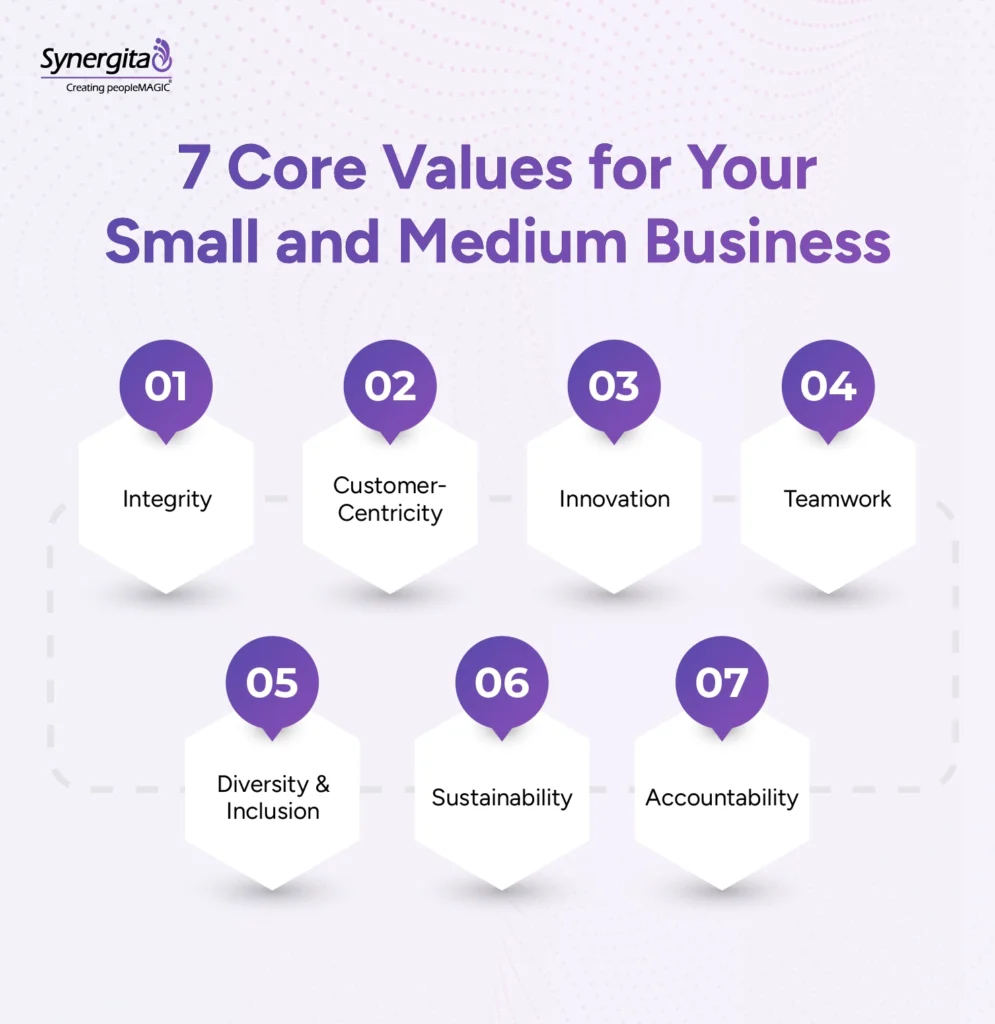
Business decisions sometimes fail due to a lack of clarity. Clear values reduce confusion and bring consistency to your team’s operations. These seven core values define how your business works, grows, and treats people.
1. Integrity
Integrity is the foundation of trust in business. It means being honest and transparent in all your dealings, both internal and external. Upholding integrity ensures that your company operates with credibility and ethical standards, which can build long-lasting relationships with customers, employees, and partners.
2. Customer-Centricity
Putting your customers first means listening to what they need, treating them well, and always looking for ways to improve. When you do this consistently, people trust your business, recommend it to others, and keep coming back.
3. Accountability
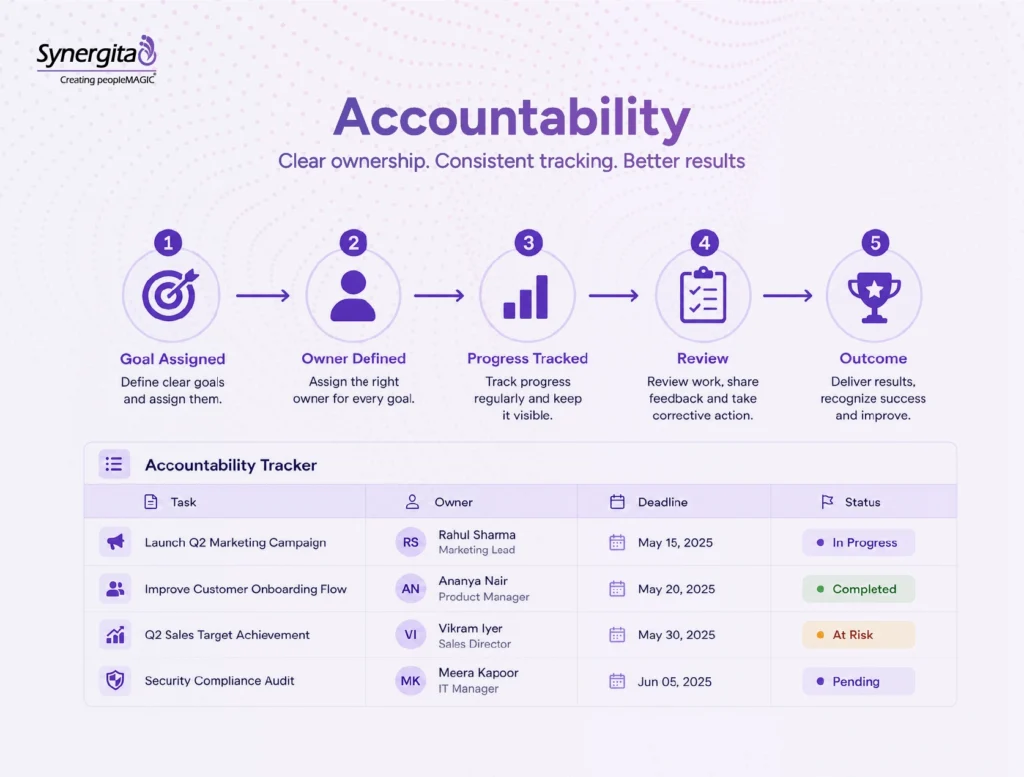
Accountability means owning your actions and taking responsibility for your work. When everyone does this, it builds trust, keeps things clear, and helps the team work better and grow together.
4. Innovation
Adopting innovation means staying open to new ideas, technologies, and creative solutions. It creates a flexible mindset and encourages your team to think creatively and grow. Innovation is essential for staying competitive and relevant in a rapidly changing business environment.
5. Teamwork
Promoting teamwork within your organization encourages collaboration and cooperation among employees. It creates a positive work environment where people support each other and work together towards shared goals. Teamwork enhances productivity, problem-solving, and overall job satisfaction.
Suggested Reading: 5 Key Factors Influencing Job Satisfaction
6. Diversity and Inclusion
Embracing diversity and inclusion means respecting and welcoming the differences among your employees. This means building a workplace where everyone feels included and heard, irrespective of their background or identity.
A diverse and inclusive workforce can lead to greater creativity, better decision-making, and broader perspectives on problem-solving.
7. Sustainability
Committing to sustainability means considering the environmental and social impact of your business operations. Sustainable practices reduce your carbon footprint, minimize waste, and support responsible sourcing. It helps the planet and makes people trust your business more.
How to Define and Implement Core Values in Your Business
Defining core values is easy but applying them consistently across your business is the biggest challenge. Here’s a step-by-step method to implement it for small and medium businesses.
Step 1. Start With Your Team, Not a Template
Avoid copying values from large corporations. Instead, involve your team by asking what you already do well and which behaviors you want to maintain as you grow. Here are a few things to keep in mind:
- Keep it simple and easy to understand
- Gather honest input from across the team
- Ensure your values reflect your real culture
- Maintain clarity at every step
Step 2. Narrow It Down to 5–7 Values
Having too many values makes them hard to remember and follow. Choose a few that reflect your business. Instead of generic terms like “integrity,” define what it looks like in practice with clear, specific behaviors.
Here are some examples:
- Sharing accurate updates, even if the progress is behind schedule
- Owning mistakes without blaming someone else
- Communicating risks or issues early, not after they escalate
- Following through on commitments made to teammates or clients
- Being transparent about pricing, timelines, or limitations
Step 3. Write Them in Plain Language
Avoid corporate language and write each value as a one-sentence statement that every employee can understand and act on.
For example: instead of “Customer-Centricity,” try “We solve the customer’s exact problem, not just the surface-level ones.”
Step 4: Integrate Values to Hiring and Onboarding
Use your values during hiring. Ask candidates questions that reflect your values, like how they’ve handled real situations. If their answers don’t match, it’s a clear sign, they may not be the right fit for your culture. Moreover, help new hires understand what your values look like in everyday work from day one.
Regular employee performance evaluation helps you see if your values are reflected in real work
Step 5: Review Values Annually
Your business will evolve, and your values should evolve with it. Review them regularly with your team and ask if they still reflect how you work and where you’re going. Core values aren’t fixed; they grow with your business.
How OKRs Help You Put Your Core Values into Action
Implementing core values requires a practical framework and that’s where Objectives and Key Results (OKRs) play an important role.
OKRs turn values into clear, measurable goals. Instead of simply saying “we value accountability,” you set a goal, such as improving your CSAT score from 50% to 60% this quarter, with specific results that everyone is responsible for.
Here is how values are translated into measurable goals:
- Integrity: Set transparent goals your team can see
- Accountability: Assign ownership to every key result
- Innovation: Make “test one new idea per quarter” a trackable objective
- Customer-Centricity: Link key results directly to customer satisfaction scores
When your OKRs reflect your values, your team knows what is expected of them. They can track progress, measure results, and take ownership, without needing constant reminders of what the company stands for.
If you want to implement core values, OKR management tools like Synergita help you define the objectives and key results, track progress, and align them directly with your core values.
Final Takeaway
The core values of a business are reflected in everyday actions. These seven core values we discussed in this guide provide your small or medium business with examples of what you should integrate in your business.
Start with what’s already there. Define what your business already stands for and then build around it. Because when the core values for a business are lived daily, they become the foundation that drives real, lasting growth.
The next step is making those values measurable. Use Synergita OKR tools to connect your core values to clear goals and track progress in real time. Start a free trial of Synergita OKR software today.

Frequently Asked Questions
The 7 core values are: Integrity, Customer-Centricity, Innovation, Teamwork, Diversity & Inclusion, Sustainability, and Accountability.
Core values in business are important because they guide hiring, decision-making, customer relationships, and how to go about day-to-day operations. Companies with clearly defined business core values grow faster and retain better talent.
Small business values are the same principles, integrity, accountability, customer focus, but applied at a closer, more personal scale. For SMBs, core values directly shape daily interactions, not just company-wide policies.
When core values are clearly defined and consistently followed, they help you find the right talent, build customer trust, and improve team performance, which contribute to measurable, long-term business growth.
Some common examples of core values for a company include integrity, customer-centricity, innovation, teamwork, diversity and inclusion, sustainability, and accountability.
OKRs turn the core values of a company into measurable goals. Instead of stating “we value accountability,” an OKR sets a specific target with ownership. This connects values for a business from intention to action.