


Same team. Same targets. One employee gets promoted. The other doesn’t know why they were passed over. The reason could be system issues, manager bias or something else. Most of the time, no one can explain it clearly.
| Quick TL;DR The Problem: In many organizations, performance appraisals are inconsistent and unclear, due to bias, poor system design, and missing evaluation criteria. The Fix: Define clear performance factors, remove bias with structured frameworks, and use continuous feedback instead of one-time reviews. The Impact: According to Gallup, only 14% of employees feel their performance reviews inspire them to improve. Organizations that fix this see improvement in trust and performance. Keep reading to: Understand the key factors that influence appraisals, common mistakes to avoid, and how to build an effective appraisal system. |
Performance appraisal determines promotions, pay hikes, retention decisions, and team structure. When the factors affecting performance appraisal are not measured correctly, the whole system breaks down.
According to a Gallup report, only 14% of employees strongly agree their performance reviews inspire them to improve. That number should concern any HR leader or business owner.
This guide covers what actually determines an appraisal outcome, what managers get wrong, and what makes the appraisal process fair and effective.
| Table of Contents 1. What Are the Factors Affecting Performance Appraisal 2. Critical Performance Appraisal Criteria Checklist 3. Why Performance Appraisal Results Are Not Always Fair 4. 5 Elements That Make an Appraisal System Effective 5. The Bottom Line 6. Frequently Asked Questions |
What Are the Factors Affecting Performance Appraisal
Most appraisal systems claim to measure performance objectively, but they miss several factors that influence the final rating. Some are related to the employee and others to the system design.
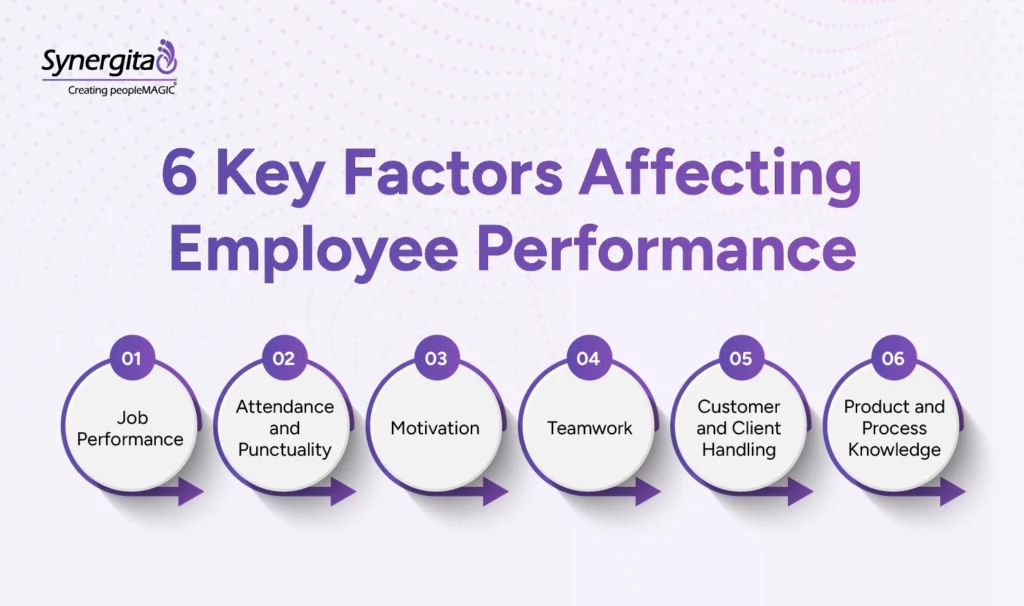
1. Job Performance
Every organization expects employees to meet or exceed their assigned targets. Quality of work in a performance appraisal context covers both the volume of output and the standard at which it is delivered.
- Employees who consistently hit KPIs and deliver error-free work rank higher across every performance factor.
- Those who go beyond their role, solving problems without being asked, are rewarded.
- Managers need clear criteria for performance appraisal and effective performance management tool to avoid subjective scoring.

2. Attendance and Punctuality
Regular presence, in-office or remote, is one of the most important employee appraisal criteria. Consistent absenteeism, late logins, or missed team meetings are signs of disengagement and reduce overall team output. Here is what to keep in mind:
- One or two planned leaves are normal and should not affect appraisals.
- Frequent unplanned absences indicate reliability issues and drag down team productivity.
- Punctuality is an indicator of discipline, a trait managers associate with professional integrity.
Tip for managers:Track attendance patterns over the entire review period, not just the recent weeks. Recency bias is one of the most common performance appraisal issues.
Suggested Reading: 7 Types of Employee Appraisal Systems
3. Motivation
Motivation is difficult to quantify, but managers can see it clearly. Employees who take ownership, seek challenges, and show up with energy stand out, even when their numbers look similar to their peers.
- Initiative includes volunteering for new projects and identifying gaps before being told.
- Motivated employees require less oversight, which directly reduces manager workload and improves team velocity.
- Recognizing motivation as a performance factor for employee evaluations builds a culture of ownership across the team.
4. Teamwork
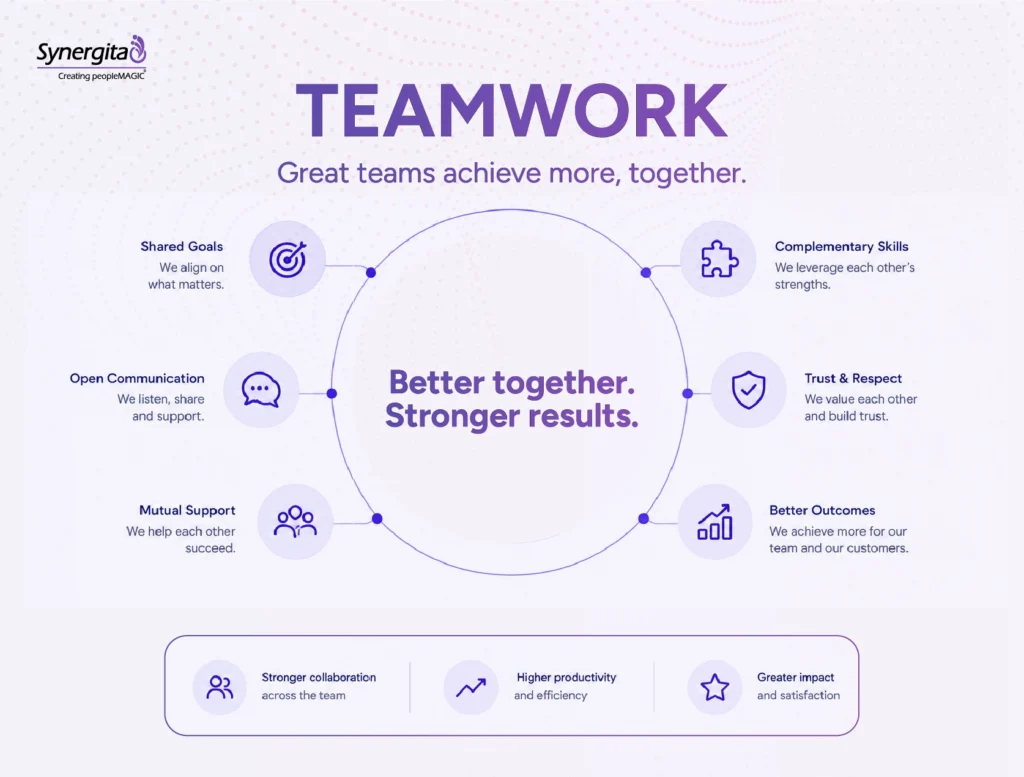
An employee’s ability to work well with colleagues, share knowledge, and support collective goals is a critical factor in the appraisal, especially in roles that require cross-functional collaboration.
- Team players lift the performance of the entire group, not just their own numbers.
- Employees who create conflict, undermine colleagues, or damage team morale should not be rated highly, even if their individual metrics look strong.
- 360-degree feedback is the most effective tool for accurately assessing employee performance in terms of teamwork.
5. Customer and Client Handling
For client-facing roles, quality of work in a performance appraisal must include how the employee manages customer relationships. Poor client handling directly affects revenue and brand credibility.
- Employees who retain clients and generate referrals are more valuable than high-output employees with poor interpersonal skills.
- Customer feedback should be included in the appraisal criteria for the roles with regular client contact.
6. Product Knowledge
An employee who understands the product, service, or process they work with is more effective than one who only follows instructions. This is a core performance factor across sales, support, operations, and product teams.
- Strong product knowledge ensures faster problem-solving and better judgment in critical situations.
- Employees with shallow knowledge slow down their teammates as they need constant support.
- Regular knowledge assessments and role-based certifications are practical ways to measure this factor.
Critical Performance Appraisal Criteria Checklist
Before you run your next appraisal cycle, check these off:
| Appraisal Factor | What to Measure | Tracked? (Yes/No) |
| Job Performance | KPIs, targets, output quality | ☐ |
| Attendance | Absenteeism rate, punctuality pattern | ☐ |
| Motivation and Initiative | Projects volunteered, problems solved proactively | ☐ |
| Teamwork | Peer feedback, collaboration incidents | ☐ |
| Customer service and client relationship | CSAT score, resolution rate, client retention | ☐ |
| Product Knowledge | Assessment scores, certifications completed | ☐ |
| Attitude and Conduct | 360° feedback, manager observations | ☐ |
Why Performance Appraisal Results Are Not Always Fair
Several factors that influence performance appraisal but they shouldn’t. Let’s look at those key factors.
1. Poorly Designed Rating Scales
Vague employee appraisal rating scales such as ‘meets expectations’ without defining what those expectations are, leave room for personal judgment. Managers end up rating based on perception rather than evidence.
Here is how to avoid them:
- Use behaviourally anchored rating scales (BARS) wherever possible.
- Define each rating level with role-specific examples so there is no ambiguity.
- Audit rating distributions across managers each year to spot systemic bias.
2. Recency Bias
Managers naturally remember the last four to six weeks’ performance most clearly. If an employee had a rough month just before the appraisal, it can overshadow ten months of strong performance.
How to avoid this
- Use continuous feedback tools to keep performance data throughout the year.
- Structured mid-year reviews significantly reduce recency bias at the year-end appraisal.
3. Halo and Horn Effect
One outstanding project (halo) or one visible mistake (horn) can unfairly influence the entire appraisal. This is one of the performance appraisal issues in organizations that don’t use formal evaluation frameworks.
How to avoid this
- Train managers to evaluate each performance dimension separately and independently.
- Calibration sessions, where multiple managers compare ratings, surface and correct this effect.
4. Unclear Objectives Set at the Start
If employees don’t have clear, measurable goals at the beginning of the review period, they don’t know what to work for. The purpose of performance appraisal is to measure progress against agreed targets, not to judge the effort.
How to avoid this
- Set SMART goals at the start of every review cycle and document them.
- Ensure the employee understands and agrees on these objectives before the period begins.
- Review goals at mid-year and adjust them if business priorities change.
5 Elements That Make an Appraisal System Effective
Understanding the factors of performance is of no use if you don’t build an effective system that helps you capture feedback accurately.
- Frequency: Annual reviews are not enough. Quarterly check-ins or continuous feedback cycles capture performance throughout the year.
- Multi-source input: Peer feedback, self-assessments, and manager ratings together produce a fuller picture than a single-rater system.
- Transparency: Employees should know exactly what they are being evaluated on before the cycle begins, not after it ends.
- Calibration: Rating calibration sessions ensure a ‘4 out of 5’ means the same thing across every department.
- Documentation: Keep a clear record throughout the cycle. Ratings without supporting documents are not useful.

The Bottom Line
A fair appraisal process does not just measure performance; it builds trust. When employees know the criteria are clear, the process is consistent, and outcomes are related to real evidence, they engage more seriously with their work.
While understanding the factors affecting performance appraisal is essential,but using the right system capture them is equally important.
If your current appraisal process still relies on spreadsheets, annual forms, and memory, you should check what a performance management system like Synergita can help your team. Try Synergita free for 14 days and see how it helps you to measure performance accurately.
Frequently Asked Questions
Performance appraisals are important because they provide a structured way to identify top performers, flag underperformance early, and align individual goals with business targets. The objectives of appraisal also include supporting pay decisions, promotions, and giving employees clear feedback on where they stand.
The core performance factors are job performance and output quality, attendance, motivation and initiative, teamwork, customer service, and product knowledge. System-side factors include rating scale design, manager bias, and review frequency.
The performance appraisals objectives are to measure individual output against agreed goals, reward consistent contributors, identify skill gaps, and support succession planning. When objectives are clearly defined upfront, appraisals shift from a judgment exercise to a structured growth conversation.
The seven factors of performance are: job performance, attendance, motivation, teamwork, customer service, product knowledge, and attitude or professional conduct. Most appraisal frameworks built for staff appraisal objectives cover all seven, either as standalone criteria or within broader competency models.
Performance appraisal are used for salary reviews, promotion decisions, succession planning, training needs analysis, and performance improvement plans.
The key criteria are job performance, attendance, motivation and initiative, teamwork, and product knowledge. Performance appraisal criteria should be specific, measurable, pre-agreed, and relevant to the role.
Performance appraisal measures accuracy, consistency, and the impact of output on team and business goals. Managers should use role-specific benchmarks, not general impressions, to score quality fairly across all levels.
Staff appraisal objectives should align individual targets with team and business goals. Clear appraisal objectives set at the start of each cycle give employees a measurable target and managers a baseline to rate against, removing guesswork from the process.

Great information it help me a lot.