
Quick Takeaway
- Regular employee appreciation significantly boosts engagement; employees who receive feedback consistently are five times more likely to be highly engaged (Gallup).
- Employee performance recognition also supports productivity and psychological safety. Teams that feel valued can be up to 13% more productive and report higher satisfaction.
- Neglecting appreciation leads to burnout, higher attrition, and weakened accountability, increasing operational disruption and talent loss.
- Structured recognition requires clarity and consistency. Modern performance management systems help through timely feedback, shared visibility, and data-driven insights.
In many organizations, employee appreciation is limited to annual awards, occasional praise, or isolated HR initiatives. When recognition is inconsistent or poorly timed, employees disengage quietly, execution slows, and attrition risks increase.
In today’s fast-changing workplace culture, regular employee appreciation drives better performance. When employees feel their efforts are noticed and valued, they are more committed, more accountable, and willing to go the extra mile.
In this blog, we will explore the importance of employee appreciation in the modern workplace, the risks organizations face when it is ignored, and how leaders can build a scalable, consistent process to recognize employees who support long-term growth.
What Are the Benefits of Employee Appreciation?
Employee appreciation offers many benefits, including measurable outcomes such as higher employee engagement, lower attrition, improved productivity, stronger employee well-being, better cross-functional collaboration, and a stronger employer brand.
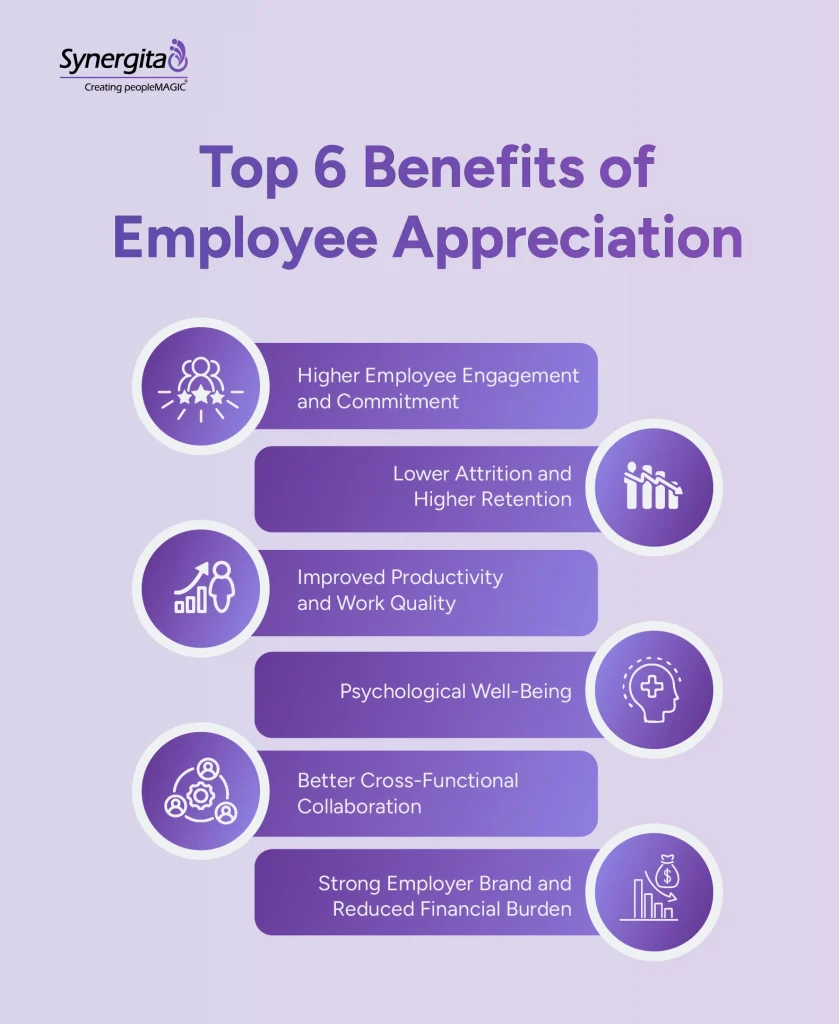
1. Higher Employee Engagement and Commitment
Employees who feel appreciated are usually more dedicated to their work and organization. Constructive and continuous feedback also motivates employees and improves accountability.
According to a Gallup report, employees who strongly agree that they receive valuable feedback on their performance from coworkers are five times more likely to demonstrate higher engagement.
2. Lower Attrition and Higher Retention
Lower attrition and higher retention are other key benefits of employee recognition and appreciation. When employees feel ignored or undervalued, they are more likely to explore opportunities elsewhere. This increases replacement costs and disrupts business operations. Employee appreciation improves:
- Sense of belonging and fairness: Employees stay longer when they feel their contributions are recognized and treated equitably.
- Trust in leadership and managers: Recognition shows that management notices effort and results.
- Confidence in long-term career growth: Employees see a future for themselves within the organization.
Suggested Reading: How to Retain Your Top Performers?
3. Improved Productivity and Work Quality
Employee appreciation impacts their productivity and how consistently projects are delivered. When their performance is recognized, employees gain clarity on what outcomes matter most and align their efforts accordingly. They also feel motivated and give their best efforts, which improves overall work quality.
4. Psychological Well-Being

When employees feel mentally supported and secure in their work environment, they can focus more and solve problems much faster. Employee appreciation creates a psychologically safe environment where people feel comfortable speaking up, sharing ideas, and taking on challenging tasks without fear of negative consequences.
A recent report shows that employees who feel happy and supported are up to 13 percent more productive, and organizations that prioritize well-being report significantly higher employee satisfaction.
5. Better Cross-Functional Collaboration
Appreciation not only impacts individuals; it strengthens team dynamics as well. Peer recognition and 360-degree feedback improve respect, trust, and mutual accountability across teams. Moreover, organizations that encourage appreciation at the team level often see:
- Reduced internal friction and blame culture
- Higher cooperation between departments
- Faster alignment during execution and change initiatives
6. Strong Employer Brand and Reduced Financial Burden
Beyond engagement and retention, one of the major benefits of employee appreciation is its direct financial impact on turnover and hiring costs. Various studies suggest that organizations that create a high-performance culture through recognition can save millions annually by reducing turnover-related costs.
For example, Gallup–Workhuman research indicates that a 10,000-employee organization can save up to $16.1 million per year in turnover costs through effective recognition practices.
What is the Cost of Not Appreciating Employees?
When employee appreciation is inconsistent or absent, it affects engagement levels, productivity, retention, and the organization’s ability to sustain performance over time. Here are the major consequences of not prioritizing employee appreciation:
1. Productivity Loss and Burnout
Employees who feel unnoticed remain unengaged and feel pressured at work. They often put in minimal effort, leading to productivity loss and burnout.
Suggested Reading: Factors Affecting Team Performance
2. Increased Attrition and Knowledge Loss
Lack of recognition is a critical reason why employees leave an organization, taking away their knowledge, experience, context, and necessary skills with them.
3. Lack of Accountability
Teams without positive engagement are often demotivated and lack accountability, making it difficult for managers to drive consistent outcomes.
4. Challenges in Hiring Talent
Poor employee experiences reflect in reviews and referrals. Dissatisfied employees leave negative feedback, making it harder to attract quality talent.
How Does Technology Help in Employee Appreciation?
Informal employee recognition can be difficult to manage consistently. However, modern technology can simplify this process. Performance management software like Synergita can help teams connect recognition with measurable outcomes through a centralized dashboard, real-time feedback, data-driven insights, and seamless scalability as the organization grows.
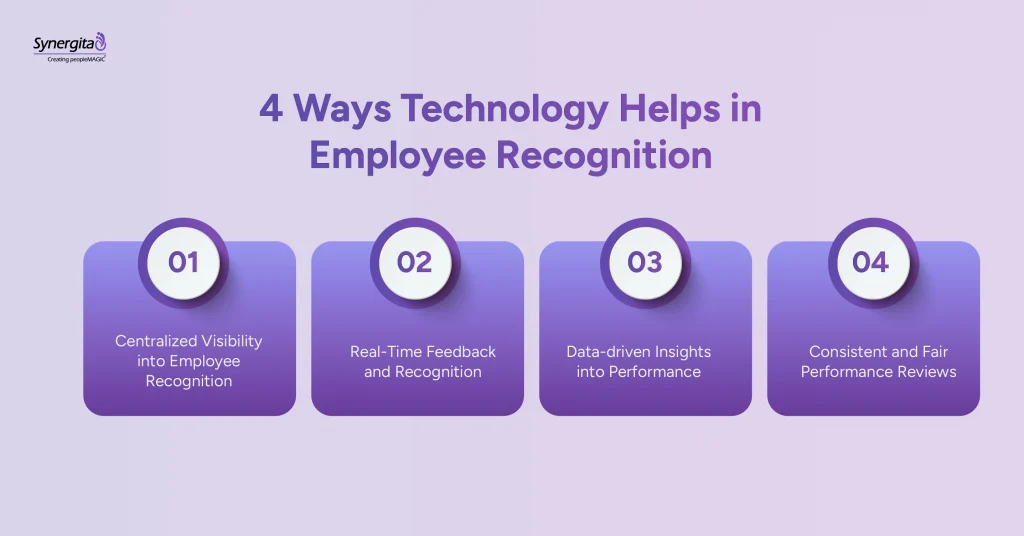
1. Centralized Visibility into Employee Recognition
Technology allows businesses to collect recognition data into one system, giving leaders clear visibility into who is being recognized, for what contributions, and across which teams.
2.Real-Time Feedback and Recognition
Appreciation directly linked to performance allows employees to understand how their efforts contribute to shared priorities, reinforcing focus and accountability.
3. Data-driven Insights into Performance
AI-powered performance management tools like Synergita help identify hidden trends in recognition and feedback to provide early signals into engagement levels. It allows leaders to address risks before they impact performance.
4. Consistent and Fair Performance Reviews
A structured performance management platform ensures appreciation remains fair, timely, and repeatable across departments, locations, and team sizes.
Common Employee Appreciation Mistakes Organizations Should Avoid
- Delayed Recognition: Limiting recognition to annual review cycles reduces its impact and makes appreciation disconnected from day-to-day contributions.
- Unclear Criteria: Recognition without clear reasons creates confusion about what matters the most.
- Outcome Blindness: Praising effort alone, without results, weakens focus on execution and accountability.
- Same Recognition Approach: Using the same recognition style for every employee feels impersonal and ineffective.
- Perceived Bias: Subjective or biased recognition damages trust and team morale.
- HR-Only Ownership: Leaving appreciation to HR limits manager involvement and everyday reinforcement.
- Lack of Visibility: Limited insight makes it harder for teams to improve fairness and alignment over time.
Final Takeaway
The long-term benefits of employee appreciation are reflected in how employees prioritize work, take ownership, and remain committed to the organization. When recognition is consistent and aligned with employees’ expectations, it boosts employee confidence, strengthens execution, and improves retention.
However, conducting regular employee appreciation requires a structured approach and technological support, as a manual appreciation process can be time-consuming and disorganized.
Synergita Performance Management Software helps support continuous feedback and performance reviews with AI-powered insights. Try the Synergita Performance Management Tool free for 14 days to streamline the employee appreciation process.

Frequently Asked Questions
Employee appreciation improves engagement, accountability, and retention. When employees feel valued, they consistently deliver their best performance, collaborate better, and remain committed to organizational goals, which support long-term business performance.
Recognition should be timely and ongoing, not limited to annual reviews. Regular, specific appreciation tied to outcomes helps employees stay aligned, engaged, and focused on continuous improvement.
Managers can ensure fairness by using clear criteria, linking recognition to outcomes, and maintaining consistency across teams. Transparent processes and documented feedback help reduce bias and build trust.
Performance management software helps in structuring performance appreciation through defined processes and data-based insights. It also helps in timely feedback, reduces subjectivity, and supports consistent recognition practices as organizations scale.
5. Is Synergita suitable for small and growing teams?
Yes. Synergita is suitable for small and growing teams due to its cost-effective pricing, simple setup, and user-friendly interface. It supports structured feedback, continuous reviews without complexity, making adoption easy as teams scale.