



Quick Takeaway
- Goal setting for employees turns effort into outcomes by providing clarity, priorities, and alignment between individual work and business objectives.
- Managers play a critical role by aligning goals with business strategy, involving employees in goal setting, using SMART goals, and balancing performance with development.
- Goals must be tracked, reviewed, and adjusted continuously through regular check-ins, outcome-focused reviews, clear documentation, and flexibility as priorities change.
- Common goal-setting mistakes include vague goals, lack of employee involvement, static objectives, and treating goal-setting as a one-time exercise.
Busy teams are not always productive teams. Many employees work hard, yet businesses struggle to deliver the desired outcomes. The reason is that they are executing tasks without clear, well-defined goals. This is why goal setting for employees is essential for turning effort into measurable business results.
Strong goal setting for employees also provides teams with direction, priorities, and a clear understanding of what needs to be done and why. Yet, many managers struggle with unclear, misaligned, or static goals that fail to evolve with changing business needs or individual roles.
This guide explains how managers can help employees set goals more effectively, track and review them, and avoid common mistakes that can hinder employee alignment, motivation, and focus on outcomes.
| Table of Contents 1. What is Goal Setting for Employees? 2. How Managers Can Help in Setting Goals and Objectives for Employees? 3. How to Track, Review, and Adjust Employee Goals? 4. Common Mistakes Managers Should Avoid in Employee Goal Setting 5. Conclusion 6. Frequently Asked Questions |
What is Goal Setting for Employees?
Setting goals and objectives for employees is the process of defining clear, achievable targets that guide what employees should focus on and accomplish within a specific timeframe.
Successful organizations follow a structured goal-setting framework like Objectives and Key Results (OKRs), where goals are aligned with business priorities and individual roles. This helps teams understand how their efforts contribute to broader organizational outcomes.
How Managers Can Help in Setting Goals and Objectives for Employees?
Managers play a critical role in deciding the right goals to set for employees, ensuring that individual effort contributes directly to measurable business outcomes. Here is how managers can help employees set effective goals.
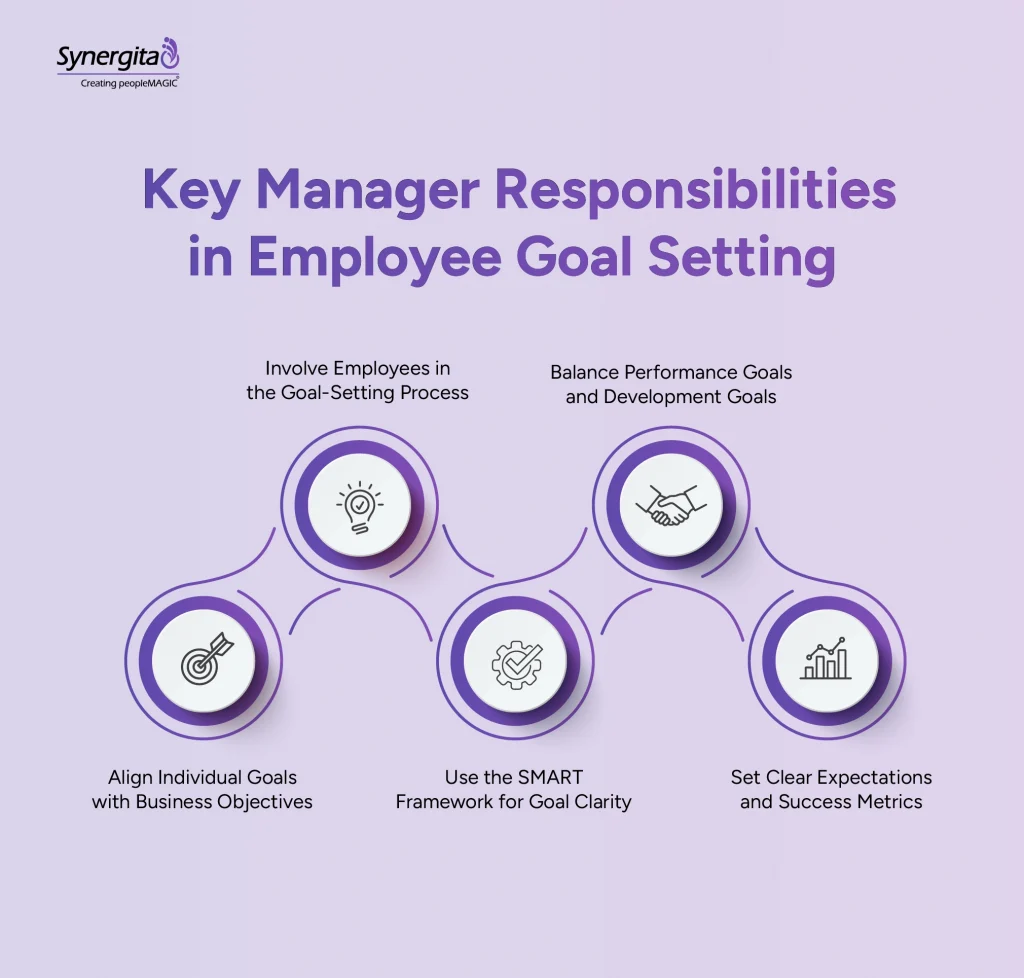
1. Align Individual Goals with Business Objectives
Goal alignment is crucial for the effective execution of business objectives. When employee goals are clearly linked to organizational priorities, teams experience stronger organization-wide alignment and understand why their work matters.
Managers can translate high-level business objectives into team-level outcomes and then break them down into individual responsibilities. This ensures that every employee can connect their goals to broader company success. To ensure alignment, managers can:
- Start goal-setting discussions by revisiting business priorities and team objectives.
- Define how each role contributes to revenue, customer outcomes, efficiency, or growth.
- Regularly review goals to ensure they continue to reflect changing business needs.
2. Involve Employees in the Goal-Setting Process
Employee involvement is essential to effective goal setting, as goals imposed without participation do not ensure employee commitment. A Gallup report suggests that employees who are not engaged or actively disengaged cost the global economy approximately $8.8 trillion in lost productivity, equivalent to about 9% of global GDP.
That’s why managers should treat goal setting as a two-way conversation. Employees bring valuable context about workloads, challenges, and opportunities for improvement. Effective collaboration includes:
- Ask employees to propose goals aligned with team priorities.
- Discussing feasibility, dependencies, and resource needs.
- Refining goals together to balance ambition with realism.
3. Use the SMART Framework for Goal Clarity
Clear goal definition determines whether goals drive action or create confusion. The SMART goal framework is one of the most practical tools for goal setting because it removes ambiguity and sets measurable expectations. Using SMART goals helps employees track progress independently and enables managers to evaluate outcomes objectively.
For example:
Vague goal: Improve customer support quality.
SMART goal: Reduce average customer ticket resolution time by 15 percent within the next quarter while maintaining customer satisfaction scores above 90 percent.
4. Balance Performance Goals and Development Goals
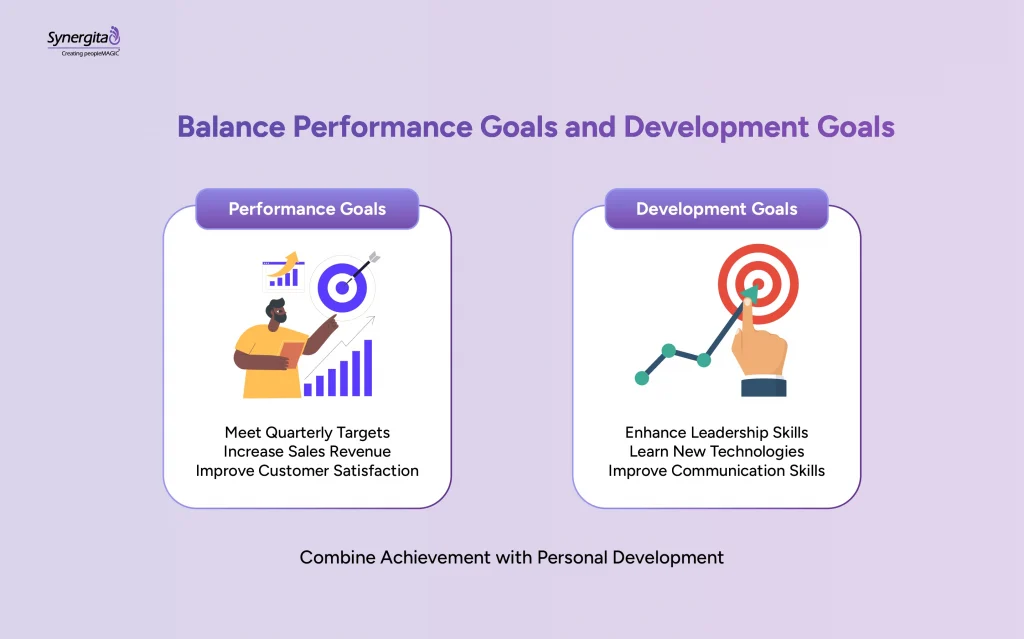
Effective goal setting addresses both results and growth. Managers should include both types of goals during goal-setting discussions. This ensures sustainable performance and long-term investment in employee growth. For example:
- A performance goal may focus on meeting quarterly targets.
- A development goal may focus on building leadership, technical, or communication skills that support long-term employee growth.
5. Set Clear Expectations and Success Metrics
Managers must set clear expectations at the time of goal setting, not later during execution. When success metrics are documented, employees understand how progress will be measured. It removes ambiguity and helps employees focus their efforts on outcomes that truly matter. Setting expectations includes:
- Specific deliverables and quality standards that define what “done” looks like
- Measurable outcomes and milestones to track progress objectively
- Agreed timelines and dependencies that account for collaboration and constraints
Suggested Reading: Metrics That Matter for Tracking Progress
How to Track, Review, and Adjust Employee Goals?
Effective goal setting for employees is just one part of the broader OKRs alignment process. Managers must continuously track progress, review outcomes, and adjust goals as priorities evolve. Here is how to track and adjust employee goals.
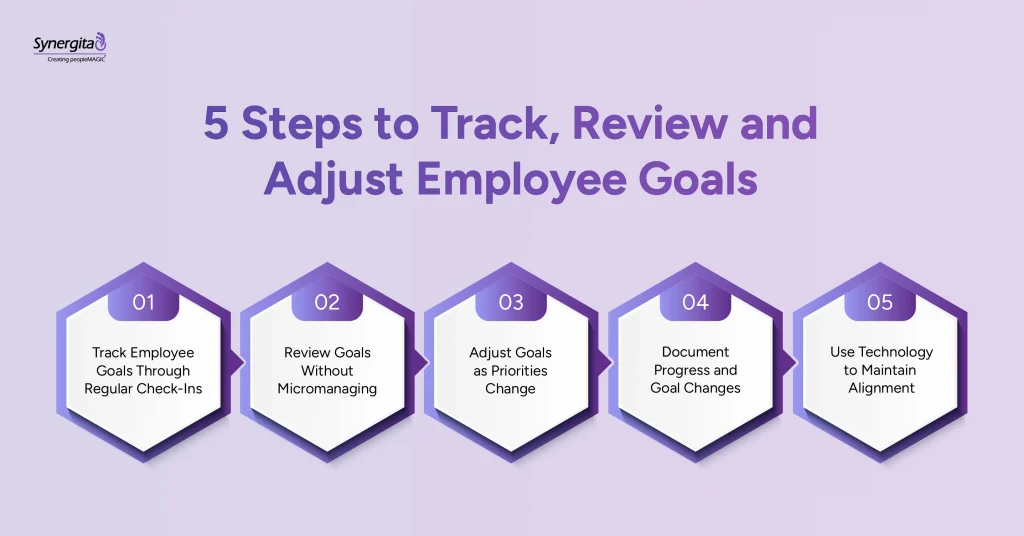
1. Track Employee Goals Through Regular Check-Ins
Tracking goals should be an ongoing process, not a quarterly activity. Regular check-ins help managers track OKRs effectively while allowing employees to raise challenges early.
Effective goal tracking includes:
- Reviewing progress against predefined milestones
- Identifying blockers and dependencies
- Maintaining visibility without constant supervision
Suggested Reading: Guide to OKR tracking
2. Review Goals Without Micromanaging
Reviewing employee goals is about assessing outcomes, not controlling tasks. Managers should focus on whether goals are moving in the right direction rather than monitoring daily activity.
A healthy approach to review goals involves:
- Evaluating progress against agreed success metrics
- Asking outcome-focused questions
- Encouraging self-reflection and problem-solving
3. Adjust Goals as Priorities Change
When priorities shift, but goals remain static, teams lose focus and motivation. That’s why managers must adjust goals with changing business conditions. The adjustments may include refining scope, redefining metrics, or re-prioritizing objectives without compromising accountability.
4. Document Progress and Goal Changes
Clear documentation creates an understanding of progress and expectations. When updates and changes are recorded, it becomes easier to track and adjust goals and maintain clarity on outcomes and responsibilities. This also reduces ambiguity in future discussions and helps in consistent follow-ups.
5. Use Technology to Streamline Goal Alignment
As teams scale, manual tracking becomes fragmented and unreliable, and businesses need modern OKR tracking software to streamline OKR setting and tracking. A centralized tool helps managers and employees stay aligned on priorities and progress through:
- Real-time goal visibility
- Easy updates and progress tracking
- Alignment between individual, team, and organizational goals
Common Mistakes Managers Should Avoid in Employee Goal Setting
Even well-designed goals may not deliver results if common pitfalls are ignored. Many of these mistakes are early red flags in OKR implementation. If they are not addressed on time, they can lead to misalignment, poor execution, and disengagement. Here are the common mistakes to avoid:
- Setting too many goals at once, which dilutes focus and creates confusion
- Defining goals that are vague or open to interpretation
- Aligning goals poorly with team or business priorities
- Applying a one-size-fits-all approach across different roles
- Setting goals without involving employees in the discussion
- Focusing only on outcomes while ignoring the effort or constraints involved
- Failing to document goals and success criteria clearly
- Not revisiting goals when priorities or conditions change
- Setting unrealistic timelines or expectations
- Treating goal setting as a one-time activity instead of an ongoing process
Conclusion
As a manager, you are responsible for providing clarity on priorities, not just assigning tasks. Effective goal setting starts with aligning individual efforts to what matters for the business. Employee goal management should be a collaborative process, and to ensure this, you need to bring in a culture of continuous feedback.
Spending time with employees to understand their responsibilities, constraints, and perspectives helps managers shape realistic, aligned, and meaningful goals. An OKR-driven approach brings this alignment to life by keeping goals visible and measurable.
Tools like Synergita OKR software streamline goal setting and keep everyone focused through regular check-ins and shared accountability. Try Synergita OKR software free for 14 days and see how it helps you guide employees to set focused, aligned, and achievable goals.
Frequently Asked Questions
Goal setting provides clarity, direction, and focus, helping employees prioritize work and understand how their efforts impact organizational outcomes.
Managers can help employees set more effective goals by aligning their tasks with business objectives, engaging employees in discussions, establishing clear success metrics, and regularly reviewing goals.
Yes, involving employees in goal-setting increases ownership and commitment, as employees bring valuable insights into feasibility and constraints.
Synergita provides an AI-powered centralized system to define goals, track progress in real time, align individual goals with company objectives, and make data-driven decisions regarding goal-setting.
Yes, Synergita OKR management tool is user-friendly and designed to scale with teams, helping managers maintain clarity, alignment, and accountability as organizations grow. It offers competitive pricing for growing businesses compared to other tools.