



Quick Takeaway
- Organizations with effective performance management systems are 4.2× more likely to outperform peers, with 30% higher revenue growth and lower attrition, according to McKinsey.
- Continuous feedback improves productivity and retention. Structured performance management with regular check-ins and feedback can increase employee productivity by 21%.
- Unclear expectations, infrequent feedback, manager bias, poor tracking, and weak alignment between individual goals and business strategy are the primary reasons performance systems fail.
- A robust performance management system helps maintain real-time visibility, standardized reviews, automation, and analytics, reducing review cycle time by 35%.
Companies with high-quality performance management outperform others by maintaining clarity, accountability, and execution discipline across every level. According to McKinsey, organizations that invest in effective performance management systems are 4.2× more likely to outperform their peers, with average revenue growth 30% higher and significantly lower attrition rates.
Effective performance management reduces operational friction, improves execution discipline, and gives leaders clearer visibility into how work is progressing across the business. Achieving this requires a structured performance management system within the business.
In this blog, we will explore what is performance management system, and explain how a robust performance management system in business can accelerate growth.
| Table of Contents 1. What is a Performance Management System in Business? 2. Why is Performance Management Important for Businesses? 3. Common Challenges of Performance Management and How to Avoid Them 4. How Performance Management Software Solves Common Performance Management Challenges 5. Final Takeaway 6. Frequently Asked Questions |
What is a Performance Management System in Business?
A Performance Management System in business is a structured framework that enables organizations to manage employee performance, monitor progress, and address execution gaps in real time. It helps leaders maintain visibility into progress, improve accountability, and prevent performance surprises that impact business outcomes.
Suggested Reading: Benefits of Performance Management on Employee Lifecycle
Why is a Performance Management System Important for Businesses?
A robust performance management system for business is essential for keeping day-to-day operations predictable, ensuring business priorities are executed on time, and giving leaders dependable insights to make faster, more confident decisions. It aligns individual contribution with business strategy and improves decision-making at every level.
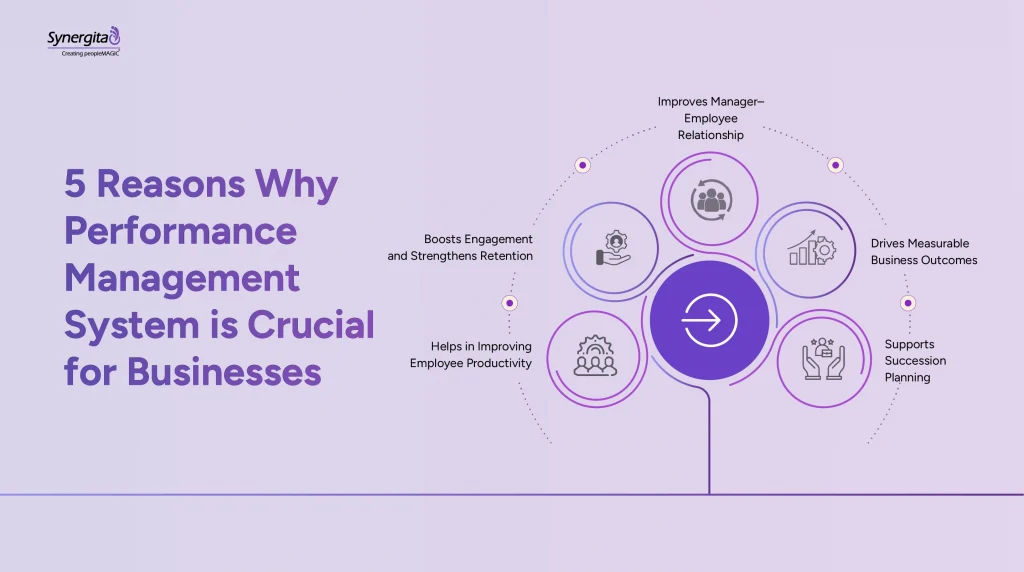
1. Helps in Improving Employee Productivity
An effective performance management system streamlines workflows and removes ambiguity from daily work, helping improve productivity. Employees know what to deliver, leaders understand what is progressing, and teams avoid last-minute escalations that derail business outcomes.
According to a Gallup report, employee productivity increases by 21% when they receive regular feedback and performance management is structured.
The key drivers that boost productivity include:
- Clear and measurable goals
- Regular performance discussions
- Timely feedback that helps correct the course
- Alignment between tasks and role objectives
2. Boosts Engagement and Strengthens Retention
Employee disengagement is a major risk for businesses because disengaged employees cost the world economy USD 438 billion in 2026, affecting productivity, increasing attrition, and replacement costs.
A structured performance management system boosts employee engagement through continuous feedback, regular coaching, and meaningful manager–employee conversations, which strengthen engagement and retention.
3. Improves Manager–Employee Relationship
A performance management system strengthens the manager–employee relationship by creating structured, ongoing communication rather than occasional check-ins. With regular and effective feedback, clarity of expectations, and constructive coaching, employees feel more supported and connected to their managers. Frequent check-ins reduce misunderstandings and build trust.
4. Drives Measurable Business Outcomes
When people perform better, businesses perform better. An efficient performance management system creates predictable execution, reduces operational risks, and ensures teams deliver work that directly contributes to business growth. It also reduces turnover-related costs, improves team efficiency, and optimizes organizational impact.
5. Supports Succession Planning
A performance management system also helps organizations identify skill gaps, growth needs, and high-potential employees. Performance insights help leaders identify execution gaps early, anticipate future capability needs, and build a sustainable high-performance culture. This helps in planning for future skill requirements, which is essential for long-term sustainability.
Common Challenges of Performance Management and How to Avoid Them
Most organizations struggle with performance management due to various reasons. Here are the key challenges and their solutions.
1. Lack of Clear Expectations
Many employees struggle because goals are vague, outdated, or not aligned with business priorities. This leads to misalignment, inconsistent output, and frustration.
How to avoid it: Define SMART goals, review them quarterly, and ensure managers communicate expectations clearly.
2. Inconsistent or Infrequent Feedback
Annual reviews delay critical information. Leaders lose visibility into what is breaking, and issues pile up until they impact customers, deadlines, or revenue. Employees feel disconnected and unsure about their performance progress.
How to avoid it: Implement monthly or bi-weekly check-ins to provide timely guidance and continuous course correction.
3. Manager Bias and Subjective Evaluation
Personal bias and inconsistent rating practices can undermine trust in the entire performance process. This results in disengagement and a perception of unfairness.
How to avoid it: Use structured evaluation frameworks like BARS, competency models, and evidence-based scoring.
4. Poor Documentation and Tracking
Manual tracking and scattered data slow down decision-making, compress review cycles into chaotic periods, and leave leaders without an accurate picture of what is happening in the business. This makes reviews time-consuming and prone to disputes.
How to avoid it: Adopt a performance management system that centralizes goals, feedback, and evaluations.
5. Limited Employee Development Opportunities
When performance discussions focus only on ratings, employees feel stuck and undervalued. This weakens retention and impacts long-term capability building.
How to avoid it: Integrate development plans, skill-building paths, and career conversations into regular performance cycles.
6. Misalignment Between Performance and Business Strategy
If individual goals do not connect to strategic objectives, effort is wasted on low-impact work. This reduces organizational agility and slows growth.
How to avoid it: Adopt effective goal-setting techniques, cascade goals top-down, and ensure each employee understands how their role drives business outcomes.
How Performance Management Software Solves Common Performance Management Challenges?
Performance management software helps in implementing a modern performance management system by providing real-time insights, automated reminders, and standardized review frameworks.
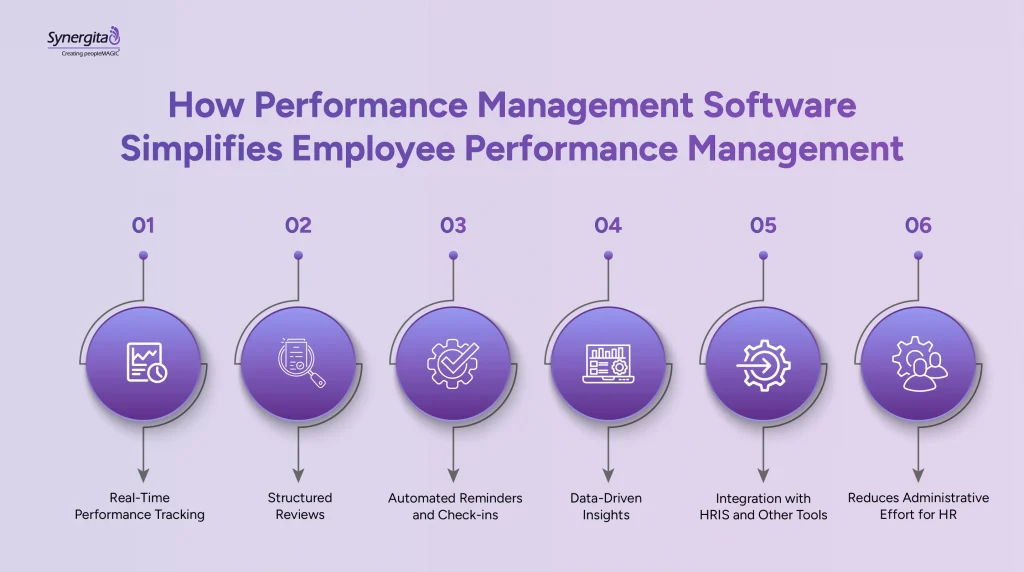
1. Real-Time Performance Tracking
Modern performance management software helps leaders quickly find out what is on track, what is slipping, and where intervention is needed. This improves business agility and reduces execution delays. Instead of waiting for quarterly or annual reviews, teams can act on real-time data, improving agility and accountability.
Key advantages include:
- Early identification of performance gaps
- Timely recognition of achievements
- Better alignment on priorities across teams
2. Structured Reviews
A PMS replaces inconsistent, manager-dependent reviews with standardized templates, workflows, and scoring models. This ensures every employee experiences a fair, comprehensive, and repeatable evaluation process based on defined criteria.
3. Automated Reminders and Check-ins
Software-driven reminders prevent reviews and check-ins from slipping through the cracks. Automated notifications make performance conversations more consistent and reduce the administrative load on HR and managers.
Benefits include:
- Regular check-ins instead of one-off annual reviews
- Timely goal updates and mid-cycle adjustments
- Reduced follow-up workload for HR
4. Data-Driven Insights
Performance management tools convert employee data into analytics dashboards, trend reports, and skill-gap insights. This helps leadership make informed talent decisions, minimize bias, and strengthen succession planning.
5. Integration with HRIS and Other Tools
A robust PMS integrates seamlessly with HRIS, payroll, attendance, and learning platforms. This unified ecosystem ensures accuracy, removes duplicate work, and enables a complete view of every employee’s journey.
6. Reduces Administrative Effort for HR
Performance management software automates goal setting, review cycles, reminders, documentation, and reporting, significantly lowering HR’s manual workload.
Impact examples:
- Companies using automated PMS reported a 35 percent reduction in review cycle time
- Over 550 manager hours saved annually through automation
Suggested Reading: How to Select Employee Performance Management Software for Your Business
Final Takeaway
A well-implemented performance management system in business is essential for achieving consistent growth. When leaders have dependable insights into how people are working, they can plan better and avoid surprises that slow growth. However, managing performance manually is a major challenge, especially for growing companies and large enterprises.
Synergita performance management software removes the administrative burden from managers, consolidates all performance data in one place, and helps leaders gain visibility into what is working and what requires course correction. If you are looking for a top-class tool to manage employee performance, try Synergita.
Start your free trial today and experience how Synergita streamlines performance management from day one.
Frequently Asked Questions
Many organizations are shifting from annual reviews to quarterly or monthly check-ins to ensure real-time guidance and continuous improvement.
The most common challenges of performance management include unclear expectations, irregular feedback, subjective evaluations, inconsistent documentation, and outdated or manual processes.
Performance management is a continuous process of coaching, feedback, and development. Performance appraisal is a periodic evaluation of employee performance, usually part of the overall system.
Small and medium-sized enterprises can benefit from clearer role clarity, smoother operations, improved decision-making, and reduced attrition.
A modern performance management system like Synergita can track data related to employee competencies, performance trends, peer input, achievements, behavioral indicators, and training and development programs.
Yes, Synergita allows complete customization to meet a business’s specific requirements. Schedule a free demo to see how it works.