
Your team may complete every task planned for a Jira sprint without making progress toward the intended business goal. Jira shows what was completed, but it may not tell leaders whether that work improved retention, increased revenue, or advanced a company objective.
The visibility problem extends beyond project tracking. Atlassian’s 2025 survey of 12,000 knowledge workers and 200 executives found that teams spend 25% of their time searching for answers. When goals and execution sit in separate systems, leaders are left piecing together progress through tickets, dashboards, meetings, and manual reports.
An OKR Jira integration connects objectives and key results with the Jira work supporting them. This guide compares seven of the best OKR software platforms with Jira integration, including how they connect goals with execution, where each platform stands out, and which one best fits your organization.
| TL;DR Match the platform to your primary need: performance management, Jira-native tracking, or enterprise strategy execution. Link Jira issues and epics to measurable key results instead of treating task completion as goal achievement. Prioritize automated progress updates to reduce manual reporting and identify delayed objectives sooner. Test the integration with your existing Jira workflows, reporting needs, and team structure before purchasing. |
| Table of contents 1. OKR software with Jira integration comparison table 2. Why do teams need OKR software with Jira integration? 3. What are the 7 best OKR tools with Jira integration? 4. Who should choose which OKR Jira integration platform? 5. Common challenges when connecting Jira and OKRs 6. Final thoughts 7. Frequently asked questions |
OKR software with Jira integration comparison table
The best platform depends on how your organization uses Jira. Synergita supports OKRs and employee performance, Oboard provides Jira-native goal management, and Quantive supports complex enterprise OKR programs.
When comparing OKR tracking tools, assess how each platform connects Jira execution with employee performance, strategic goals or enterprise goal management.
| Sl.no | Software | Jira Integration Approach | Best For |
| 1 | Synergita | Connects Jira execution with employee goals | Organizations looking for cost-effective OKR software |
| 2 | Perdoo | Links Jira activities with strategic goals | Leadership and strategy teams that need to connect strategic pillars |
| 3 | 15Five | Connects goals with performance workflows | HR teams linking OKRs with performance |
| 4 | Oboard | Jira-native OKR management | Jira-first product and engineering teams |
| 5 | Tability | Connects execution with key results | Teams needing lightweight OKR tracking |
| 6 | Leapsome | Combines goals and employee experience | HR teams managing goals and development |
| 7 | Betterworks | Updates goal progress based on completed Jira issues | Enterprises linking Jira with performance |
Why do teams need OKR software with Jira integration?
Teams use Jira OKR tools to connect business objectives with issues, epics, sprints, and development work managed in Jira. It helps leaders track how Jira issues, epics, and releases contribute to key results without relying on separate reports or manual updates.
An OKR Jira integration creates a direct connection between:
- Company objectives
- Team goals
- Key results
- Jira issues and project progress
This helps leaders understand whether teams are working on the priorities that matter most and helps employees see how their daily tasks support larger business outcomes.
1. Jira tasks vs. OKR outcomes
Jira is widely used by engineering and product teams to manage execution. Teams rely on it for:
- Sprint planning
- Issue tracking
- Feature development
- Bug resolution
- Release management
However, Jira mainly answers questions like:
- What tasks are completed?
- Who is working on an issue?
- What is the current project status?
It does not always answer strategic questions such as:
- Are teams making progress toward company objectives?
- How does engineering work support business goals?
- Which initiatives are driving measurable results?
OKR software for Jira connects completed issues, epics, and releases with the key results they support.
For example, a product team may complete multiple Jira tickets related to improving application performance. An OKR platform can connect those tasks to a key result, such as improving customer experience or reducing response time, helping teams measure the impact of their work.
2. Improves goal alignment
When objectives and Jira activities are managed separately, teams often rely on manual updates and status meetings to understand progress.
A Jira OKR integration helps create better alignment by allowing teams to:
- Link Jira work items with key results
- Monitor progress toward objectives
- Reduce manual reporting efforts
- Improve visibility between technical and business teams
This connection ensures that teams are not only completing tasks but also moving toward measurable goals.
3. Better decisions with progress data
Leadership teams need accurate information to evaluate whether strategic initiatives are on track.
With OKR tools with Jira integration, leaders can get visibility into:
- Objective progress
- Team performance
- Project contributions
- Potential blockers
Instead of relying on separate reports from different teams, organizations can use connected data from Jira and OKRs to understand progress more clearly.
4. Employee contributions linked to business goals
Effective OKRs help employees understand how their work impacts organizational priorities.
By connecting Jira workflows with OKRs, teams can create a clearer path:
Business objective → Team goal → Individual contribution → Jira execution
This alignment helps employees focus on meaningful outcomes while giving managers better visibility into progress and performance.
What are the 7 best OKR tools with Jira integration
The seven leading options are Synergita, Perdoo, 15Five, Oboard, Tability, Leapsome, and Quantive. Each serves a different requirement, from employee performance and lightweight tracking to Jira-native OKRs and enterprise strategy execution.
1. Synergita
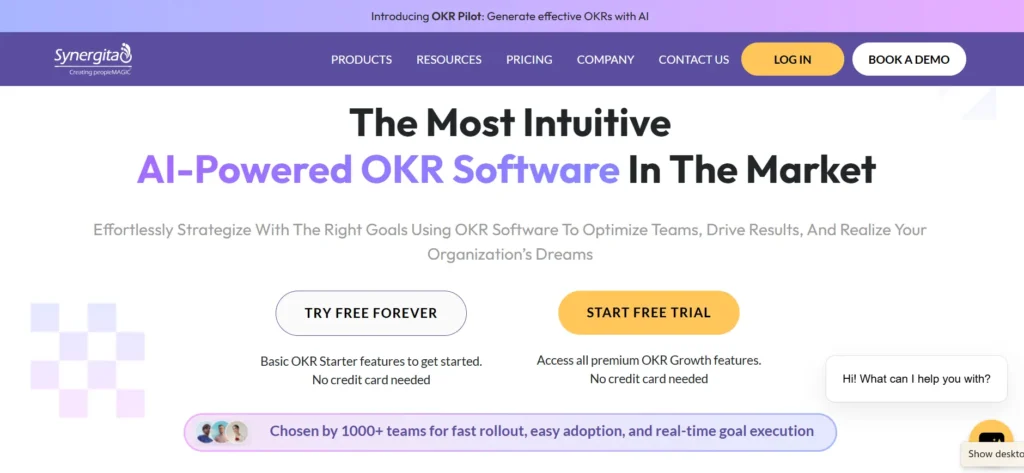
Synergita is designed for organizations that need more than standalone OKR tracking. It connects business objectives, employee performance, continuous feedback, and Jira-based execution to help leaders understand how individual contributions support strategic goals.
While many OKR platforms focus mainly on goal tracking, Synergita brings together goals, performance reviews, employee feedback, and engagement insights. This makes it suitable for organizations that want to understand not only whether objectives are progressing but also how employees contribute toward those outcomes.
With Synergita integration, teams can connect project execution with business goals. Engineering and product teams can align Jira activities with measurable objectives, giving leaders better visibility into progress.
Key Features
- OKR management and goal alignment
- Jira integration for connecting work with objectives
- Performance reviews and continuous feedback
- Employee engagement insights
- Progress tracking dashboards
- Individual and team goal visibility
How Synergita helps with Jira OKR alignment
Synergita helps organizations connect: Company strategy → Team goals → Individual performance → Jira execution
This creates a clearer connection between completed work and measurable business outcomes.
For example, a software company may set an objective to improve customer experience. Product teams can link Jira initiatives related to performance improvements, bug reduction, and feature enhancements with measurable key results. Managers can then evaluate both project progress and employee contributions toward that objective.
Best For
Synergita is suitable for organizations looking for:
- OKRs combined with employee performance management
- Better alignment between teams and business goals
- Visibility into individual contributions
- Enterprise-level goal tracking
2. Perdoo
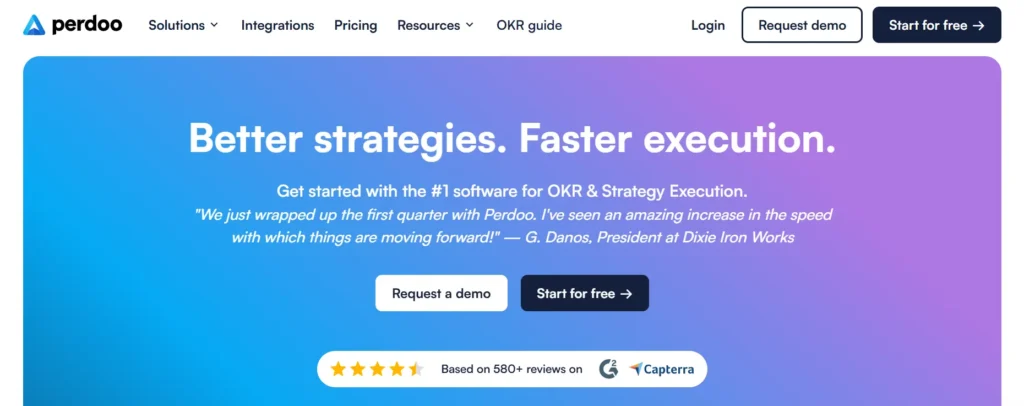
Perdoo is an OKR platform focused on helping organizations connect strategy, goals, and execution. It combines OKRs, KPIs, and strategy mapping to help teams understand how their work contributes to company priorities.
Its Jira integration helps teams connect development activities with objectives. This allows organizations to track progress from strategic goals down to execution-level tasks.
Key Features
- KPI tracking
- Strategy maps
- Goal alignment
- Jira integration
- Progress visualization
Perdoo is especially useful for companies that want a clear view of how team initiatives connect with broader business strategies.
Best For
Perdoo works well for:
- Organizations focused on strategic planning
- Teams that need visibility across multiple goals
- Businesses looking to connect KPIs and OKRs
3. 15Five
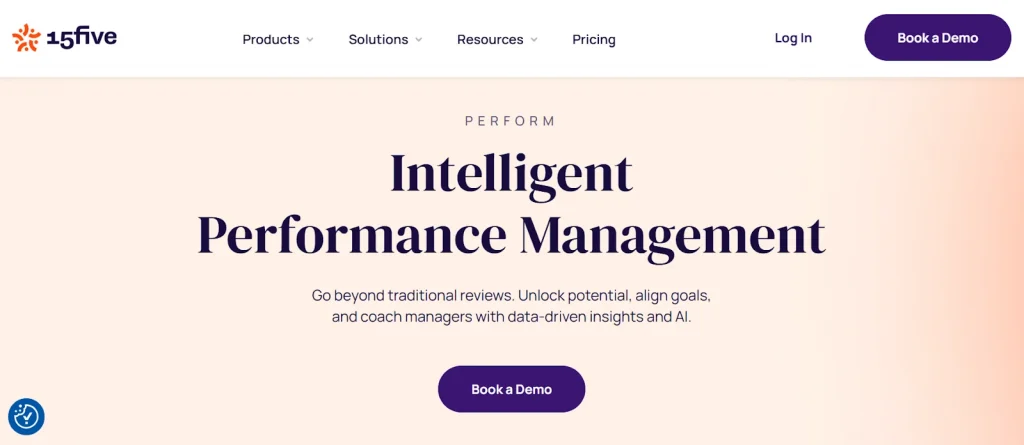
15Five combines OKR management with employee performance tools. The platform focuses on helping organizations set goals, conduct regular check-ins, collect feedback, and improve employee engagement.
For organizations that want more than traditional goal tracking, 15Five connects employee development with business objectives.
Its Jira integration helps teams link progress on development work with broader goals, creating better alignment between technical teams and leadership.
Key features
- Weekly check-ins
- Performance reviews
- Employee feedback
- Engagement surveys
- Jira connectivity
Best for
15Five is a strong fit for organizations that want:
- Employee performance management
- Continuous feedback processes
- Goal tracking alongside employee development
4. Oboard
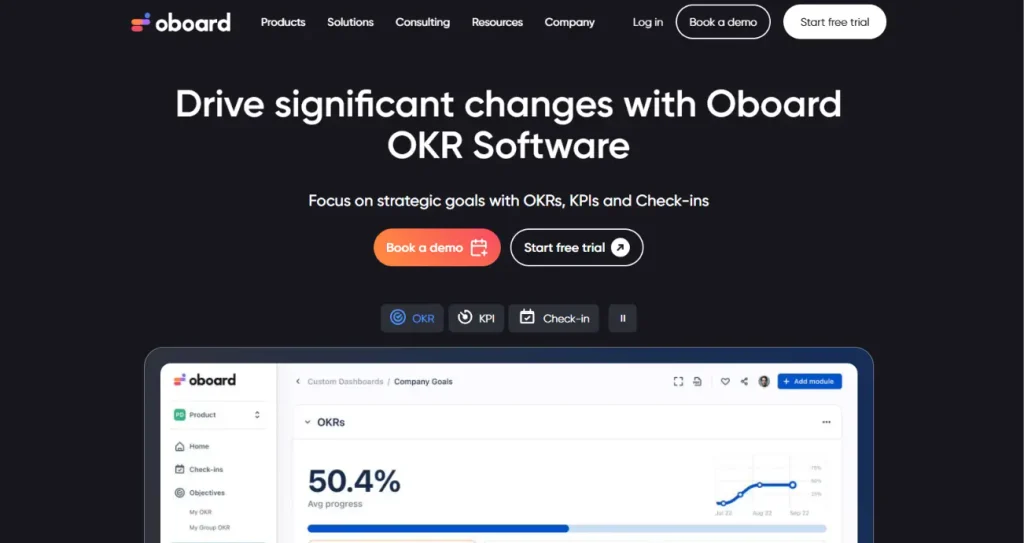
Oboard is designed specifically for teams that want OKR management software within the Jira ecosystem. It supports OKRs for agile teams that want to manage objectives and monitor progress within the Jira ecosystem. Instead of moving between multiple platforms, teams can manage objectives and track progress closer to their existing Jira workflows.
For Jira-heavy organizations, Oboard provides a familiar environment where teams can connect objectives with ongoing projects.
Key features
- Jira-native OKR experience
- Objective tracking
- Key result management
- Progress visualization
- Team alignment
Oboard helps teams connect strategic goals with Jira activities by bringing OKR visibility closer to daily execution.
This can reduce the gap between leadership objectives and development workflows.
Best for
Oboard is suitable for:
- Jira-first organizations
- Agile development teams
- Teams looking for OKR tracking inside Jira
5. Tability
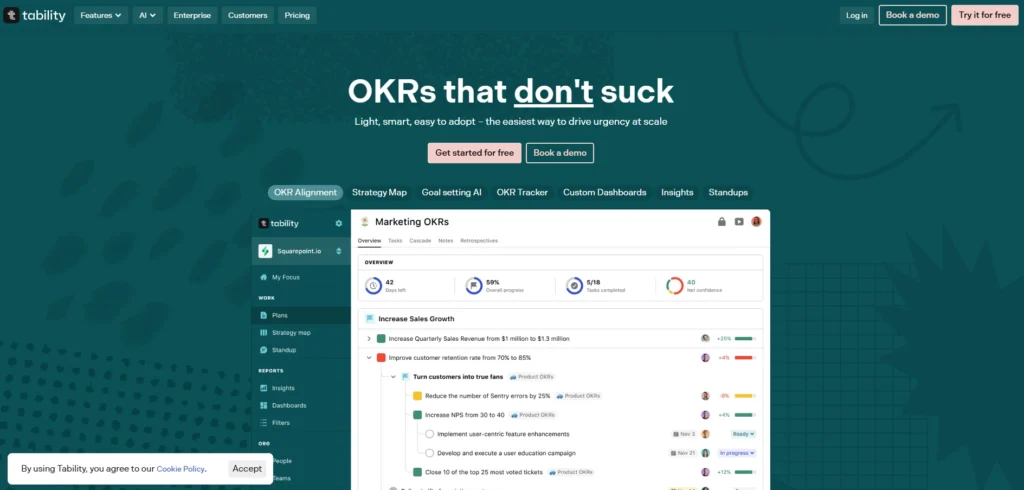
Tability helps teams connect strategic goals with the work required to achieve them. It focuses on making OKRs easier to plan, track, and update by connecting objectives with execution activities.
For teams using Jira, Tability helps bring visibility into how ongoing work contributes to key results. Instead of reviewing progress only through task completion, teams can understand whether their work is moving important goals forward.
Key features
- Goal planning
- Jira integration
- Progress updates
- Team collaboration
- Goal visibility dashboards
Tability helps teams connect Jira work with measurable outcomes. This allows managers and teams to monitor progress without manually collecting updates from different systems.
For agile teams, this connection helps create better alignment between:
- Product initiatives
- Engineering tasks
- Team objectives
- Business outcomes
Best for
Tability is suitable for:
- Agile teams managing multiple initiatives
- Organizations needing lightweight OKR tracking
- Teams connecting execution data with goals
6. Leapsome
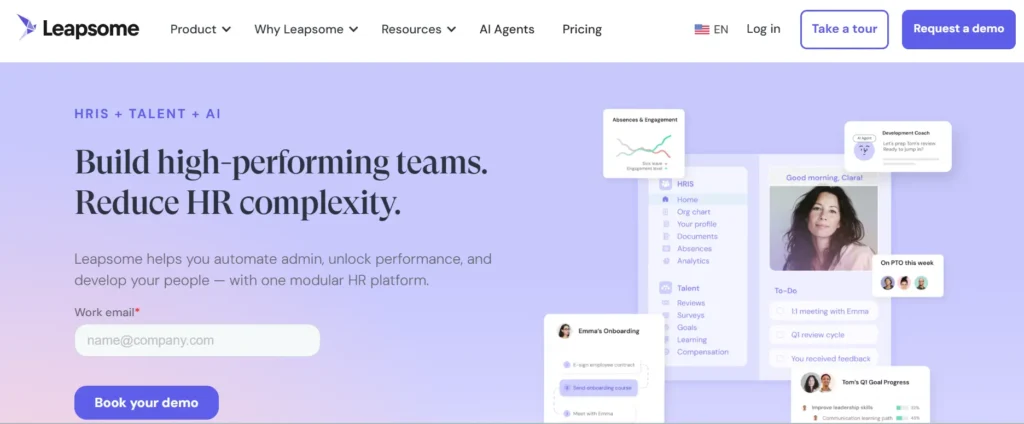
Leapsome combines OKR management with employee performance and engagement capabilities. The platform helps organizations manage goals while also supporting feedback, performance reviews, and employee development.
For companies that want OKRs connected with people management, Leapsome provides a broader approach than standalone goal-tracking platforms.
Its Jira integration helps teams connect development activities with objectives, allowing managers to understand how project work contributes to team and company goals.
Key Features
- Performance reviews
- Feedback cycles
- Employee engagement tools
- Learning and development
- Jira integration
Leapsome helps organizations create a connection between employee goals and business objectives.
Teams can use OKRs to define priorities, while performance conversations help employees understand how their contributions support those goals.
Best For
Leapsome works well for organizations that prioritize:
- Employee growth
- Performance management
- Engagement alongside OKRs
- Team goal alignment
7. Betterworks
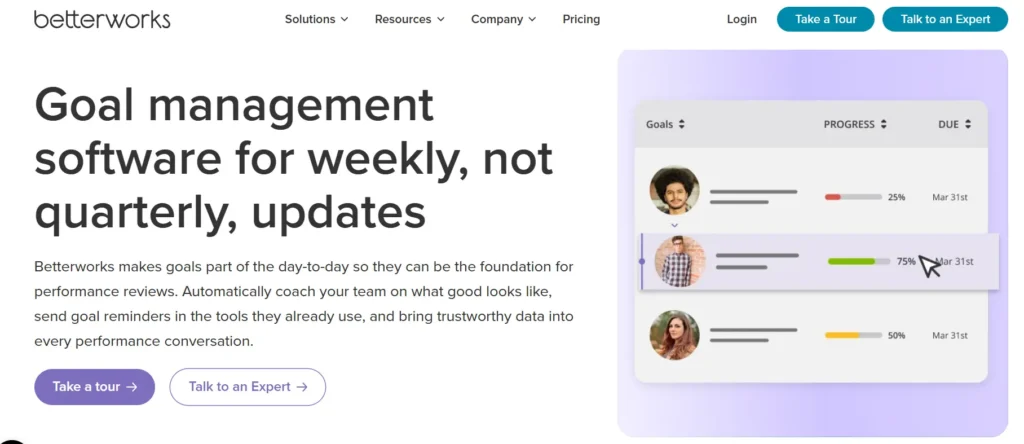
Betterworks connects OKRs, employee goals, performance conversations, and feedback. Its Jira integration automatically updates goal progress when teams complete linked Jira issues, reducing manual check-ins.
This gives managers a current view of progress while allowing employees to update goals through the tools they already use.
Key features
- Company, team, and individual goals
- Automated goal updates from Jira
- OKR alignment and progress tracking
- Performance conversations
- Employee feedback
- Goal analytics and dashboards
Betterworks uses completed Jira issues to update goal progress. Engineering and product teams can continue working in Jira while managers track how their work contributes to team and company goals.
Best for
Betterworks is suitable for:
- Mid-sized and enterprise organizations
- HR teams connecting goals with performance management
- Product and engineering teams using Jira
- Organizations that want automated goal updates
Who should choose which OKR Jira integration platform?
The right OKR Jira integration software depends on what your organization wants to achieve. Some teams need stronger employee performance alignment, while others need Jira-native goal tracking or enterprise-level strategy management. The right Jira OKR tools give technical teams a clear link between completed work and the key results that work supports.
Choose Synergita if you need OKRs connected with employee performance
Best for: Organizations that want to align company goals, employee contributions, and Jira execution.
Synergita is a strong fit for companies that need more than basic OKR tracking. It helps connect:
- Company objectives
- Team goals
- Individual performance
- Jira-based execution
Choose Synergita if your organization wants to:
- Link employee goals with business objectives
- Combine OKRs with performance reviews and feedback
- Understand how individual contributions impact strategic outcomes
- Improve visibility across teams and leadership
Other platforms fit specific needs:
- Perdoo: Best for organizations focused on strategy mapping and KPI alignment.
- 15Five: Suitable for teams prioritizing employee engagement and performance conversations.
- Oboard: Best for Jira-first teams that want OKRs inside Jira workflows.
- Tability: Useful for agile teams needing lightweight OKR tracking.
- Leapsome: Fits organizations combining OKRs with employee experience initiatives.
- Quantive: Designed for enterprises managing complex OKR programs.
Common challenges when connecting Jira and OKRs
The main challenges include linking technical tasks to business goals, keeping key result updates accurate, and showing how individual work contributes to team objectives. Clear ownership and well-defined integration rules help prevent unreliable progress reporting.
Connected OKR tracking tools reduce manual reporting by using Jira activity to support key result updates. Integrating Jira with OKRs can improve alignment, but organizations often face challenges when connecting execution data with strategic goals.
Challenge 1: Connecting technical work with business goals
Engineering teams complete Jira tickets, features, and projects every day. However, leadership teams need to understand the impact of that work.
A completed issue does not always explain:
This creates a visibility gap where teams can deliver large volumes of work without knowing whether those efforts are improving the outcomes that matter most.
- Which objective does it support?
- Why the work matters.
- Whether it contributes to business priorities.
OKR Jira integration helps connect technical activities with measurable outcomes.
Challenge 2: Maintaining accurate progress tracking
Without connected systems, leaders often spend review cycles collecting updates instead of analyzing progress and making decisions.
This can create problems such as:
- Delayed status updates
- Inconsistent reporting
- Different progress views across teams
Connecting Jira data with OKRs helps teams maintain better visibility by using execution information to support progress tracking.
Challenge 3: Aligning individual performance with team objectives
OKRs become more valuable when employees understand how their work contributes to larger goals.
Without this connection:
- Employees may focus only on assigned tasks
- Teams may lose visibility into priorities
- Leaders may struggle to measure contribution
Platforms that combine OKRs with performance management help create stronger alignment between individual efforts and company objectives.
Final thoughts
As organizations become more distributed, connecting strategy with execution will become increasingly important. Jira provides teams with visibility into daily work, while OKR platforms help organizations measure progress toward larger business outcomes.
The right OKR Jira integration should help teams move beyond task completion and understand how their work contributes to measurable goals.
Platforms such as Perdoo, 15Five, Oboard, Tability, Leapsome, and Quantive support different organizational needs. However, businesses looking for a complete connection between OKRs, employee performance, and Jira execution need a platform that brings goals and people alignment together.
Synergita helps organizations connect objectives, performance discussions, and Jira workflows in one unified approach, giving teams better visibility into progress and contribution.
See how Synergita connects employee goals, OKRs, and Jira workflows to create clear visibility from strategy to execution. Book a Jira integration.

Frequently asked questions
OKR Jira integration connects an OKR platform with Jira so teams can link business objectives with project tasks, issues, and development activities. It helps organizations track how daily work contributes to larger goals.
Jira can support goal tracking through integrations, but it is primarily designed for project and issue management. OKR software adds objective setting, key results, alignment, and progress tracking capabilities.
The best OKR software depends on business needs. Synergita is suitable for organizations that want OKRs connected with employee performance, while tools like Oboard focus on Jira-native OKR tracking and Quantive supports enterprise strategy management.
Jira does not provide native OKR management, but teams can track OKRs by integrating Jira with an OKR platform. This allows organizations to connect objectives and key results with Jira issues, epics, and project progress.
With an OKR Jira integration, teams can:
Link Jira tasks and epics to specific key results
Track progress based on completed work
Align engineering activities with business objectives
Monitor goal updates through dashboards and reports
Yes, Synergita supports Jira integration to help organizations connect project execution with objectives, team goals, and employee performance insights.
In Jira OKR software, look for Jira connectivity, objective tracking, key result management, progress dashboards, reporting capabilities, and alignment features that connect team execution with business goals.
Engineering teams should look for OKR tools that connect Jira issues, epics, and sprint progress with measurable objectives. Jira-native tools and platforms with strong execution tracking are usually the best fit.
The best OKR software for Jira depends on your team’s requirements. Synergita suits organizations connecting OKRs with employee performance, Oboard supports Jira-native goal tracking, Profit.co automates key result updates using Jira data, and Betterworks connects Jira progress with employee goals and performance workflows.